Experienced woodworkers will tell you to audit your shop before you pick a plan, and there's a reason for that. The number of beginners who buy a complex project kit, hit a step requiring a tool they don't own, and abandon the whole thing is genuinely discouraging to watch.
Picking your first woodworking project isn't really about difficulty level. It's about tool-to-joint matching: the operations a project demands have to map directly onto what's sitting in your garage right now. Get that match wrong and you're not building a stool, you're building frustration.
The variables that matter are your saw type, whether you have any clamping capacity, and how you're set up for measuring and squaring. Those three factors determine more about what you can realistically finish than any skill rating printed on a project plan. Most guides skip this and jump straight to a ranked list of "easy" projects regardless of what tools the reader has.
Here's the honest tension: a project rated beginner-friendly by one source assumes you own a miter saw. If you're working with a hand saw and a pocket-knife-grade chisel set, that project will stop you dead before lunch. This guide works backwards from your actual tool inventory.
Start With Your Saw: It Narrows Everything
Your saw is the single biggest constraint on your first project, and the reason is geometry. Different saws produce different cut types, and project joints are designed around specific cuts. A box, a shelf, a bench: each one needs cuts that only certain tools can produce cleanly enough to assemble without gaps.
If you own a circular saw, you can make straight crosscuts and rips, but freehand cuts on narrow stock are genuinely risky for a beginner. A circular saw paired with a straightedge guide opens up sheet goods like plywood. That makes a simple plywood shelf, a storage box, or a basic wall cabinet a legitimate first project. The joints are butt joints, glued and screwed, and no joinery skill is required.
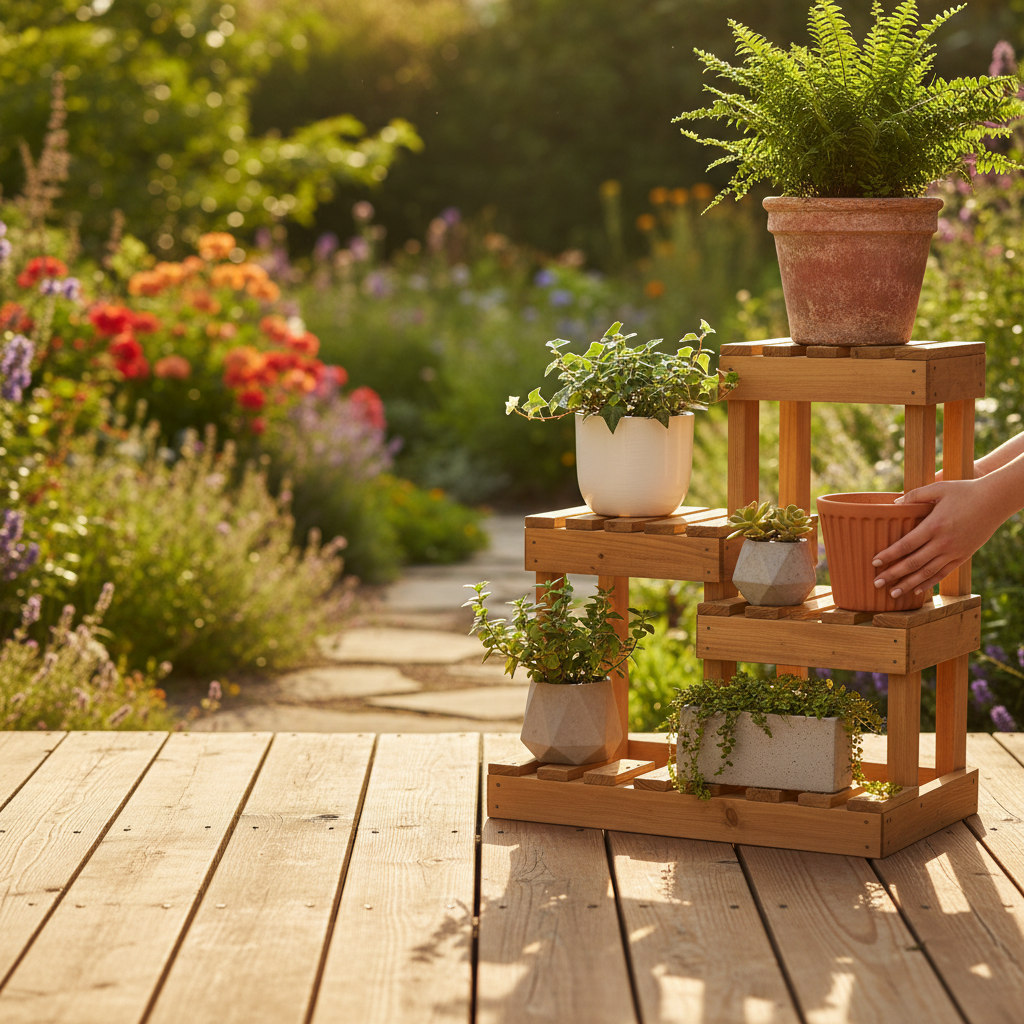
A miter saw changes the calculus significantly. You can cut dimensional lumber like 1x4s or 2x4s to precise lengths repeatedly, which unlocks small furniture builds: a step stool, a simple picture frame stand, a basic plant stand. Or rather: you can attempt those things. The miter saw handles the crosscuts, but you'll still need a way to join pieces, so clamp inventory matters (more on that in the next section).
Hand saws are underrated here. A sharp rip saw and a crosscut saw, used with a bench hook or a shooting board, can produce surprisingly clean joints on small projects. A small box with a lid is achievable with hand tools alone. Cut slowly, let the saw do the work, and a beginner can produce square, tight joints on pine or poplar. Don't let anyone tell you hand tools are a handicap on your first build. They slow you down in a way that teaches you to read grain, which power tools mask entirely.
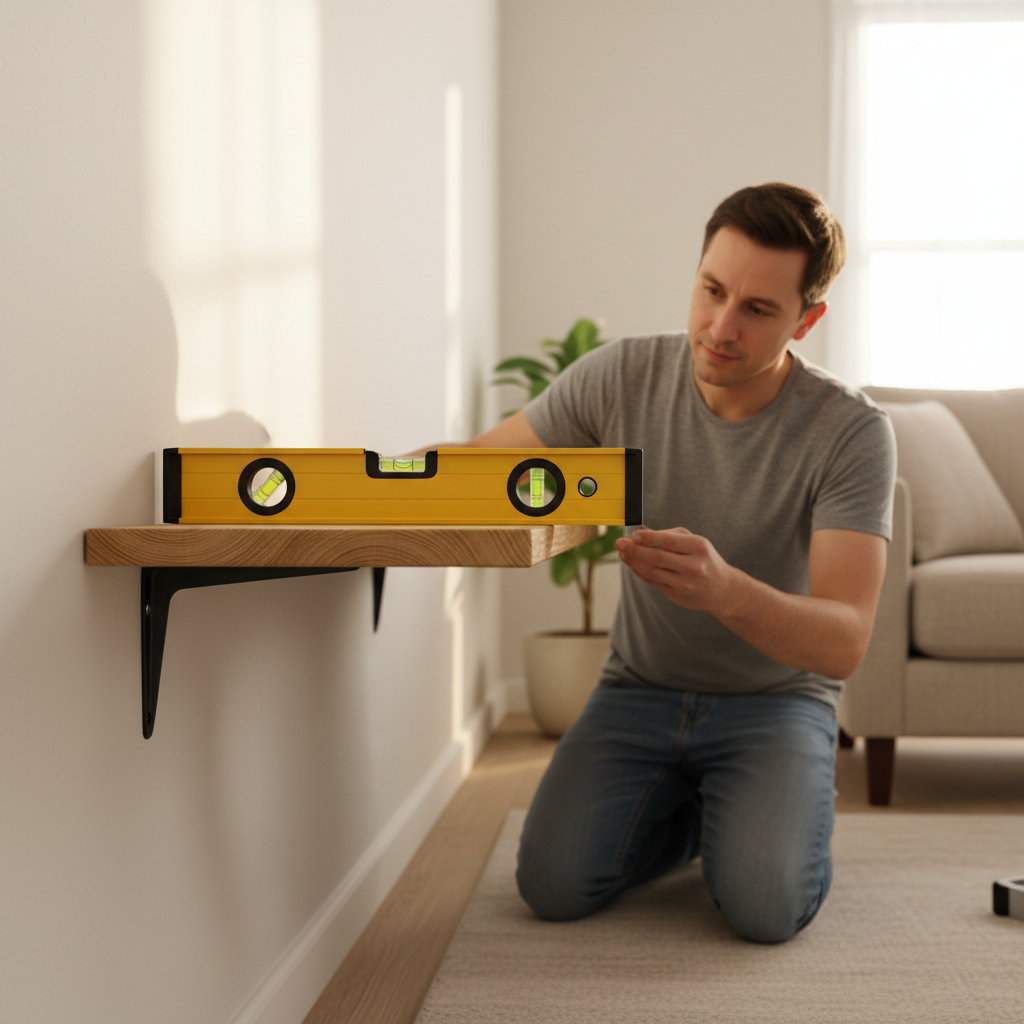
If you have no saw at all, that's actually a defined starting point too. Home Depot, Lowe's, and most local lumber yards will make straight crosscuts for you at the store, often for a dollar or two per cut. You design the project, pre-plan every cut, get the lumber cut at the store, and do all assembly at home. A small wall shelf built this way is a real and satisfying first project. This isn't cheating. It's a legitimate method that professionals use for prototyping.
What Your Clamps Tell You About Joint Options
Clamps are the underappreciated bottleneck of beginner woodworking. A project can look simple on paper and become impossible without adequate clamping during glue-up. Glue needs pressure held for a minimum of thirty minutes to an hour depending on the adhesive, and wood doesn't hold itself square while that happens.
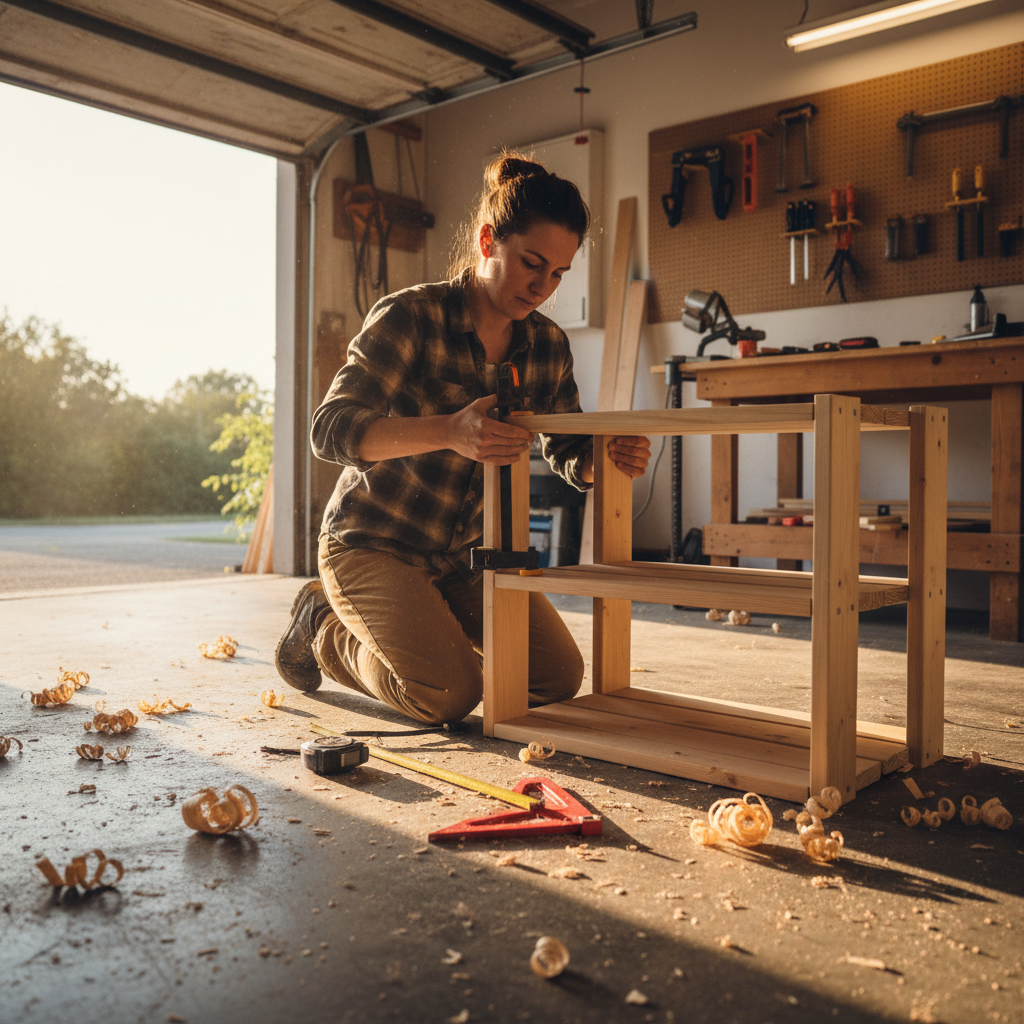
If you own two to four bar clamps or F-clamps, you can glue up a box or a small frame. That's a real capability. Use those clamps on a project that requires exactly one glue-up joint at a time: a picture frame, a small shelf with a back rail, a simple step stool. Don't attempt a project that requires simultaneous clamping of four or more joints, like a cabinet carcass. The timing kills beginners.
Pocket-hole joinery deserves a mention here because it's shifted what beginners can build without traditional clamp-heavy glue-ups. A Kreg jig (the R3 or the 320 are the common entry-level options) lets you drive angled screws through a pocket to pull boards together, and the joint is mechanically sound while the glue sets without external clamping. If you're willing to buy one inexpensive tool, a pocket-hole jig expands your project list substantially: shelving units, face frames, simple benches. That framing misses something, though. Pocket holes aren't invisible, and on furniture where the joint line shows, you'll want to either plug the holes or plan joinery placement carefully from the start.
No clamps at all? Butt joints driven with screws alone, or brad nails from a nail gun, are the honest answer. A simple wall-mounted coat rack with hooks screwed into a 1x4 back board, or a basic tool tote with a dowel handle, can be built with screws and no clamp. The structural integrity depends on screw placement and pilot holes to prevent splitting, not on glue pressure.
Ignore the temptation to start with a project that requires six clamps when you own two. Buy the project to the tool inventory you have now, not the one you plan to have eventually.
Matching Project Complexity to Your Measuring Setup
A tape measure and a speed square will get you through most beginner projects with one critical constraint: you need a way to verify that your assemblies are square. The classic method is measuring corner-to-corner diagonals. If both diagonals are equal, the assembly is square. If they're not, you push on the longer diagonal corner and recheck. This works reliably and costs nothing beyond your tape measure.
A speed square is also worth owning before your first project if you don't have one already. They run between $8 and $15 at any hardware store and let you mark consistent 90-degree cut lines on dimensional lumber. That's not an upgrade. That's table stakes for avoiding cut drift.
Where measuring setup matters most for project selection is in repetitive parts. A project with four identical legs, like a simple table or a bench, requires cutting four pieces to the same length with enough consistency that the finished piece sits level. With a miter saw this is straightforward. With a hand saw and a basic bench hook, it's achievable but slower. Without any consistent stop-block system, you'll end up with four slightly different lengths and a wobbly result. Beginners who don't own a stop block (or haven't clamped a scrap piece to their work surface to act as one) should avoid projects with four or more identical parts until they've practiced the technique.
Projects with zero identical repeated parts are the beginner's friend: a simple cutting board, a wall-mounted hook rack, a small shelf with a single shelf board and two side supports. Each piece is a different dimension, so the measuring challenge is manageable one cut at a time. Check sq footage, device count, and Thread support first works for WiFi purchasing decisions. For woodworking: check joint count, identical-part count, and required squareness precision first.
A Tool-to-Project Map for Common Beginner Setups
The table below maps four realistic tool inventories to projects that are achievable now, projects that require one additional tool, and projects to leave alone until your setup grows. Use it as a reality check against whatever plan you're considering.
This isn't an exhaustive list of beginner projects. It's a filter for what your current inventory can actually finish without a mid-project tool purchase derailing the build.
| Tool Inventory | Build Now | One Tool Away | Skip for Now |
|---|---|---|---|
| Hand saw, tape measure, 2 clamps | Small pine box, wall shelf (store-cut lumber), cutting board | Speed square unlocks frame projects | Furniture with legs, anything requiring repeated identical cuts |
| Circular saw, straightedge guide, drill | Plywood shelf unit, simple storage box, workbench top | Pocket-hole jig unlocks face frames | Curved cuts, narrow stock joinery, fine furniture |
| Miter saw, drill, 4 clamps | Step stool, plant stand, simple bench, coat rack | Router unlocks dadoes and rabbets for drawer boxes | Cabinet carcasses requiring sheet good rips |
| Hand tools only (no power tools) | Cutting board, small box with lid, wall hook rack | Battery drill unlocks screw joinery without pilot hole fatigue | Projects with more than 6 parts, sheet goods |
The pattern across all four rows is the same: your first project should require only the operations your saw and joining method can handle cleanly. The moment a plan introduces a new operation, the beginner's attention splits between learning the skill and finishing the object, and neither gets done well.
When This Approach Fails (and Who Should Ignore It)
Tool-to-project matching is the right framework for most beginners, but it has a failure mode worth naming. If you're the kind of learner who advances through discomfort rather than being stopped by it, buying a project slightly beyond your current tool inventory can be a legitimate growth strategy. You hit the wall, you figure it out, you come out the other side with a new technique. Some people are wired this way and tool-matching advice will bore them into quitting.
The bigger failure case is this: if you match your project perfectly to your tools, finish it, and never feel stretched, you may stall. The point of a first project isn't just to finish something. It's to build enough confidence to attempt a second, harder thing. A project that goes too smoothly can paradoxically reduce motivation by making the hobby feel too simple. That understates it. The optimal first project should have at least one moment where you're genuinely unsure how to proceed and you figure it out. That problem-solving moment is what makes woodworking stick as a practice, not the finished object on the shelf.
This guide also won't help you if you're planning to sell what you build, or if you're building something structural like a load-bearing shelf system or outdoor furniture that will be exposed to weather. Those projects have material and joinery requirements driven by structural loads and moisture exposure, not just tool availability, and that's a different conversation entirely.
How to Pick Yours: The Short Version
I'd start with a wall-mounted shelf if you own a circular saw, or a small pine box if you're working with hand tools. Both projects give you a complete build cycle: measure, cut, join, square, finish. That cycle is the actual skill you're developing. The object is incidental.
Before you pick anything, run through this: What's my saw type? How many clamps do I own? Does the plan require any repeated identical parts? If the plan requires an operation your saw can't produce or a joint that needs more clamps than you have, find a different plan. Don't modify a complex plan to fit your tools. Find a simpler plan.
If you skip this matching step and pick based on how the finished project looks in a photo, you will spend money on materials, hit a wall at step four, and stop. Not because woodworking is hard, but because the wrong first project teaches you that woodworking is frustrating. It isn't. The wrong project matching is frustrating.
Pick something you can finish in one weekend with what you own. Finish it. Then upgrade one tool and pick the next thing.