
Any woodworker will tell you that small box projects reveal every skill gap you have, and there's a reason they assign them first. A desk organizer with compartments looks simple, but it asks you to get four things right simultaneously: square cuts, consistent dimensions, a joint that won't rack over time, and a finish that handles daily contact without flaking. Miss one, and the whole piece wobbles or gaps.
This guide is for someone building their first or second project who has access to basic hand tools or a beginner power-tool setup. It won't cover routing decorative edges or building a drawer-slide system, and it's not for anyone expecting furniture-grade joinery on the first try. The goal is a functional, sturdy organizer you'll actually keep on your desk, built from lumber you can find at any Home Depot or Lowe's for under $30.
Here's the tension nobody mentions: the compartment layout that looks best in your head is almost never the one that's easiest to build accurately. Getting those two things to agree is the real problem this project asks you to solve.
Choosing Your Wood and Buying It Right
Start with poplar or select pine. Both are widely available at big-box stores in the US, take screws without splitting when you pre-drill, sand cleanly, and accept paint or stain evenly. Poplar runs slightly harder and stays flatter, which matters for thin divider pieces. Select pine is cheaper and works fine if you pick boards that are straight and knot-free at the store.
Don't buy common pine (the rough, knotty boards in the cheaper bin). Knots cause two problems: the wood around them is unpredictably hard, and they bleed resin through paint for years. That's a pain to deal with on a first project.
For a standard desktop organizer with three to five compartments, you'll need roughly 6 to 8 linear feet of 1×4 or 1×6 nominal board, which actually measures ¾ inch thick. That thickness matters because your joinery math depends on it. Buy one extra foot as a test piece; you'll want to practice your cuts before touching the good stock. Total material cost typically lands between $18 and $28 depending on species and store location.
Or rather: don't just buy by species. Buy by board. Sight down each board from one end before you take it home. Any visible bow, cup, or twist will transfer directly into a lopsided box, and no amount of clamping fixes it later.
Planning Your Compartment Layout Before You Cut Anything
Sketch your layout on paper first, in actual dimensions. A common beginner mistake is designing compartments that feel right visually but produce divider pieces so narrow they split when you screw into them. As a practical guideline, keep interior compartment widths at 2 inches or wider, and keep any divider piece at least ¾ inch wide, which is exactly one board thickness.
A simple three-compartment organizer might use these dimensions: 12 inches wide overall, 6 inches deep, 4 inches tall, with two interior dividers creating three sections. Write those numbers down, then calculate your cut list. You need: two side pieces (6 inches × 4 inches), one back piece (12 inches × 4 inches), one base (12 inches × 6 inches), and two dividers (the depth minus the base thickness, so roughly 5¼ inches × 4 inches). That's seven pieces total from one or two boards.
The better question is whether your layout serves how you actually work. Before locking in dimensions, put a ruler on your desk and mark out where your pens, phone, and notebooks actually sit. Build compartments around real objects, not around what looks balanced on paper. A 1.5-inch-wide slot fits most pens. A 3-inch slot holds a standard notepad upright. A 4-inch open bay handles a phone lying flat.
Write the cut list on painter's tape stuck to your workbench. Cross each piece off as you cut it. This sounds unnecessary until the third time you cut the wrong length because you were working from memory.
Cutting and Joining: Where Beginners Lose Accuracy
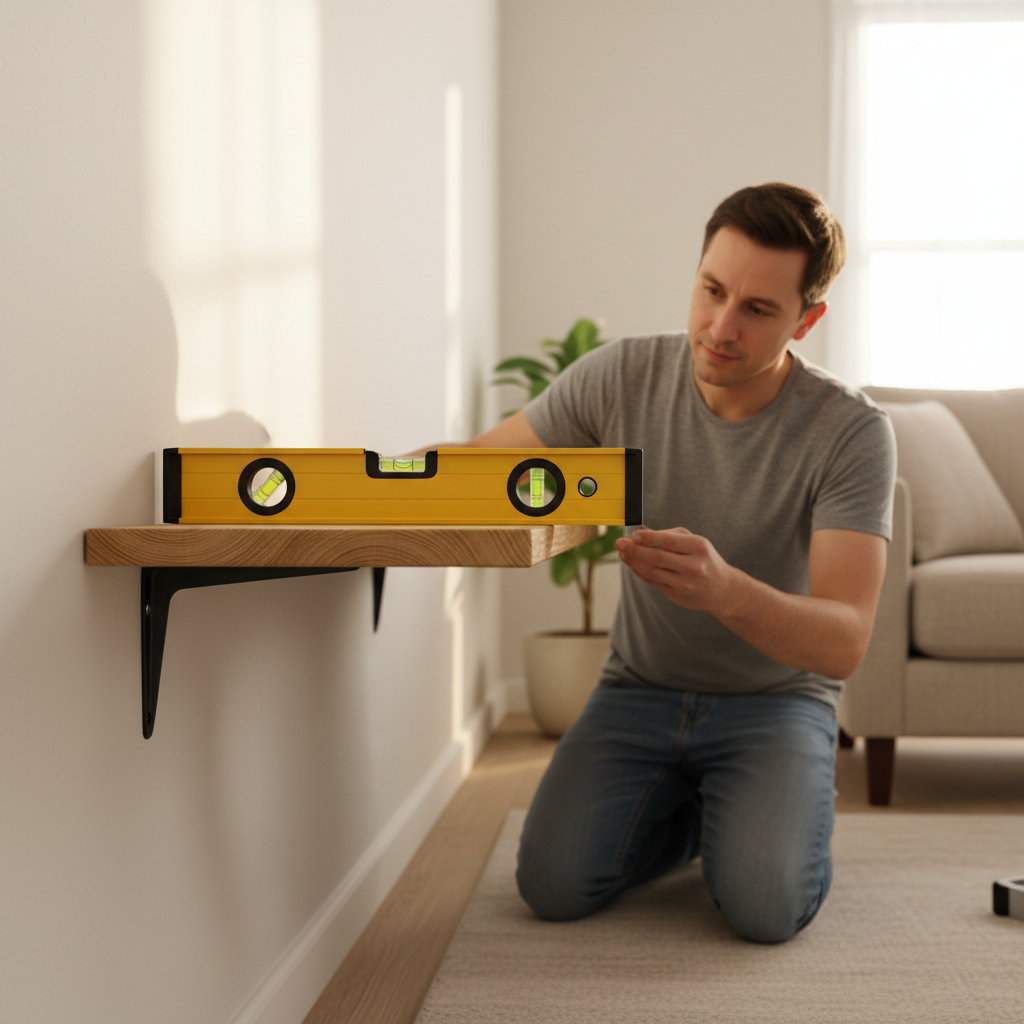
Square cuts are everything in box construction. If your ends aren't 90 degrees, gaps open at every corner joint and no amount of wood filler makes them look intentional. Use a speed square to mark your cut lines, and if you're using a hand saw, clamp a guide block alongside the line. A miter box (the simple plastic kind costs around $12) is worth every cent on this project.
For joinery, butt joints with screws are the right call for a beginner organizer. They're fast, strong enough for desktop use, and require no special tools. Pre-drill every hole with a bit slightly smaller than your screw diameter, countersink so the head sits flush, and use 1¼-inch coarse-thread screws into the end grain. Add a thin bead of wood glue at each joint before driving the screws. The glue does most of the long-term work; the screws hold everything while it cures.
Pocket-hole joinery (using a Kreg Jig or similar) is a reasonable upgrade if you already own the tool. It hides the fasteners and pulls joints tight cleanly. But buying a pocket-hole jig specifically for this project is harder to justify: the $40 entry-level version is fine, but it adds a learning curve that can derail a first build. Butt joints done carefully are not inferior for this application.
Assemble the base and two sides first, check for square with a framing square before the glue sets, then add the back piece. Install dividers last. Clamp everything while drying; even inexpensive bar clamps from Harbor Freight hold adequate pressure for this scale of work.
Sanding, Finishing, and What Actually Makes It Look Good
Sand in sequence: 80 grit to remove mill marks and tool scratches, 120 grit to smooth, 180 grit to finish. Don't skip grits. Jumping from 80 to 180 leaves 80-grit scratches that only show up after you apply finish, when it's too late to fix them cleanly.
Always sand with the grain. Cross-grain scratches catch light and look terrible under any finish, especially stain. On end grain (the cut ends of your boards), apply an extra pass at the final grit; end grain absorbs finish faster and looks blotchy if left rough.
For finish, two options work well for a beginner desk organizer. A water-based polyurethane (Minwax Polycrylic is a common choice) goes on clear, dries fast, cleans up with water, and handles daily wear without yellowing. Apply two thin coats with a foam brush, light-sand with 220 grit between coats. If you want color, a spray paint rated for wood gives the most even results on a small project with interior compartments where a brush can't reach cleanly. Rust-Oleum 2X Ultra Cover is a reliable option available at most hardware stores.
I'd start with paint rather than stain on a first build. Stain reveals every grain inconsistency and glue smear in a way paint doesn't, and dealing with blotchy stain on a first project is discouraging when the issue is the finish, not the woodworking.
One thing buyers of pre-finished kits miss: the inside corners of compartments collect finish drips. Brush those areas first, then work outward. Let the first coat dry fully before adding the second, even if the can says 30 minutes; in humid conditions, that timeframe extends significantly.
When This Project Gets Harder Than Expected
This project gets genuinely difficult in two situations. First: if you're working with only a hand saw and no guide block or miter box, hitting consistent 90-degree cuts across seven pieces is hard. Inconsistent angles compound at every joint, and by the time you reach the dividers, gaps can be significant. If your cuts are running off-square by even 2 or 3 degrees, stop and fix the cutting setup before continuing, not after assembly.
Second: very narrow compartments (under 1.5 inches wide) require thin divider pieces that are prone to splitting when screwed through the sides. If your design calls for a pen slot that narrow, consider cutting a groove (a dado) in the base piece and dropping the divider into it without fasteners, secured only with glue. That technique requires a router or a dado stack on a table saw, which pushes beyond a true beginner setup. The simpler fix is to widen the compartment.
If you skip the pre-drilling step and drive screws directly into end grain on poplar or pine, you will split the board. That's not a maybe. End grain along ¾-inch stock gives almost no holding power for screws without a pilot hole, and the crack usually opens mid-assembly when clamping pressure is highest. Pre-drilling takes two minutes and prevents a ruined piece.
Putting It Together: The Build Sequence That Saves Rework
Follow this order and you'll avoid the most common assembly mistakes: cut and label all pieces before gluing anything, dry-fit the entire box without glue to confirm everything squares up, then glue and fasten in stages.
Stage one: attach the two side pieces to the base. Stage two: add the back piece, checking for square at all four corners. Stage three: let the assembly cure for at least an hour before installing dividers. Installing dividers into a not-yet-rigid box introduces twist that locks in permanently once the glue sets.
Check square at every stage with a framing square. A box that's out of square by 1/16 inch at the base will be noticeably skewed by the time you add a 4-inch-tall back piece. Square early; it's nearly impossible to correct late.
Clamp lightly. Over-clamping squeezes glue out of joints faster than it can set, which creates a starved joint with almost no adhesion. A thin, consistent glue line that stays in the joint is stronger than a heavy application that gets squeezed to the floor.
Build It Once, Build It Right
Build the cut list before you buy the lumber. Dimensions on paper reveal problems that only become expensive once wood is involved. A three-compartment organizer built from select pine, assembled with butt joints and glue, pre-drilled and finished with two coats of water-based polyurethane, will sit on your desk for years without loosening or warping, provided the wood was flat when you bought it.
If your first attempt has gaps at the joints or a slight twist in the base, that's normal and fixable with wood filler before finishing. What you'll have learned about square cuts, glue timing, and assembly sequence is worth more than a perfect first result. The second one will be noticeably better.
Don't leave the project unfinished. Bare wood on a desk absorbs spills, oils from your hands, and pen marks within days. Two coats of finish take less than an afternoon and protect the piece for years. That step is what separates a project you're proud of from one you eventually throw away.