Carpenters will tell you to locate your studs before you buy a single piece of wood, and there's a reason for that. A coat rack that isn't anchored into wall studs won't hold a loaded winter coat for long, and a failure at head height is genuinely dangerous. Building a wall-mounted coat rack is one of the most satisfying beginner projects you can take on, but the difference between one that lasts a decade and one that pulls out of the wall after a month comes down to a few decisions most first-timers get wrong.
The core variables are board thickness, hook spacing, and fastener choice. None of those terms is complicated, but each one has a threshold that matters. A 1×6 common board feels sturdy in the store and looks right on the wall, yet it flexes noticeably under load unless you keep hooks to three or fewer on a short span. Sixteen-inch stud spacing in standard US framing means your mounting holes may or may not line up with where you want the rack to sit.
Here's the tension that catches beginners off guard: the spot on the wall that looks best for a coat rack is rarely the spot that makes structural sense. Centering a rack on a blank wall almost guarantees at least one lag screw misses every stud. That gap between visual logic and structural logic is where the project either succeeds or fails, and it doesn't get resolved until you have a stud finder in your hand and marks on the wall.
What You Need Before You Cut Anything
This article is for beginners building a straightforward wall-mounted rack with individual hooks, not a mudroom bench system or a built-in cubby. If you're planning hooks on a floating shelf with a shoe tray underneath, the fastening principles still apply, but the sizing math is different.
The materials list is short. You need a board (more on sizing below), coat hooks, lag screws or structural screws rated for the load, wall anchors as a backup only, sandpaper in 80- and 120-grit, and your finish of choice. For tools: a stud finder, a drill with a Phillips bit and a drill bit slightly smaller than your screw diameter, a level, a tape measure, a pencil, and a miter saw or a circular saw if you're cutting the board yourself. A pocket-hole jig is not required for this project.
Buy your hooks before you finalize board length. Hook spacing drives board length, not the other way around. I'd start with the hooks and work backward to the wood.
Choosing Your Board and Hooks
A 1×6 board at nominal dimensions is actually three-quarters of an inch thick and five and a half inches wide. That's the real dimension you're working with, and it matters when you're sizing the board for hook placement. For a beginner rack holding four to six hooks, a length between 36 and 48 inches is manageable both in the store and on the wall.
Poplar and pine are the two most practical choices at US lumber yards for a painted finish. Pine is cheaper and widely available, but it dents easily. Poplar takes paint better and mills cleaner, which you'll notice when you sand it. For a stained natural look, oak gives a sharper grain but costs more and requires sharper bits to drill without tearout. Pick your finish before you pick your wood.
Hook selection matters more than most beginner guides admit. Cast-iron hooks with a screw-mount backing plate distribute load across two or three screws per hook, which is structurally sounder than single-screw decorative hooks. Coat hooks rated for 25 to 30 pounds per hook are standard in US hardware stores; anything labeled purely decorative or picture-hook style won't hold a wet parka. Check the weight rating on the package.
Or rather: the weight rating on the hook matters less than the fastener going into the board. A 30-pound-rated hook fastened with a single short wood screw into the face of a thin board can pull free well below its rating. Pre-drill all hook holes to avoid splitting, and use screws long enough to pass through the board face and bite at least three-quarters of an inch into the wood behind.
Cutting, Sanding, and Finishing the Board
Cut your board to final length before any drilling. Sand in order: 80-grit to remove mill marks and rough edges, then 120-grit to smooth. Always sand with the grain. End grain drinks stain and sealer differently from face grain, so seal end grain separately if you want an even color.
If you're painting, one coat of shellac-based primer followed by two coats of latex paint in eggshell or satin will outlast flat paint in a high-touch area like an entryway. If you're staining, apply a pre-stain wood conditioner on pine; without it, pine blotches badly. Wipe-on polyurethane in two coats gives a durable clear finish without the brush marks that oil-based poly leaves for beginners.
Let the board cure fully before mounting. Water-based finishes feel dry in two hours but need 24 hours before you put stress on them. Oil-based finishes need longer, sometimes 48 to 72 hours depending on humidity. Rushing this step means your finish scuffs against the wall during installation and you'll see it every time you hang your coat.
Mark your hook positions on the board before mounting, not after. Use a tape measure to space hooks evenly, and pre-drill through the board face for each hook screw. Countersinking the mounting screws that go into the wall is optional but keeps the board sitting flush.
Mounting the Rack Safely
Standard US residential framing puts studs 16 inches on center, which gives you predictable targets once you find the first one. Run your stud finder slowly across the wall at the height you want the rack, mark both edges of each stud, and use the center point between the two marks as your drill target. A magnetic stud finder is less accurate than an electronic one on walls with thicker drywall, so if you're working in a home built before 1980, the electronic version is worth the extra few dollars.
You want your lag screws or structural screws into at least two studs. For a 36- to 48-inch rack, that's achievable with 16-inch stud spacing. If your rack length doesn't span two studs cleanly, you have two options: adjust the board length so it does, or use toggle bolts rated for drywall in the non-stud locations alongside at least one stud anchor. Toggle bolts can hold real weight in drywall, but they work differently from stud screws: the load spreads across a wider area of the drywall panel rather than transferring into framing. That's acceptable for a lightweight rack, but if you're hanging heavy coats, bags, and backpacks daily, two stud anchors is the right call.
What happens if you skip the stud-finding step entirely and rely on drywall anchors alone? The rack will likely hold for a while under light use, then fail suddenly when load peaks, typically during a rushed morning when someone grabs a coat hard. The anchor pulls through the drywall face, the board swings down, and you're patching a hole. Not a safety crisis for a low rack, but a waste of an afternoon and a frustrating repair.
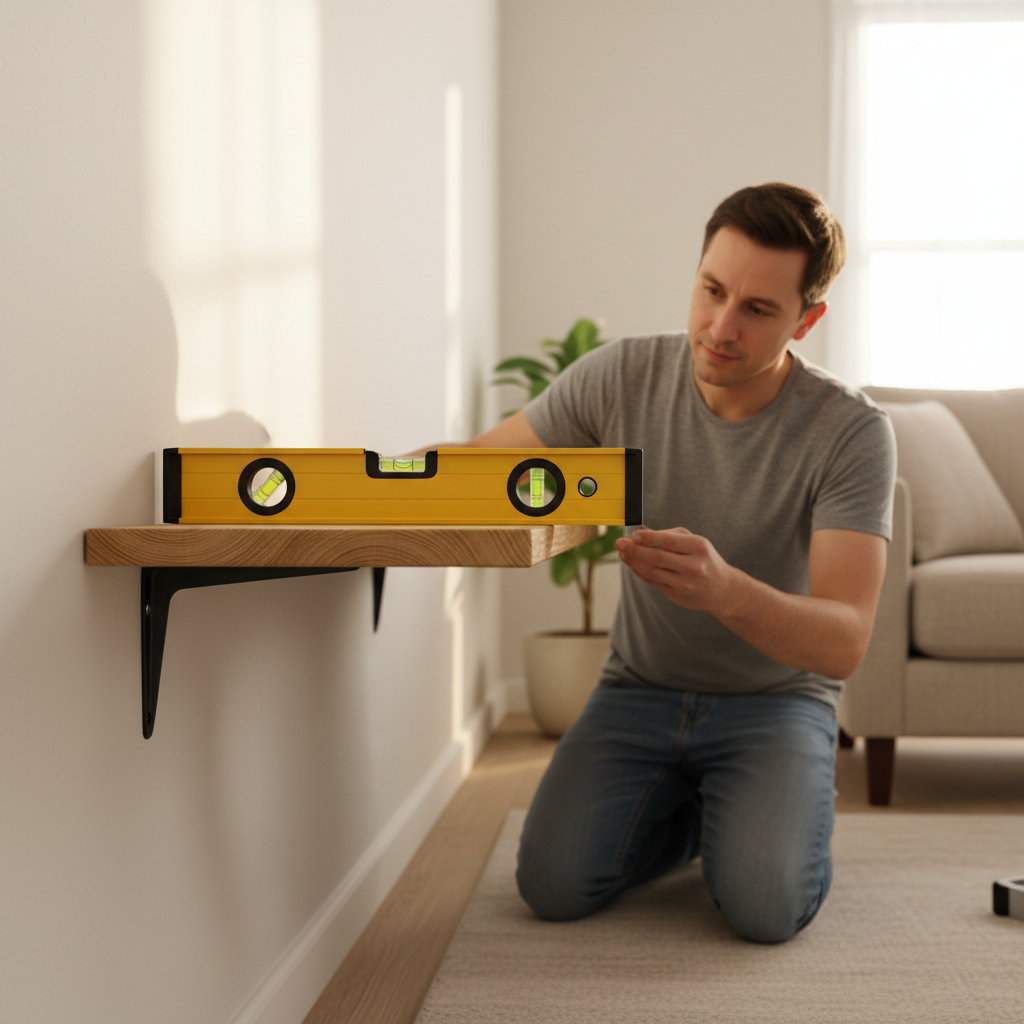
Hold the board against the wall at your chosen height and have someone hold a level on top while you mark the stud locations through the board onto the wall. Drill pilot holes through the board at those marks, hold it up again to confirm alignment, then drive your screws. Don't overtighten; snug is enough, and overtightening can strip the pilot hole or crack a thin board.
Attaching the Hooks and Final Check
Attach hooks after the board is mounted. It's tempting to install them on the workbench, but mounting a board with hooks already attached is awkward and risks scratching the wall. Screw each hook in by hand first to confirm the thread catches cleanly, then tighten with a screwdriver. Cast-iron hooks with backing plates get all screws driven before you torque any of them down; this keeps the plate seated flat.
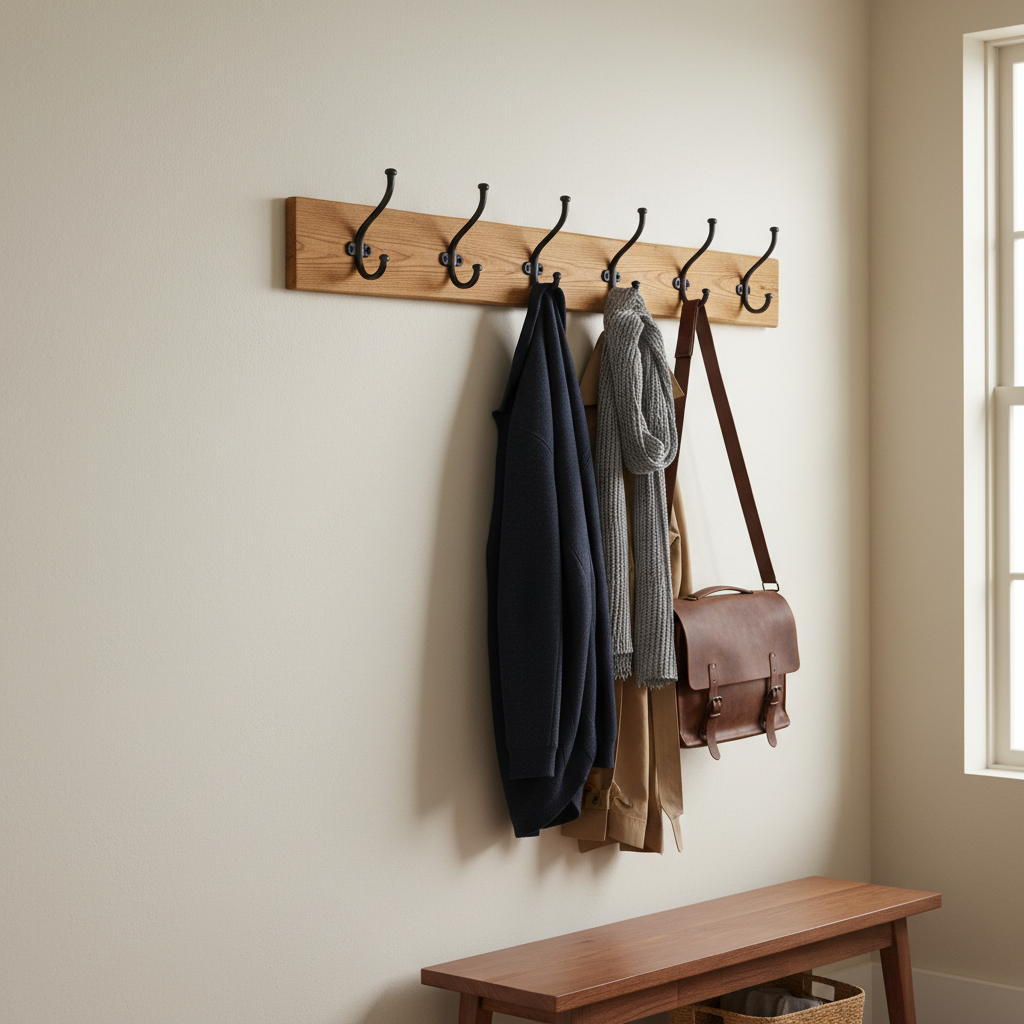
Space hooks at least 6 inches apart for functional use. Closer than that and full-size coats will overlap and bunch. Eight inches gives coats room to hang without touching, which matters more in a small entryway than it sounds. Five hooks on a 48-inch board at 8-inch spacing (with 4 inches of margin at each end) is a clean layout that uses the board well.
But consider this before you settle on hook count: a rack with fewer hooks used consistently beats a rack overloaded until a screw strips. Four hooks actually used beats six hooks where two are always buried under a pile. Build for how you'll actually use it, not maximum capacity.
Give the finished rack a load test before you trust it. Hang 20 to 25 pounds from the center hook, leave it for a few minutes, and check whether the board has moved or the screws have shifted. If everything is solid, you're done. If the board has flexed visibly, your mounting points need reinforcement.