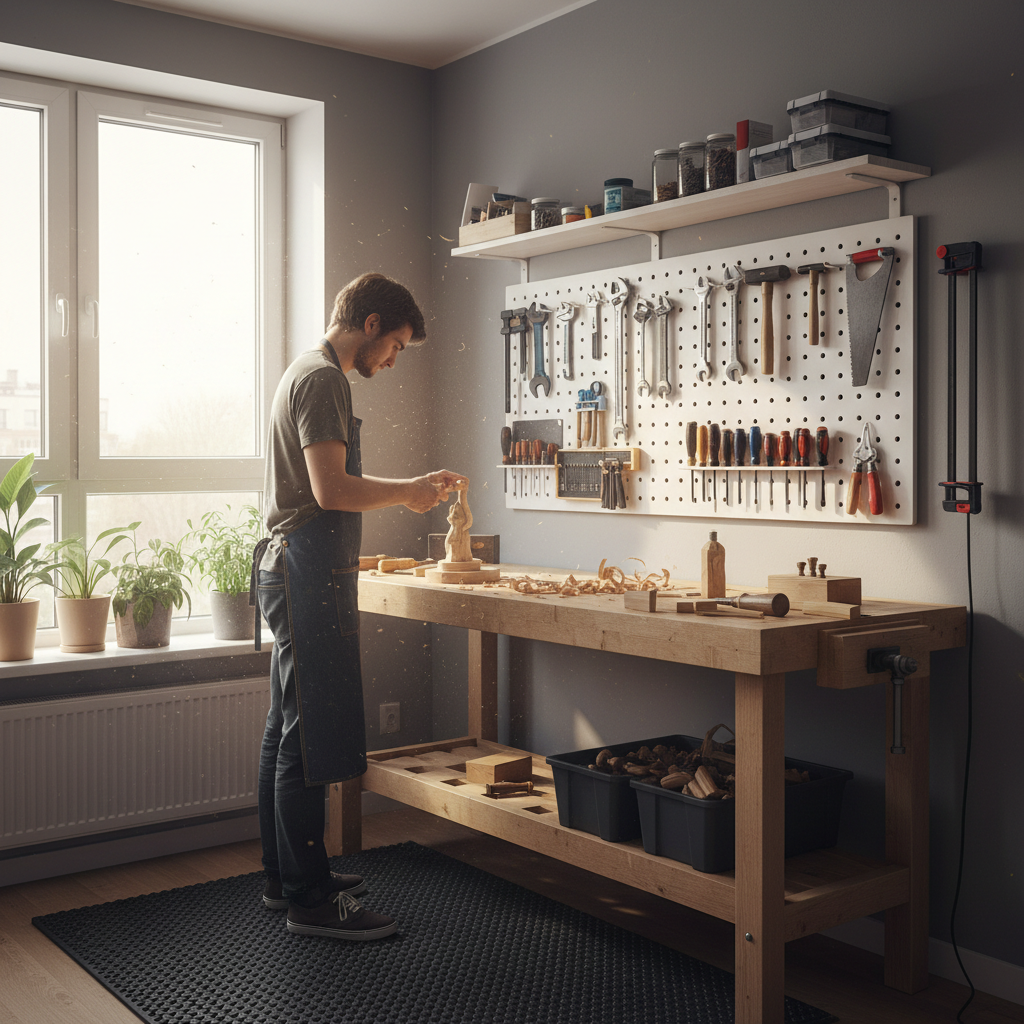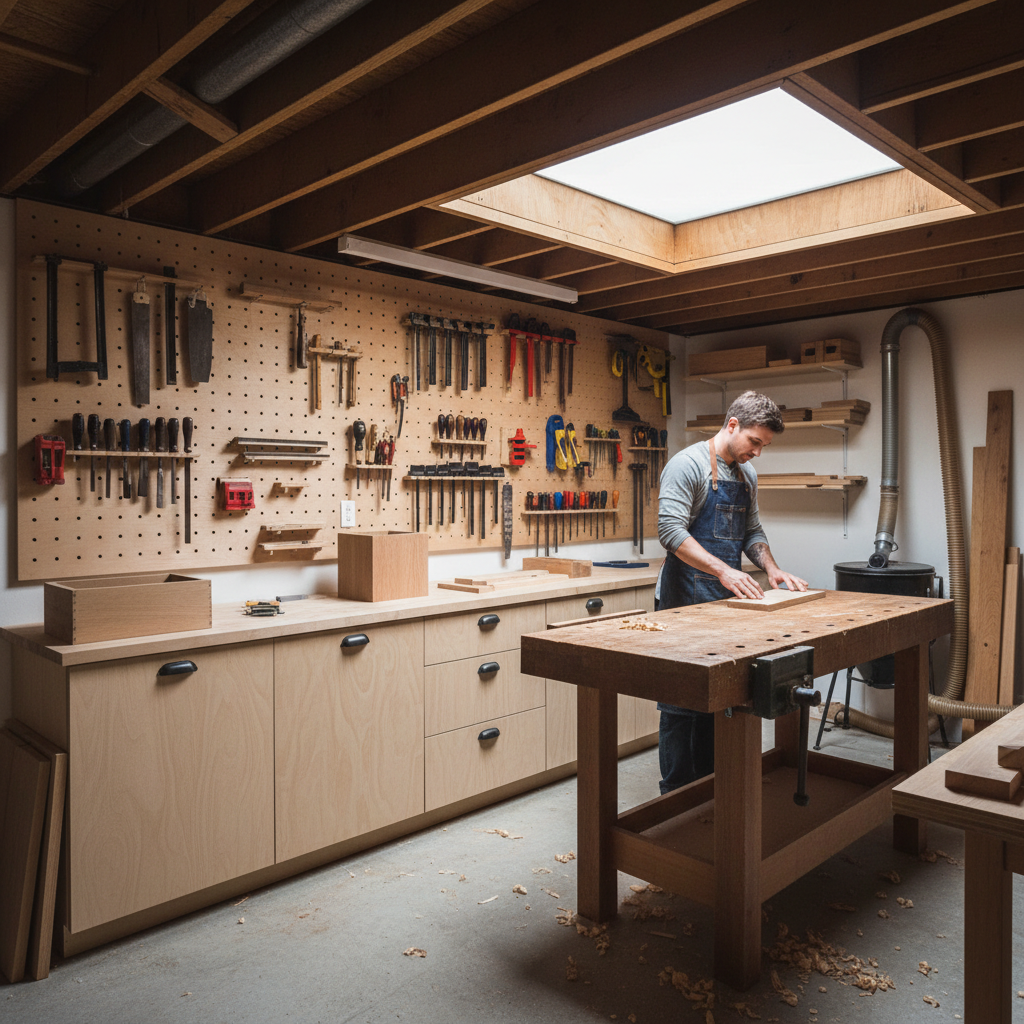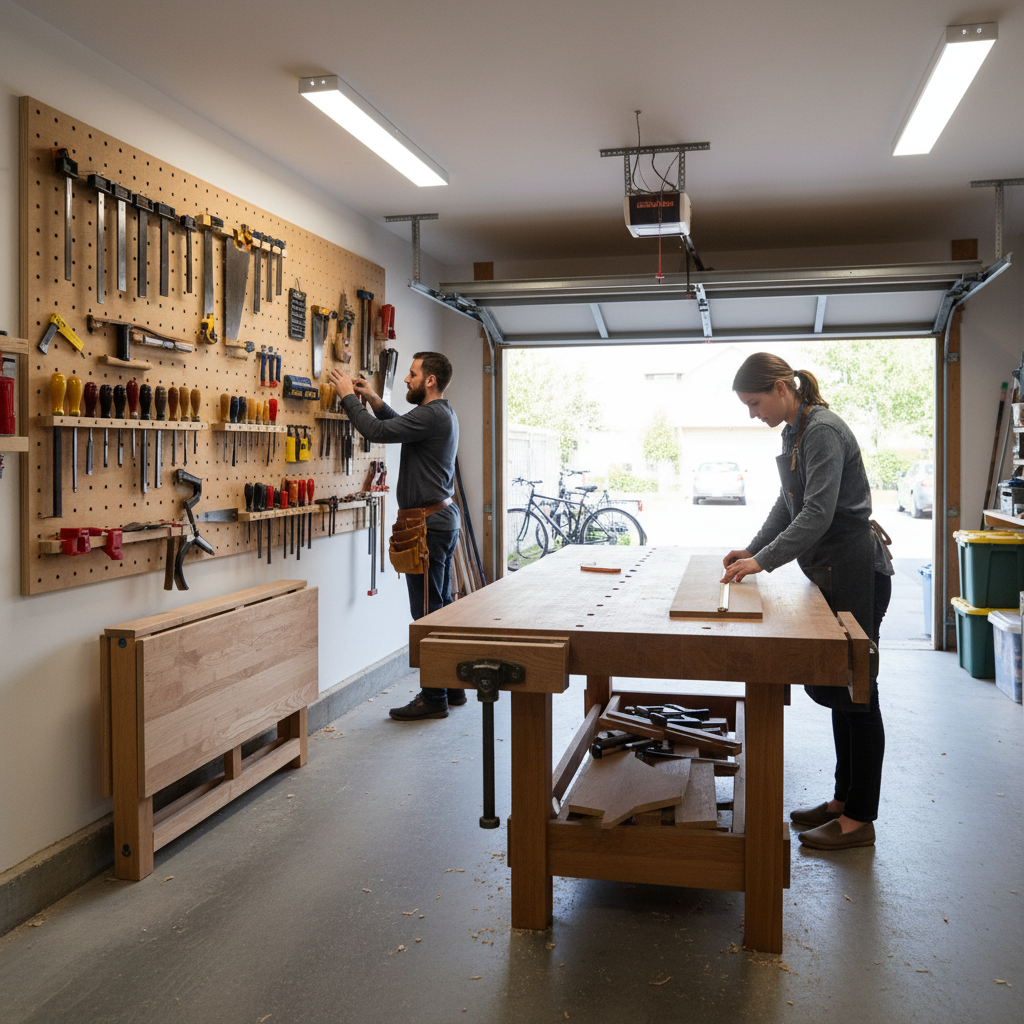
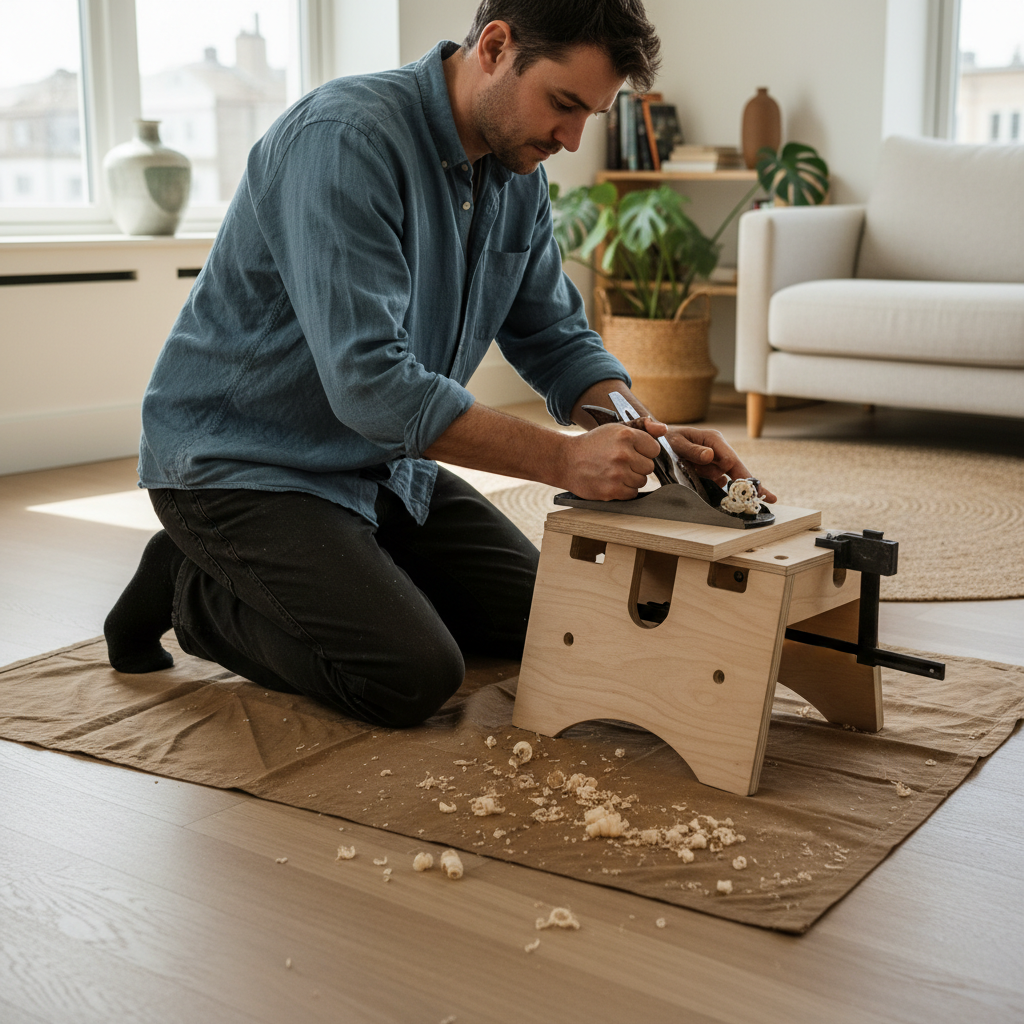
Carpenters who work in tight urban spaces will tell you dust management is the first conversation, not tool selection, and there's a reason for that. Woodworking in an apartment is genuinely possible, but the constraints aren't just about square footage. Noise ordinances, lease clauses, shared walls, and building HVAC systems all shape what you can realistically do, and ignoring any one of them turns a hobby into a landlord dispute or a health problem.
The variables that matter most aren't the ones most guides lead with. It's not whether you have a balcony or a second bedroom. It's whether your building has concrete-slab floors (which absorb vibration differently than wood-frame construction), how your lease defines "alterations" versus normal use, and whether your sawdust has anywhere to go that isn't your neighbor's air supply.
Here's the tension nobody resolves cleanly: the tools that make apartment woodworking practical enough to sustain produce finished work that looks noticeably different from shop-built pieces. That gap closes with skill, but it doesn't disappear. Understanding exactly where it closes, and where it doesn't, is what this article is actually about.
Why Most Apartment Woodworking Advice Fails Before You Buy a Single Tool
The standard recommendation is to switch entirely to hand tools. Quieter, no dust collection required, no electrical load. That advice isn't wrong, but it understates the adjustment. Hand-tool woodworking at a competent level requires sharp edges, which requires sharpening equipment, which requires flat reference surfaces, which requires space you may not have. The tool list expands fast.
Or rather: the real issue isn't power versus hand tools. It's the workflow assumption baked into most beginner projects. Those projects assume you'll dimension lumber yourself, which is the noisy, dusty part. If you buy dimensioned, surfaced lumber from a hardwood dealer or a big-box store and skip the rough milling entirely, you've eliminated the table saw, jointer, and planer from your process without giving up the finished result. That's the reframe most apartment woodworkers miss.
Buy S4S (surfaced four sides) lumber or pre-dimensioned hardwood, and your apartment shop suddenly needs only the tools that cut to length, join, and finish. The noise and dust load drops dramatically. A miter saw makes more noise than you'd want in a shared building, but a Japanese pull saw and a shooting board produce the same crosscut with zero decibels above conversation level.
The buyers who struggle aren't the ones who committed to hand tools or committed to power tools. They're the ones who tried to replicate a garage shop at one-fifth the scale. That never works.
The Tools That Actually Fit the Constraint
A workable apartment kit has a short list. For cutting: a quality Japanese saw (the Suizan or Gyokucho double-cut saws are widely available and cost under $40) handles crosscuts and rips cleanly with no motor noise. For joinery: a set of bench chisels, a low-angle block plane, and a combination square give you the fitting capability that matters most. For drilling: a cordless drill runs quieter than most people expect and generates no airborne dust.
What's missing from that list is a workbench, which is actually the harder problem. A proper bench requires either significant floor space or wall-mount hardware your lease may prohibit. The practical workaround most apartment woodworkers land on is a portable assembly table, the Festool MFT-style or a knockoff like the Bora Centipede, combined with clamps that reference off the grid surface. Not ideal. Good enough to produce real furniture.
Power tools aren't banned outright. A random orbital sander (the finishing kind, not an aggressive stock-remover) runs around 85 dB, which is roughly conversation-in-a-restaurant level. A compact router used briefly for edge profiles is manageable if you're not doing it at 10 PM. The Dremel Trio and similar compact rotary tools work for smaller detail work. The honest filter: if the tool requires dust collection to be safe to operate indoors, it doesn't belong in an apartment shop without a serious portable dust extractor connected to it at all times.
A common guideline among apartment woodworkers is the "30-minute rule": don't run any power tool continuously for more than 30 minutes in a session, and don't do power work more than three days a week. That's not an official standard. It's a practical heuristic for staying on good terms with neighbors.
Dust and Air Quality: The Constraint Most People Underestimate
Fine wood dust is a genuine respiratory hazard. The U.S. Occupational Safety and Health Administration (OSHA) sets permissible exposure limits for wood dust, and while those limits apply to occupational settings, the underlying biology doesn't change because you're a hobbyist. Hardwood dusts, particularly oak, walnut, and cherry, contain compounds that are sensitizers, meaning repeated low-level exposure can trigger allergic responses that worsen over time, not improve.
In an apartment, the problem compounds. You can't open a wall-mounted window fan and exhaust to the outside the way a garage shop can. Building HVAC systems recirculate air, which means fine particles you generate in your unit can end up in shared ductwork. This isn't theoretical. It's the kind of complaint that ends leases.
The practical answer is a two-layer approach. First, a HEPA-rated shop vacuum connected directly to any power tool that produces chips or dust, before you turn the tool on. Second, a standalone air purifier with a true HEPA filter running during and for at least an hour after any sanding session. The Levoit Core 300 and similar compact HEPA units in the $80-$120 range handle a room up to about 200 square feet effectively. That's not a product endorsement; it's a size-class reference.
If you skip dust management and just open a window, you're not solving the problem. You're redistributing it, and you're still inhaling whatever stays airborne in your breathing zone during the work itself. Wear a respirator rated at least N95 for sanding. A dust mask is not a respirator.
Projects That Make Sense (and the Ones That Don't)
The projects that work best in apartment shops share a common trait: they use pre-dimensioned lumber and require no more than three or four distinct operations. Small wall shelves, simple stools, picture frames, small boxes, and wall-hung cabinets with no face-frame joinery all fit this profile. You're cutting to length, drilling pocket holes or cutting mortises, gluing, clamping, and finishing. The workflow is linear and each step is short.
Dining tables and bed frames are technically possible but practically difficult. Not because the joinery is too complex, but because you'll spend more time wrestling 8-foot boards through a 900-square-foot apartment than actually building. The logistics degrade the experience until most people quit. If you want to build furniture at that scale, a makerspace membership is a better answer. Many US cities have community woodworking shops, TechShop-successors, or makerspaces with full shop access for $50-$150 a month. That's not a failure to commit to apartment woodworking. It's knowing which tool belongs in which context.
What you can't build well in an apartment: anything requiring a flat reference surface larger than 24 inches (because you can't true a surface that large with hand tools in a confined space without a dedicated bench), anything with more than four glue-up stages (because you need staging area for drying assemblies), and anything that requires a router table. The router table exclusion is firm. Freehand routing with a trim router is manageable; a table-mounted setup in a small space is a dust and noise problem with no clean solution.
The buyers who thrive in apartment woodworking narrow the project scope aggressively, then go deep on execution quality. One very well-made small shelf beats three mediocre ones for skill-building and satisfaction.
Leases, Neighbors, and the Rules You Actually Need to Know
Your lease almost certainly contains a clause about not disturbing other tenants and another about not making alterations to the unit. Woodworking doesn't automatically trigger either, but it can. The alterations clause matters if you want to mount a French cleat wall system or install any kind of wall-hung workbench. Driving screws into drywall for a removable mount is generally considered normal use in most standard leases, but check yours. Some buildings, particularly co-ops and newer luxury buildings, have more restrictive language.
Noise is the higher-stakes issue. Many US municipalities have ordinances restricting construction noise to daytime hours, typically 7 AM to 10 PM on weekdays and 8 AM to 6 PM or similar on weekends, though these vary by city. Those ordinances were written for contractors, not hobbyists, but the sound level is what the neighbor hears, not your intent. A belt sander at 9:45 PM is a neighbor complaint regardless of what the ordinance technically covers.
The practical approach: tell your immediate neighbors you do woodworking, keep it to weekend afternoons, and restrict power tool use to the quieter end of the tool spectrum. That conversation, done once, eliminates most of the friction. Neighbors who feel considered are far less likely to complain than neighbors who are surprised by noise.
One condition where apartment woodworking genuinely doesn't work: buildings with thin drywall-only party walls and noise-sensitive neighbors on shared walls. In that situation, even hand-tool work, specifically mallet-and-chisel joinery and hand-plane work, transmits structurally. You'd need to limit yourself entirely to sawing and assembly, which may not be satisfying enough to sustain the hobby. Know your building before you invest in tools.
Making It Work Long-Term
Start with check what you've actually got: confirmed lease language on alterations, your building's floor construction type, and neighbor proximity on at least two sides. Those three inputs tell you more about your realistic shop capability than any tool recommendation.
If the lease is permissive and you have concrete-slab floors, you can sustain a hand-tool shop with occasional power sanding indefinitely. Build a portable bench setup first, before buying anything else. Without a stable work-holding solution, every subsequent tool purchase underperforms.
If the lease is restrictive or the building is wood-frame with shared walls, be honest about what that means. A hand-tool-only practice with bought-dimensioned lumber is still real woodworking. It produced most of the furniture made in the United States before the 20th century. The constraint sharpens your cutting and fitting skills faster than a shop full of machines would.
I'd start with a quality pull saw, two chisels, a block plane, and a combination square. That kit costs under $150, fits in a drawer, and lets you build anything in the apartment-appropriate project range. Add the HEPA air purifier before you add any power tool. The dust problem gets ahead of you faster than the noise problem does, and it's harder to fix retroactively.
What happens if you skip the dust and noise homework and just start building? You'll get one or two projects in before something breaks down, a neighbor complaint, a landlord notice, or a respiratory irritation that makes every session unpleasant. The hobby dies not from lack of skill or interest but from an infrastructure problem you could have solved in an afternoon. Don't let that be the reason.