Apartment leases have ended careers in woodworking before the first board was cut. A random orbital sander runs somewhere around 85 decibels, which puts it in the same range as a lawnmower, and your neighbor's bedroom wall is probably two inches of drywall away from your workbench. If you've been holding off on a project because you're not sure what your building actually tolerates, that hesitation is well-founded.
The quietest woodworking tools for apartment use fall into two categories: hand tools that produce almost no mechanical noise, and a smaller subset of power tools engineered specifically for low-emission operation. The line between them isn't always obvious from spec sheets, because manufacturers measure dB at one meter in anechoic conditions, not in a reverberant room with hard floors.
Three variables actually determine whether you stay under your building's threshold: the tool's bare dB rating, the acoustic character of the noise it produces (impact noise travels through structure differently than airborne sound), and the hours you're running it. Here's the tension that most tool guides skip: the hand tools that keep you quietest often demand technique you may not have yet, while the quiet power tools that lower the learning curve cost significantly more than their loud counterparts. Getting that trade-off wrong in either direction wastes money or goodwill with your landlord.
Why Decibels Alone Don't Tell the Full Story
The dB scale is logarithmic. A tool rated at 90 dB isn't twice as loud as one rated at 80 dB; it's roughly ten times as intense to the human ear. That gap matters when you're trying to stay below a threshold your building actually enforces.
But dB ratings miss something critical: frequency and transmission path. A hand plane dragged across oak produces broadband sound in the 60-70 dB range, which stays mostly airborne. A mallet striking a chisel produces a sharp impact that couples directly into your floor and travels as structure-borne vibration into the unit below. Your neighbor hears the mallet strike not through the air but through their ceiling. Or rather: they feel it before they hear it, and that's a complaint that dB charts won't help you predict.
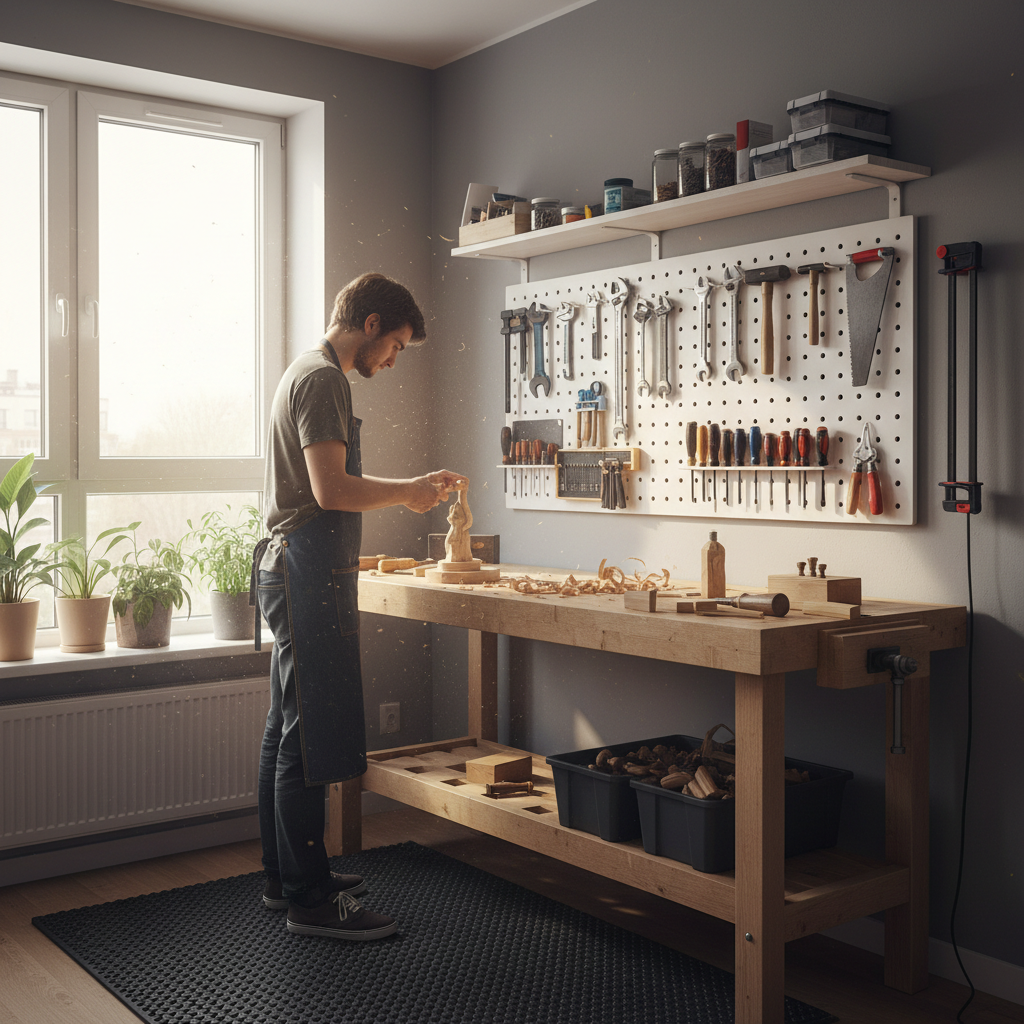
This is why the standard advice of "just use hand tools" is incomplete for apartments above the ground floor. Impact transmission from mallet work, heavy planing, and anything involving a clamp-to-bench hold is a real problem regardless of airborne noise. A workbench mat rated for vibration damping (not just rubber shelf liner, which does almost nothing) reduces structure-borne transmission meaningfully. Anti-vibration mats designed for washing machines, available at hardware stores for $20-$40, work reasonably well under a portable workbench.
Put more precisely: the goal isn't just a quiet tool, it's a quiet tool used in a way that minimizes transmission into the building structure. Those are two separate problems, and solving only the first one will still get you a knock on the door.
Hand Tools: The Realistic Starting Point
A sharp hand plane on a well-supported workpiece runs at roughly 65-70 dB, comparable to a normal conversation. A sharp chisel with hand pressure alone (no mallet) runs quieter still. These are the tools that make apartment woodworking genuinely viable, but "sharp" is doing real work in those sentences.
Dull hand tools are not quiet tools. A dull plane chatters, skips, and requires more force, which means more vibration transferred to the bench. A dull chisel needs a mallet to do what a sharp one does by hand. The single most important piece of equipment for apartment woodworking isn't a tool at all: it's a sharpening system you'll actually use. A water stone setup (1,000 and 6,000 grit covers most situations) takes about ten minutes to produce a working edge on most bench chisels.
The hand tools worth prioritizing for small apartment projects: a block plane for end grain and fitting, a set of bench chisels (3/4-inch and 1/4-inch cover most joinery), a pull saw (which cuts on the pull stroke and vibrates less than Western-style push saws), and a marking gauge. That kit handles the majority of small box builds, shelf fitting, and simple joinery without anything that would exceed 70 dB in a closed room.
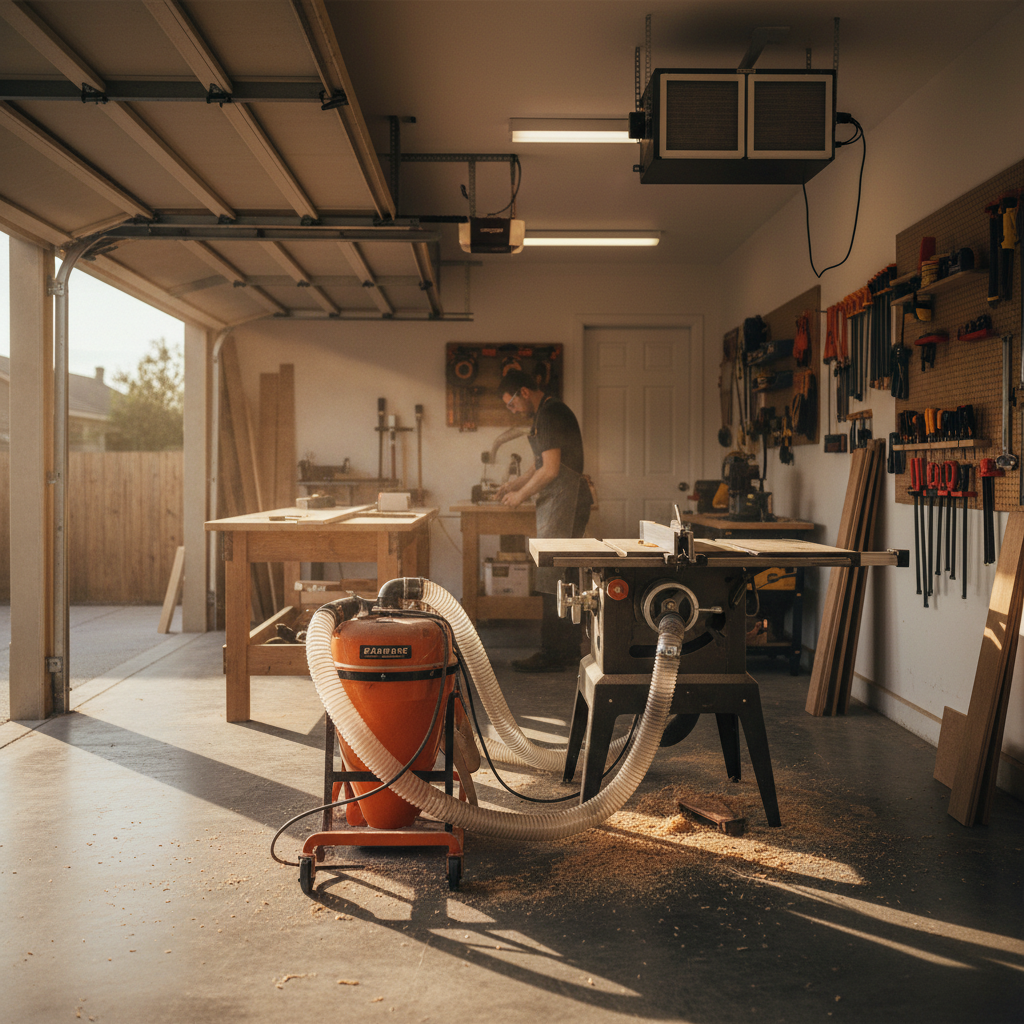
What this article isn't covering: router-based joinery, lathe work, or anything requiring a large workbench bolted to the floor. Those are not apartment-compatible, and no amount of noise management makes them so. If your project requires a router, do it elsewhere or do a different project.
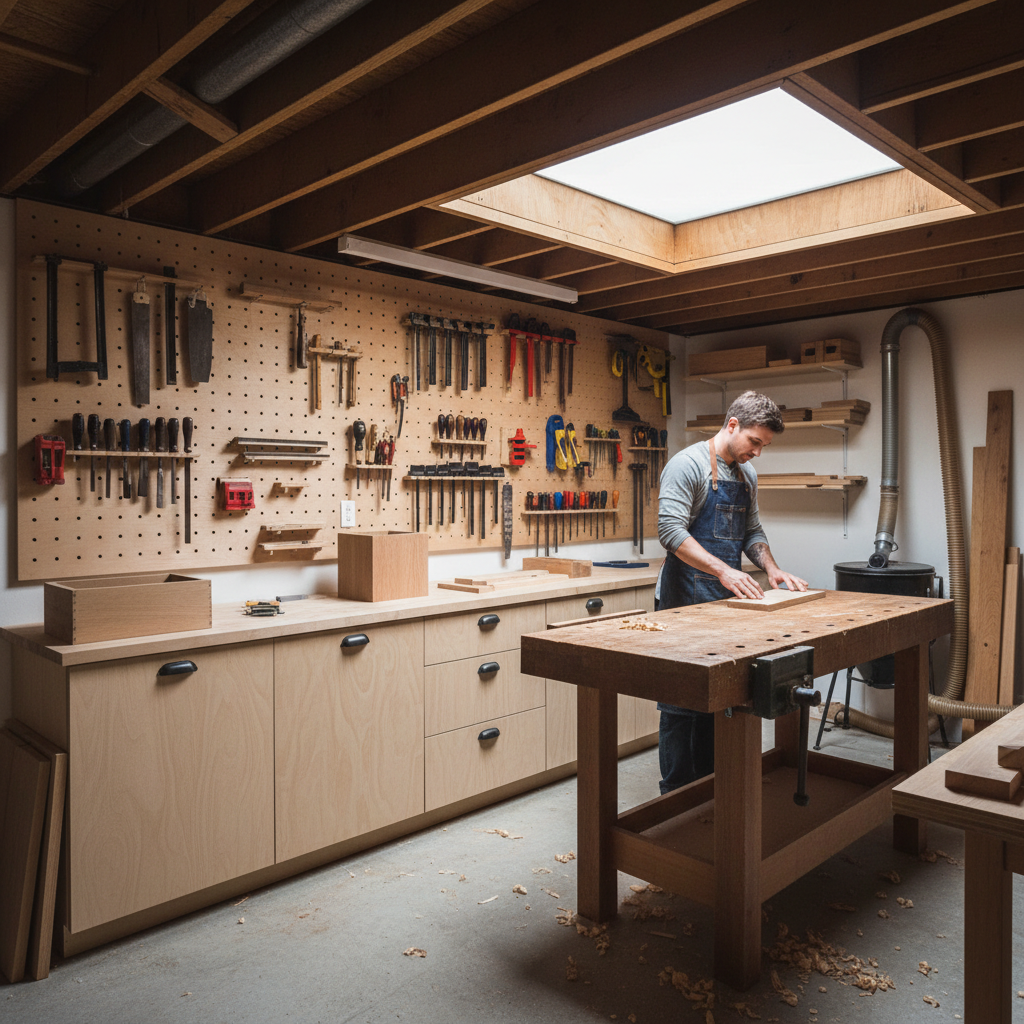
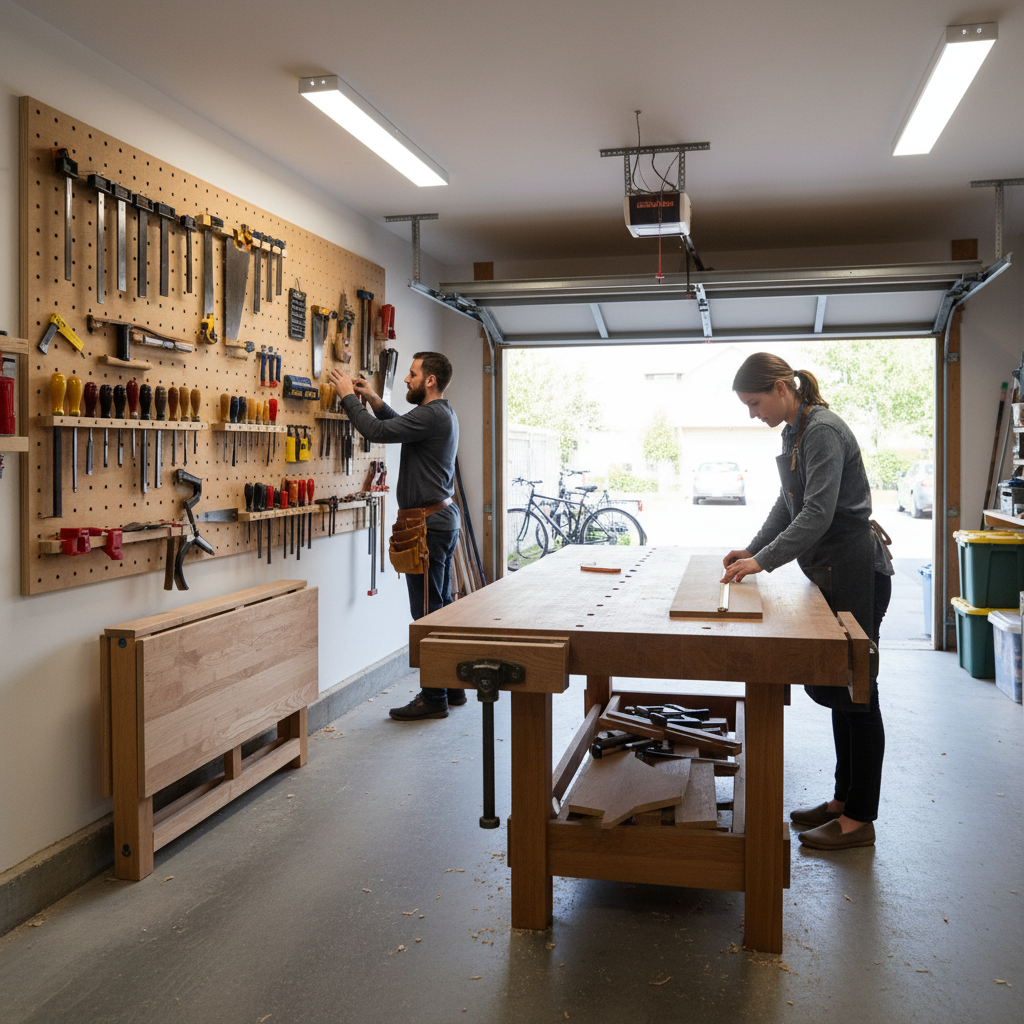
The most common mistake I see is buying a full-size workbench before establishing a hand tool practice. A portable workholding solution like a Moxon-style twin-screw vise clamped to a dining table is quieter, takes up less space, and forces better technique because it's less rigid. Rigid is not always better when you're trying to dampen vibration.
Quiet Power Tools Worth the Investment
Not all power tools are apartment-hostile. Three categories are genuinely usable: random orbital sanders with dust collection, scroll saws, and compact track saws used horizontally on foam insulation underlayment.
Random orbital sanders rate around 75-80 dB, which is audible but not structural. The noise is broadband and airborne, not impact-coupled into the floor. Run one for 20 minutes with a shop vac for dust collection and most neighbors won't register it as more than background noise. The dust collection matters not just for air quality but because an uncollected dust cloud in a small apartment is a legitimate health hazard. I'd start with a 5-inch variable speed unit rather than a full 6-inch, since the smaller pad has less rotational mass and runs slightly quieter.
Scroll saws are the genuinely underrated option here. A mid-range scroll saw (Dewalt, Excalibur, and WEN all make models in the $200-$500 range) runs at roughly 60-65 dB and produces almost no structure-borne vibration when placed on a mat. The blade moves vertically, the table doesn't shake, and the cuts are clean enough for small decorative work and thin-stock joinery. The tradeoff is capacity: scroll saws cut thin material (typically up to 2 inches, depending on blade and motor) and don't replace a table saw for dimensional lumber.
Track saws are the surprise entry. A cordless track saw used on a sheet of rigid foam insulation on the floor cuts plywood with less noise than a circular saw on a workbench, because the foam absorbs vibration and the enclosed blade reduces the acoustic signature. Festool's track saws are the gold standard here, but Makita and Dewalt both make compatible track systems at lower price points. Using one on the floor also eliminates bench vibration entirely. The foam insulation, by the way, costs about $1 per square foot at any big-box store and can be recut as needed.
If you skip quiet power tools and rely only on hand tools without building a sharpening habit, your tools will dull within a few projects and you'll compensate with more force and more noise. That's the counterfactual worth sitting with: the investment in sharpening gear or a scroll saw pays for itself in neighbor goodwill you won't spend recovering from.
When Quiet Tools Aren't Enough: Noise Windows and Lease Reality
Before buying anything, read your lease. Most standard residential leases in the US reference local noise ordinances rather than setting their own dB thresholds. Municipal noise ordinances typically define "quiet hours" (often 10 PM to 7 AM or 11 PM to 8 AM) rather than setting daytime dB limits for residential spaces, though a handful of cities do specify daytime thresholds for residential areas.
The practical heuristic most apartment woodworkers use: run power tools only between 9 AM and 8 PM on weekdays, 10 AM and 6 PM on weekends, and never more than 30 minutes at a stretch without a break. This is a guideline, not an ordinance, but it maps to what most building managers will support if a complaint comes in. Check what your specific city or county ordinance says; this varies enough that a blanket rule could mislead you.
There's also a building-type variable that dB charts don't capture. Concrete and steel construction (common in post-WWII high-rises) transmits less airborne sound between units but conducts structure-borne vibration efficiently. Wood-frame construction (the majority of apartment buildings built before 1970 and many built since) does the opposite. If you're in a wood-frame building, impact noise from mallets and bench planing is a bigger concern than in a concrete building. You probably already know which you're in; if you don't, the building's age and your rent are reasonable proxies.
Building a Practical Quiet Shop Setup
The quietest apartment woodworking setup isn't a single tool: it's a system. Check these before buying anything: your floor surface (carpet damps vibration; hard floors don't), your available hours, your project scope, and whether you have dedicated storage or need to set up and break down every session.
A workable starting kit, roughly in order of priority: a quality block plane ($60-$150 for a Veritas or Stanley Sweetheart), a set of four bench chisels, a Japanese pull saw, a sharpening setup (water stones or a honing guide system), anti-vibration mat for the work surface, and a 5-inch random orbital sander if finish work is in scope. Total cost sits somewhere around $300-$500 for the hand tool core, depending on brand choices. Add a scroll saw if your projects involve curves or thin stock, and you're looking at another $200-$400.
The setup matters as much as the tools. A Moxon vise on a heavy table is quieter than a lightweight portable workbench because it has less resonance. Foam underlayment under any power tool cuts structure-borne transmission. Working on carpet (even a cheap area rug) over a hard floor adds meaningful damping.
And talk to your neighbors before a complaint forces the conversation. A two-minute introduction, a note about what hours you work, and an offer to let them know before a session earns goodwill that no dB rating can buy. Woodworking in apartment buildings is a negotiated activity, not just a technical problem.
The Right Starting Point
If you have one decision to make, start with hand tools and a sharpening system before anything else. A sharp block plane and two chisels let you build real things quietly; a dull set of the same tools will generate noise and frustration in equal measure. Add a scroll saw when your projects outgrow what hand tools can do efficiently.
Power tools are worth adding when hand tools become a bottleneck, not before. A random orbital sander is the easiest addition because it's airborne noise only, runs briefly, and every apartment woodworking project eventually needs a sanding stage anyway.
The readers this guide won't help: anyone planning to mill their own lumber, run a router table, or work with stock thicker than three inches. Those projects need a dedicated shop, and no apartment-friendly workaround changes that.