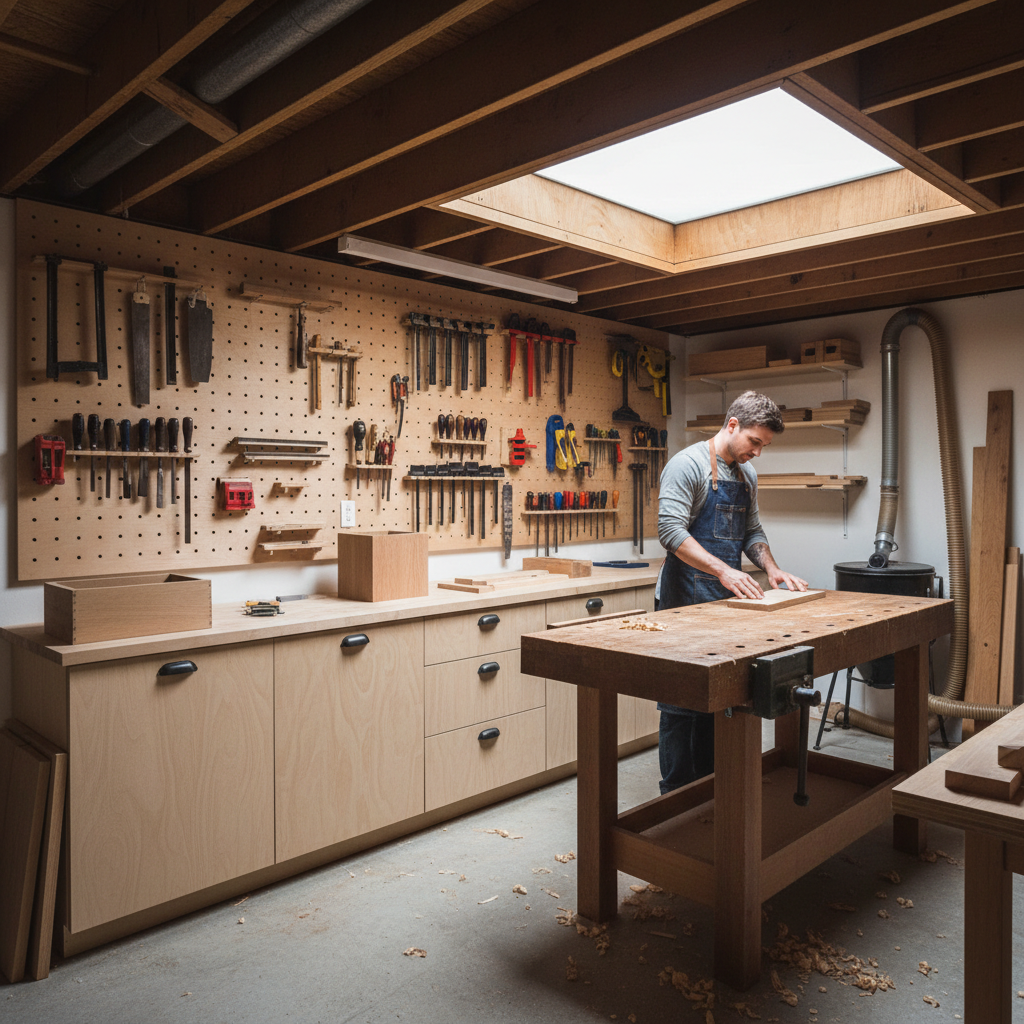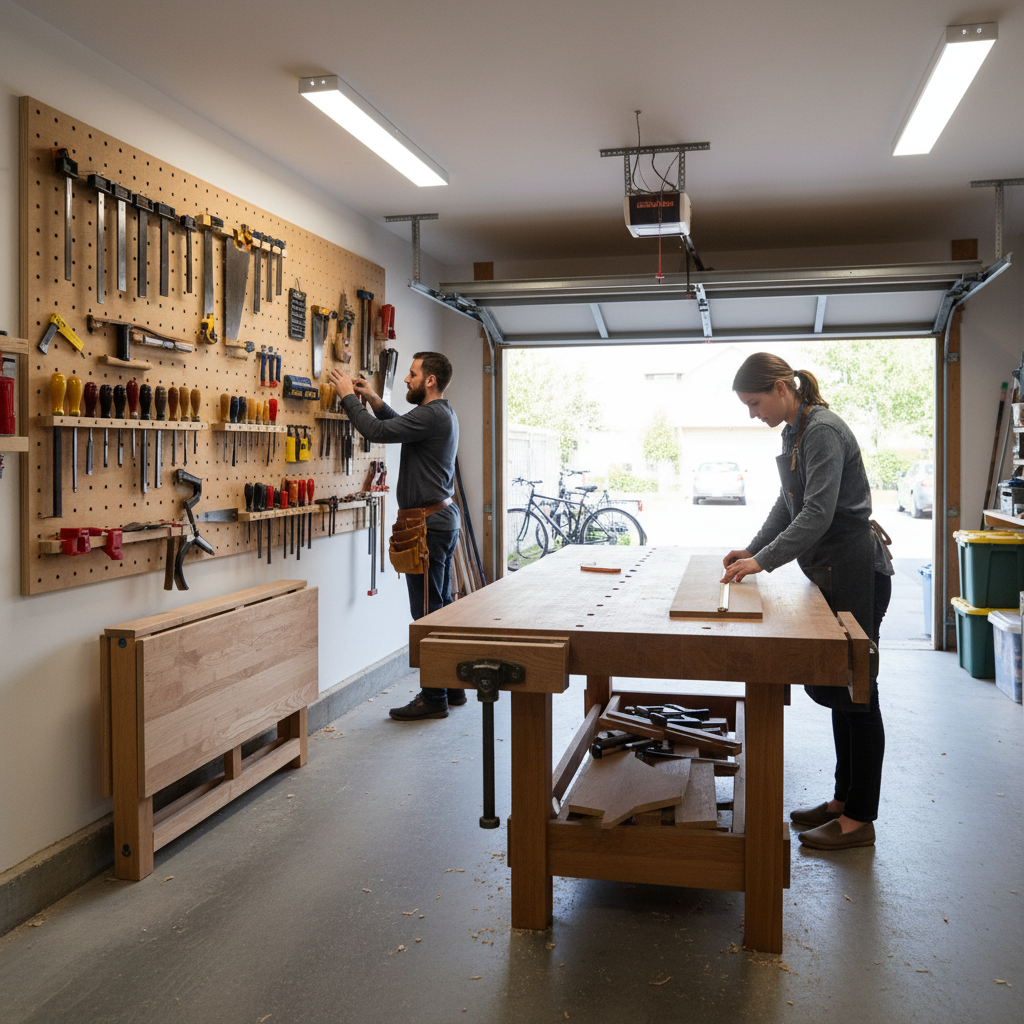
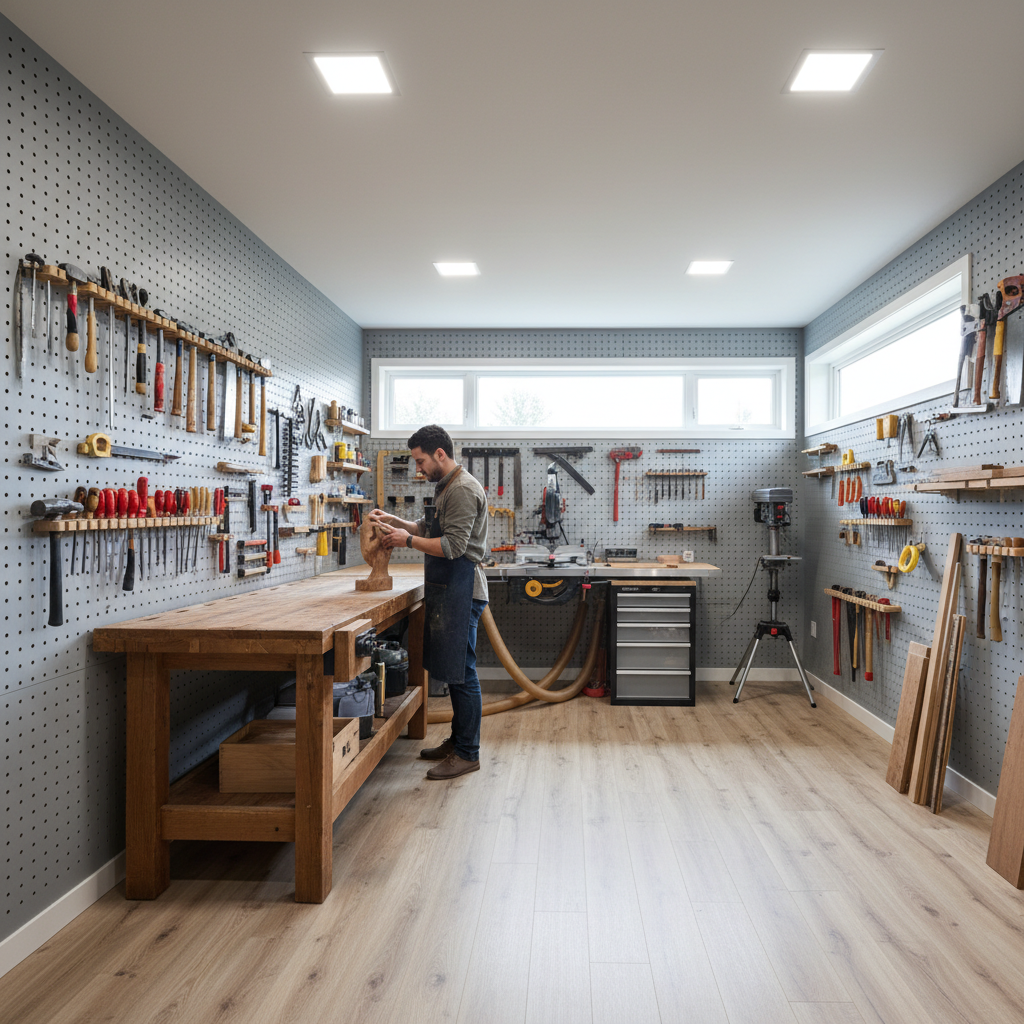
Woodworkers and finish carpenters will tell you to walk the space before buying a single shelf bracket, and there's a reason for that. Your workshop's appearance problem is almost never a shortage of storage. It's that the space communicates carelessness, and that feeling compounds every time you walk in. A disorganized, dim, concrete-floored room makes careful work harder to do, not just harder to photograph.
The gap worth naming here: most workshop makeover content treats aesthetics as a reward for getting organized first. That framing is backwards. How a space looks directly shapes how you work in it, which means the visual upgrade and the functional upgrade are the same project.
Getting this right depends on three variables that most guides treat as independent: your existing floor substrate, your ceiling height (which determines lighting placement), and how your wall framing runs. Each one constrains the others in ways that aren't obvious until you've already bought materials.
Start With the Floor, Because Everything Else Follows From It
Concrete floors are the default in American garages and basement shops, and bare concrete does two things you don't want: it reflects light in a flat, washed-out way, and it makes every dropped tool sound like a catastrophe. The fix isn't complicated, but the choice matters.
Interlocking foam tiles, epoxy coatings, and rigid vinyl plank are the three realistic options for most home shops. Foam tiles are forgiving underfoot and cheap, typically running $1 to $2 per square foot for the 3/4-inch thickness that actually protects against fatigue. But they compress under stationary tool legs and look consumer-grade. Epoxy coatings look genuinely professional and last decades when applied to a properly prepped surface, but surface prep is the work most DIYers underestimate. Rigid vinyl plank (LVP) is the middle path: it installs fast, tolerates shop grit better than foam, and the better products handle occasional moisture without buckling.
Or rather: what makes LVP the right call for most hobbyist shops isn't the material itself. It's that LVP is the only option that reads as a finished floor to a visitor without requiring the surface prep discipline that epoxy demands. If you're not willing to acid-etch and degrease the concrete slab to manufacturer spec, skip epoxy entirely. A poorly bonded epoxy coating that peels after two winters looks worse than bare concrete.
If you ignore the floor altogether and jump straight to wall organization, the space will still read as unfinished. Walls and storage are furniture. The floor is the room.
Lighting Is the Fastest Return on Investment in the Shop
A shop with good lighting looks more competent than a shop with expensive tools under bad lighting. That's not an aesthetic opinion; it's how human visual systems parse spaces.
For a typical two-car garage shop (roughly 400 to 500 square feet), the practical target is 50 foot-candles of even illumination across the work surface, which translates to somewhere around 8,000 to 10,000 lumens of overhead output. LED shop lights in the 5,000K color temperature range (daylight white, not warm) are the standard choice now. They render colors accurately, which matters if you're applying stains or finishes. The 4-foot linkable LED fixtures sold at most home improvement stores will do the job when spaced no more than 4 feet apart on center.
What most guides skip: the fixture placement axis matters as much as the lumen count. Run fixtures perpendicular to your primary work surface, not parallel to it. Parallel placement creates shadow lines exactly where your hands are working. Perpendicular placement washes the surface evenly. This is the kind of thing an electrician who works on commercial kitchens knows without thinking about it, and it costs nothing to get right if you plan before you mount.
Add one dedicated light over the bench, positioned so it's between your eyes and the work surface. Overhead ambience is for the room. The bench light is for the work.
Wall Systems: What Actually Looks Built-In
The visual difference between a shop that looks finished and one that looks cluttered comes down to whether the wall storage system reads as intentional or accumulated. Pegboard hung on drywall reads as accumulated. A French cleat wall reads as intentional, even when it's holding the same tools.
French cleat systems work on the visual logic of uniformity: every element hangs from the same 45-degree strip pattern, so the variation in what's stored doesn't register as chaos. The cleats themselves disappear into the background. A full cleat wall running floor to ceiling, built from 3/4-inch plywood ripped at 45 degrees, costs around $150 to $250 in materials for a 8-by-8-foot section, depending on plywood prices in your region. That's a real number you can take to the lumber yard.
The alternative most woodworkers consider is a commercial wall track system like Gladiator or Rubbermaid FastTrack. These are faster to install and the hardware is consistent-looking, but they lock you into a manufacturer's accessory ecosystem. When a bracket discontinues, you're patching with a different profile, and the seam shows. French cleats don't have that problem because you built them yourself.
Paint the cleat wall before you hang anything. Flat or eggshell finish in a single color (light gray reads as workshop-intentional; bright white reads as garage) makes the stored tools look deliberate. Paint after the tools are hung and you'll spend an afternoon masking.
This is where the reframe belongs: the goal isn't a cleaner version of the shop you already have. It's a shop that communicates the same level of care as the objects you make in it.
Details That Separate a Finished Shop From a Tidied One
Cord management is the detail most woodworkers defer and later regret. Retractable cord reels mounted to ceiling joists or overhead struts put power where you need it without the trip hazard or the visual noise of extension cords looped on nails. A single 30-amp, 240-volt circuit to a ceiling-mounted reel for stationary tools is a one-time investment that changes the room's profile permanently. An electrician who does garage circuits can typically rough this in during a single half-day visit.
Consistent finishes on shop furniture matter more than expensive materials. A workbench with a Danish oil finish and a matching cabinet base reads as considered. The same bench with three different polyurethane coats in varying sheens reads as improvised. You don't need to refinish everything at once. Pick one finish and apply it consistently going forward.
Paint color on the walls affects perceived ceiling height. Dark colors pull walls in; light colors push them out. For a shop with a standard 8-foot ceiling, a light warm gray on the upper two-thirds and a darker base on the lower third (a wainscot treatment) gives the room visual weight without making it feel low. This is a residential interior design principle that transfers cleanly to shop spaces.
- Concrete floor coated or covered before wall systems go in
- Lighting perpendicular to main work surface, bench light separate
- Wall storage system unified in profile and painted before loading
- Cord management addressed at ceiling level, not floor level
One honest caveat: if your shop has a moisture intrusion problem, finish work will fail. A garage that takes on water after rain needs drainage correction before any floor coating, wall paint, or wood storage system goes in. There's no aesthetic solution to a wet slab.
Finishing the Shop
Start with the floor this week. Measure the square footage, decide between LVP and epoxy based on your willingness to prep the slab, and buy materials before you move anything else. A finished floor changes how every subsequent decision looks.
Then address lighting before touching a single shelf. Map your fixture runs perpendicular to the bench, calculate your lumen target for the square footage, and get the ceiling hardware in place while the room is still clear.
Wall storage and detail finishing come last, because they're the layer people see. But they're only convincing when the floor and light are already right. Do it in order. The shop that looks as good as what you build in it isn't a different kind of space from a functional one. It's the same space, sequenced correctly.