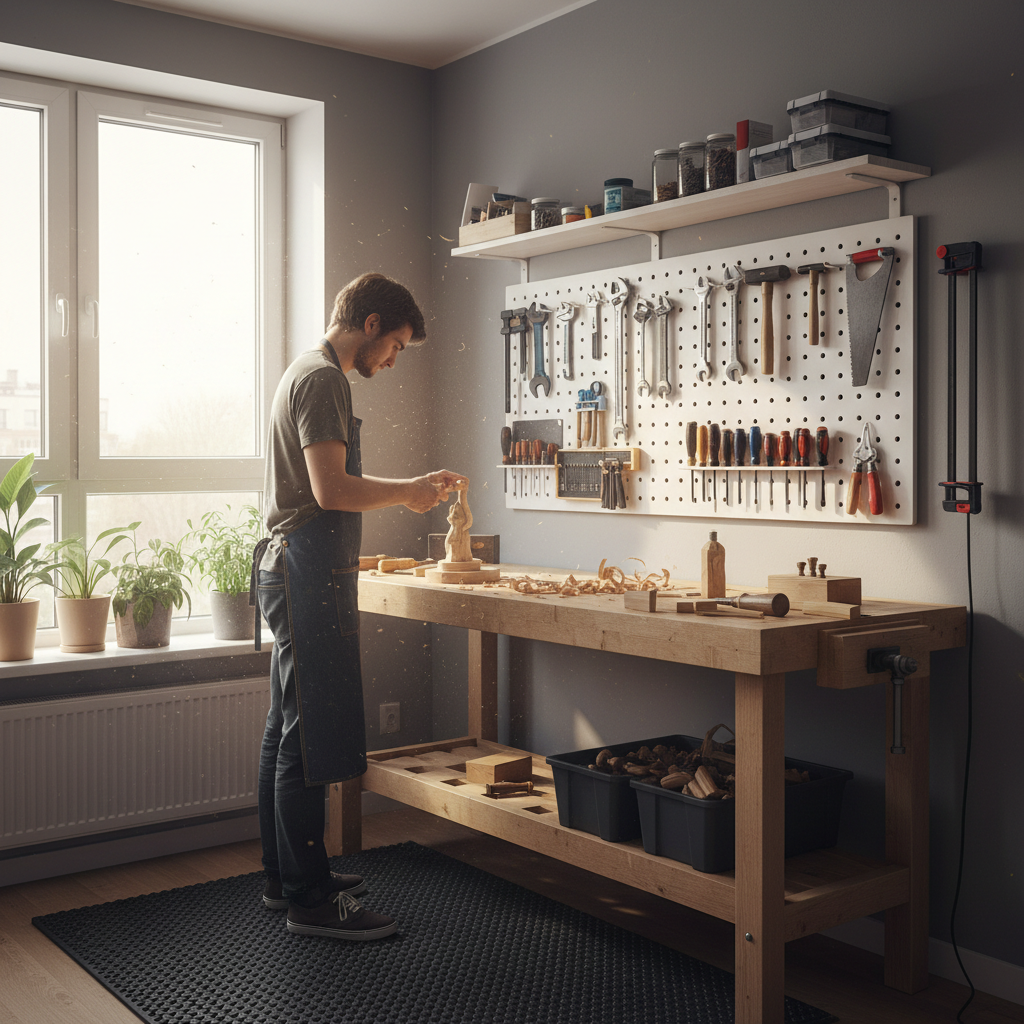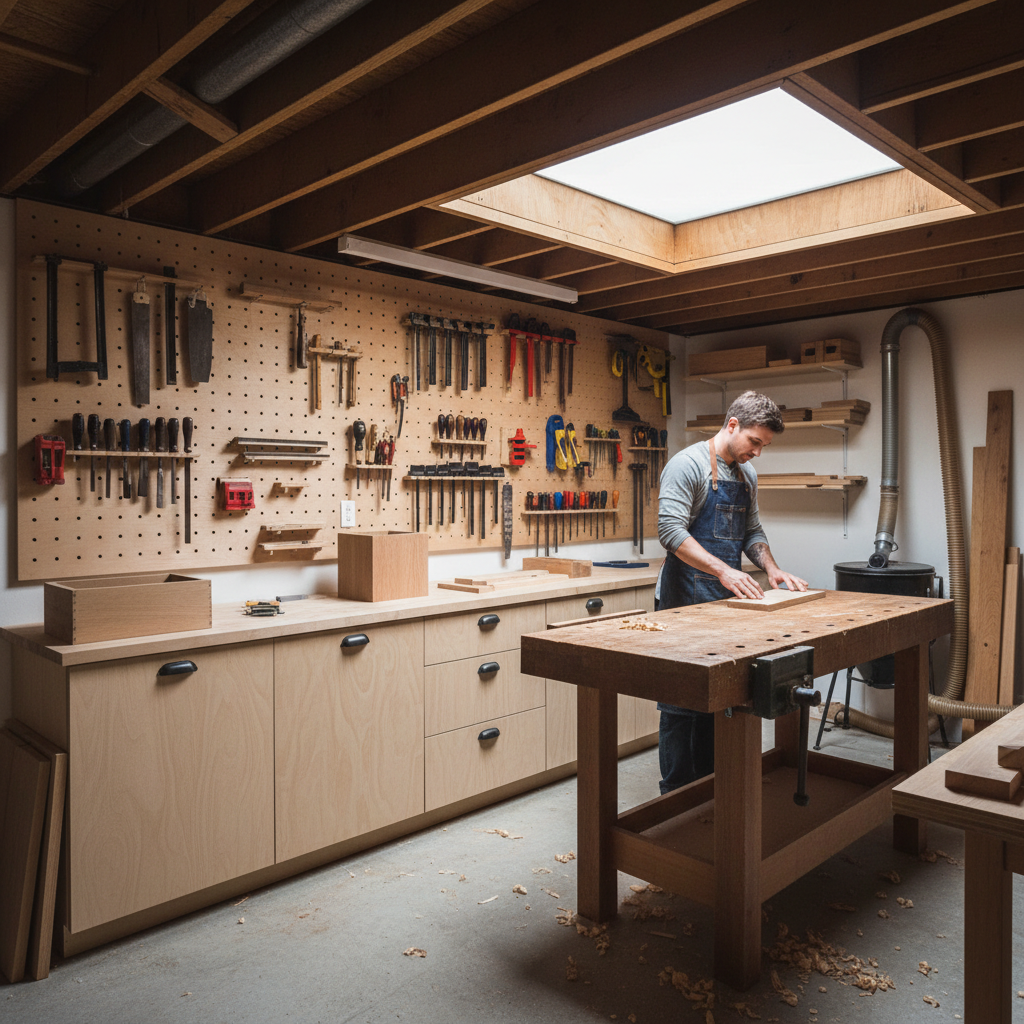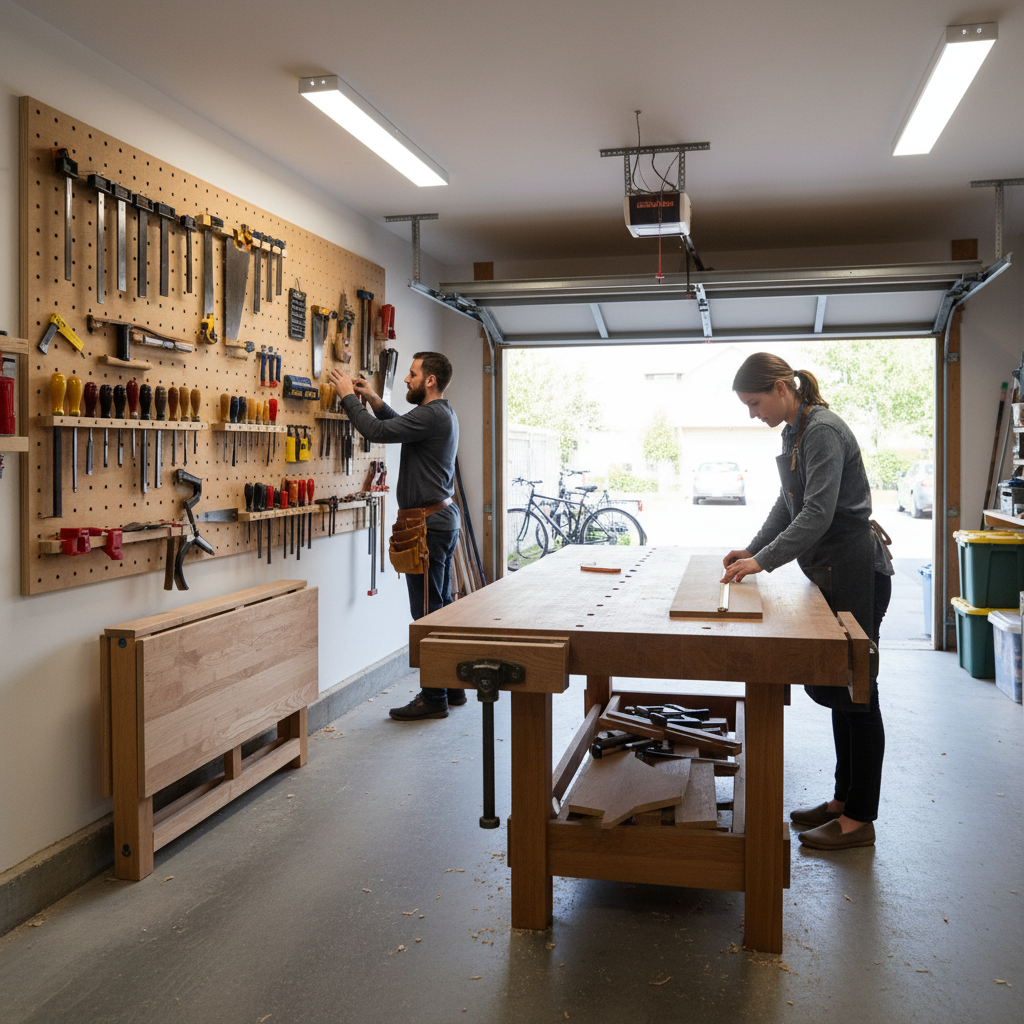
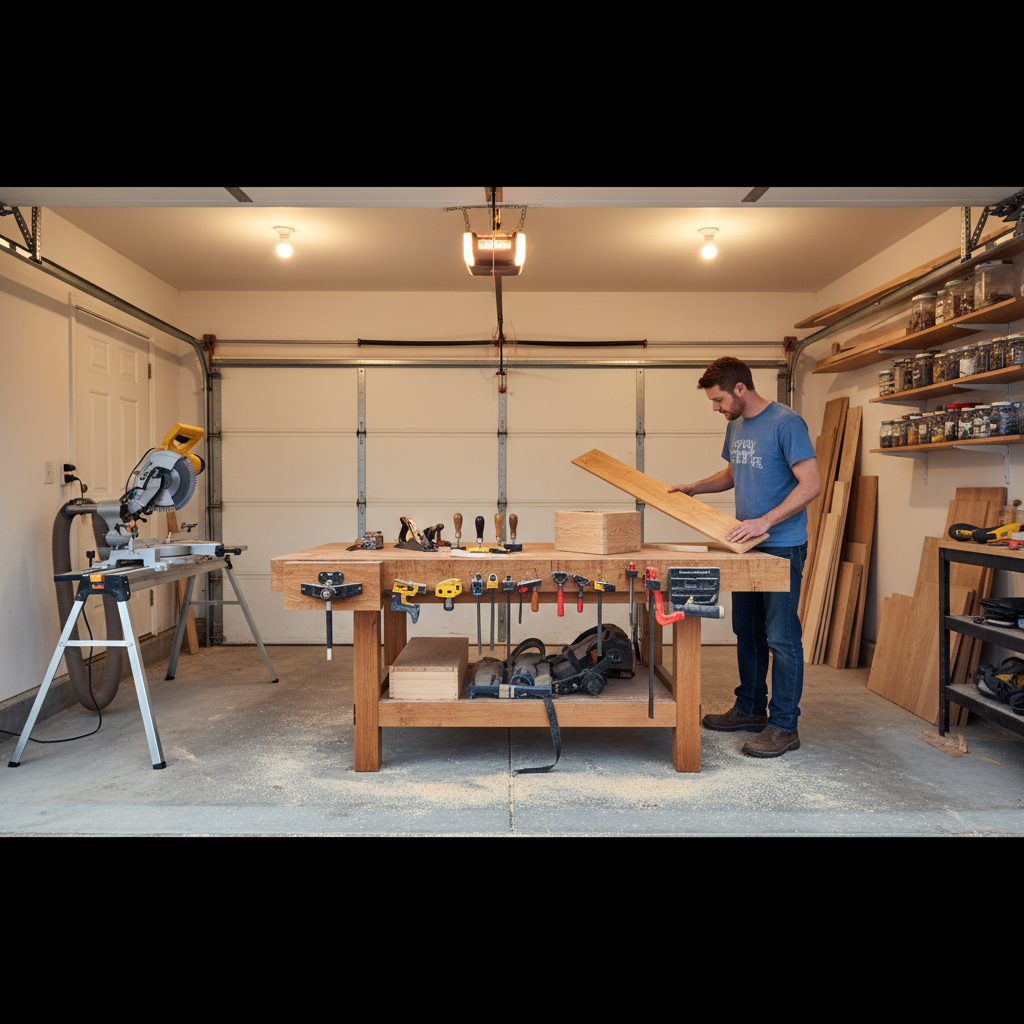
A functional beginner woodworking workshop in the US can cost anywhere from $1,500 to over $4,000, and that spread exists for a reason that most budget guides quietly skip past. The price depends less on how many tools you buy and more on which three decisions you make first: whether you're working with hand tools, power tools, or a hybrid setup; how much usable floor space you actually have; and whether your existing electrical panel can handle a tablesaw or dust collector without an upgrade.
None of those variables are obvious when you're standing in a home improvement store comparing price tags on a random orbital sander. And the tension running through every beginner's planning process is this: the cheapest workshop build almost always costs more long-term, because underspecified tools get replaced faster and unsafe shortcuts get fixed after something goes wrong.
This guide covers the realistic cost ranges for a US-based beginner shop, the specific tools worth prioritizing, what you can safely defer, and the one setup condition that makes a budget build genuinely unwise. It does not cover commercial shop builds, professional cabinet-making setups, or CNC routing equipment. That's a different category entirely.
What You're Actually Paying For: The Three Cost Layers
Beginner woodworking workshop costs break into three layers, and most guides collapse them into a single number. Understanding the layers changes how you spend.
The first layer is the tool core: the four or five tools you'll reach for on nearly every project. For a power-tool-oriented beginner, that typically means a miter saw, a random orbital sander, a drill/driver, a circular saw or jigsaw, and a router. A reasonable entry-level set from brands like Ridgid, Ryobi, or Bosch's standard line runs $600 to $900 if bought individually, less if you catch combo kit sales at Home Depot or Lowe's. A hand-tool-first approach (chisels, hand plane, crosscut saw, marking gauge) comes in closer to $200 to $400 for quality starter versions from brands like Stanley or Narex, but demands more time investment to develop technique.
The second layer is shop infrastructure: workbench, lighting, dust collection, and storage. A solid workbench alone, whether you buy a kit or build one from construction lumber, typically runs $150 to $350. Dust collection is where beginners consistently underbudget. A basic 1-micron shop vac costs around $80 to $130; a dedicated dust collector with proper filtration starts around $200. But here's what those numbers don't show: without adequate dust collection, fine wood dust accumulates in ways that create both a fire hazard and a genuine respiratory health risk over time. The CDC and NIOSH both list wood dust as a known respiratory hazard, and fine particles from MDF and certain hardwoods carry elevated concern.
The third layer is safety and compliance: hearing protection, safety glasses, a dust respirator rated at least N95 (P100 for MDF or exotic species), a fire extinguisher rated for your shop, and adequate lighting (a minimum of 50 foot-candles at the work surface is a practical guideline cited by woodworking safety educators, though specific requirements vary by jurisdiction for commercial spaces). For a home shop, this layer costs $100 to $200 but is the layer most commonly cut when someone is trying to hit an arbitrary budget target. Don't cut it.
Realistic Budget Ranges by Setup Type
The range of $1,500 to $4,000 compresses a lot of meaningful variation. Here's how it actually breaks down across three realistic starting points.
| Setup Type | Estimated Total | What's Included | What's Deferred |
|---|---|---|---|
| Hand-tool first | $600 - $1,200 | Chisels, hand plane, saws, basic bench, safety gear | Power tools, dust collector, major electrical work |
| Power-tool hybrid | $1,500 - $2,500 | Miter saw, drill/driver, sander, jigsaw, bench, shop vac, safety | Tablesaw, dedicated dust collector, lumber rack |
| Full beginner power setup | $2,800 - $4,200 | All above plus tablesaw, dust collector, workbench upgrade, lighting | Bandsaw, planer, jointer (intermediate tools) |
The hybrid setup is where most beginners actually land, and it's the most defensible starting point. A miter saw handles the crosscuts you'll make constantly; a jigsaw or circular saw covers ripping and curves; a drill/driver handles assembly. You can add a tablesaw later once you know whether you need one for your project types.
Or rather: the question isn't whether you should own a tablesaw eventually. It's whether you should own one before you've made ten projects with the tools above. A tablesaw is the single most injury-prone tool in a home workshop according to the U.S. Consumer Product Safety Commission (CPSC), which has tracked tens of thousands of annual tablesaw-related emergency room visits. Buying one before you have consistent saw discipline is a meaningful safety risk, not just a budget inefficiency.
The hand-tool-first path deserves more credit than it gets. You can build genuinely good furniture with a quality No. 4 bench plane, a set of six Narex chisels, a decent crosscut saw, and a marking gauge. The skill ceiling is higher, the startup cost is lower, and you won't wake up neighbors on Sunday morning. It's a legitimate long-term strategy, not just a stepping stone.
Space, Electrical, and the Hidden Setup Costs
Tools are the visible cost. Space preparation is where budgets quietly blow up.
A workable single-car garage shop runs about 200 square feet of usable floor space, which is tight but functional if you use mobile bases for larger tools and keep a clear path to exits. A two-car garage gives you room to breathe, but most beginners start in a single-car space or a basement. Basement shops introduce their own cost layer: humidity control matters for wood storage and for tool longevity. A dehumidifier capable of maintaining 40 to 50 percent relative humidity in a 400-square-foot basement runs $150 to $250 for a mid-range unit.
Electrical is the line item that surprises people most. A standard 15-amp household circuit handles a drill and sander without issue. A contractor-grade tablesaw, a dust collector, and shop lighting running simultaneously will trip a 15-amp breaker and may require a dedicated 20-amp circuit. Hiring a licensed electrician to run a dedicated 20-amp circuit to a garage or basement typically costs $200 to $500 depending on the distance from the panel and local labor rates, though this varies significantly by region and contractor. Get a quote before you buy the tablesaw.
That framing misses something. The real electrical question isn't just amperage. It's whether your panel has available breaker slots at all. An older home with a full 100-amp panel may need a subpanel or a panel upgrade before you add any shop circuits, which can push electrical costs to $1,000 or more. Check your panel before finalizing any tool budget.
Lighting gets underestimated consistently. A dim shop is a dangerous shop. Two 4-foot LED shop light fixtures (roughly $30 to $50 each at hardware stores) improve safety and reduce eye fatigue substantially for a modest investment.
What to Buy First, What to Skip, and the Budget Trap to Avoid
The most common beginner mistake isn't buying the wrong tools. It's buying too many tools at once and then not having budget left for the workbench, the safety gear, or the materials to actually build something.
I'd start with this sequence: a miter saw, a quality drill/driver, a random orbital sander, safety gear (full set, not partial), and a workbench. That's your functional first-project kit. Check square footage, electrical capacity, and dust collection needs before adding anything else. Once you've built three or four projects, you'll know exactly which gap in your tool set is actually slowing you down.
Budget-brand tools at the very bottom of the price range are often a waste of money for woodworking specifically. A $29 circular saw from an off-brand will flex, bind, and produce cuts that frustrate rather than teach. Ryobi, Ridgid, and the entry-level Milwaukee M18 line represent genuine value for beginners: not professional-grade, but accurate and durable enough to build real skill. The jump from no-name to these brands is worth the $40 to $80 price difference per tool.
Buyers who skip the workbench to save $200 and work on a folding table quickly discover they've made every operation harder and less safe. A stable work surface isn't optional equipment.
The budget trap is this: spending $800 on tools and $0 on infrastructure, then wondering why the shop feels unusable. Allocate at least 30 percent of your total budget to the non-tool layer (bench, lighting, dust management, safety gear) before finalizing your tool list. That heuristic won't be right for everyone, but it prevents the most common failure mode.
When a Budget Build Is the Wrong Choice
There's a specific condition under which the standard beginner budget build genuinely doesn't work: when your available space is under 100 square feet with no ventilation and no way to add it.
A basement room with a single small window, no exhaust fan, and no mechanical ventilation is not a safe woodworking space for power tools, especially for MDF, plywood, or finish work involving stains and lacquers. Wood dust concentrations build quickly in unventilated spaces, and solvent-based finishes in enclosed areas create both fire and inhalation risk. NIOSH guidance on wood dust exposure and the Occupational Safety and Health Administration (OSHA) standards for air contaminants both apply to professional settings, but the underlying hazard doesn't disappear in a home context.
If your only available space is genuinely unventilatable, the right first investment isn't tools. It's a box fan and a HEPA-rated window exhaust setup, or rethinking the space entirely. Hand tools in a small unventilated space are far safer than power tools, because the dust volume is dramatically lower.
Beginners who ignore this and set up a power tool shop in a sealed basement room are not just making a financial mistake. They're creating a health problem that compounds quietly over months. That's the downside case worth taking seriously.