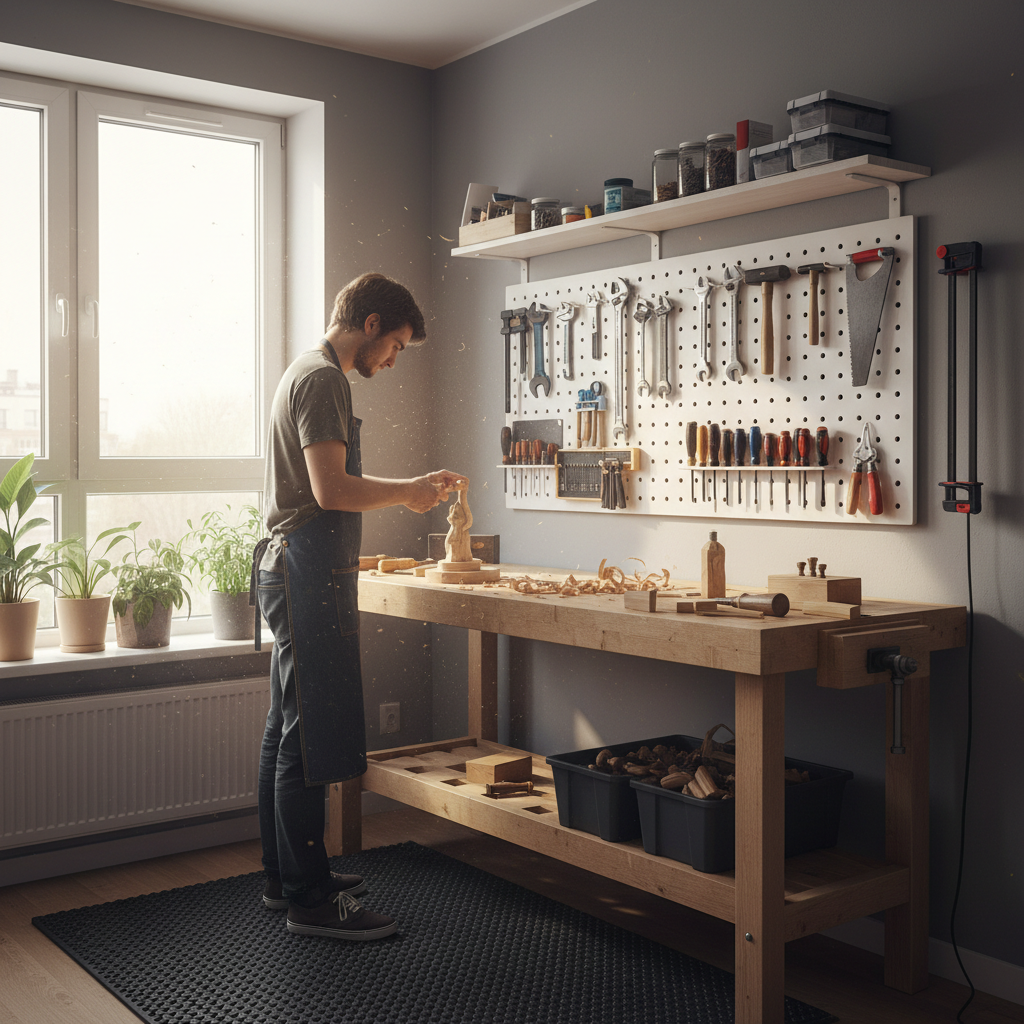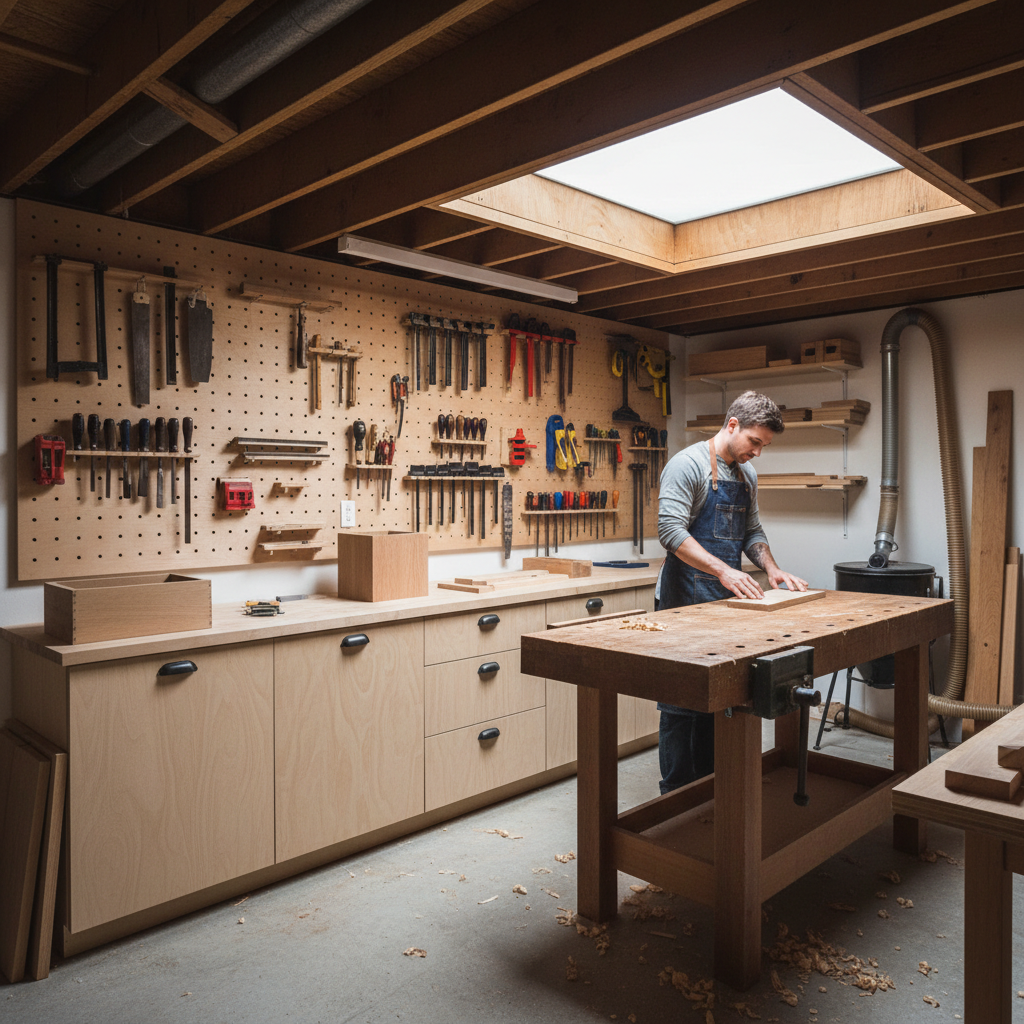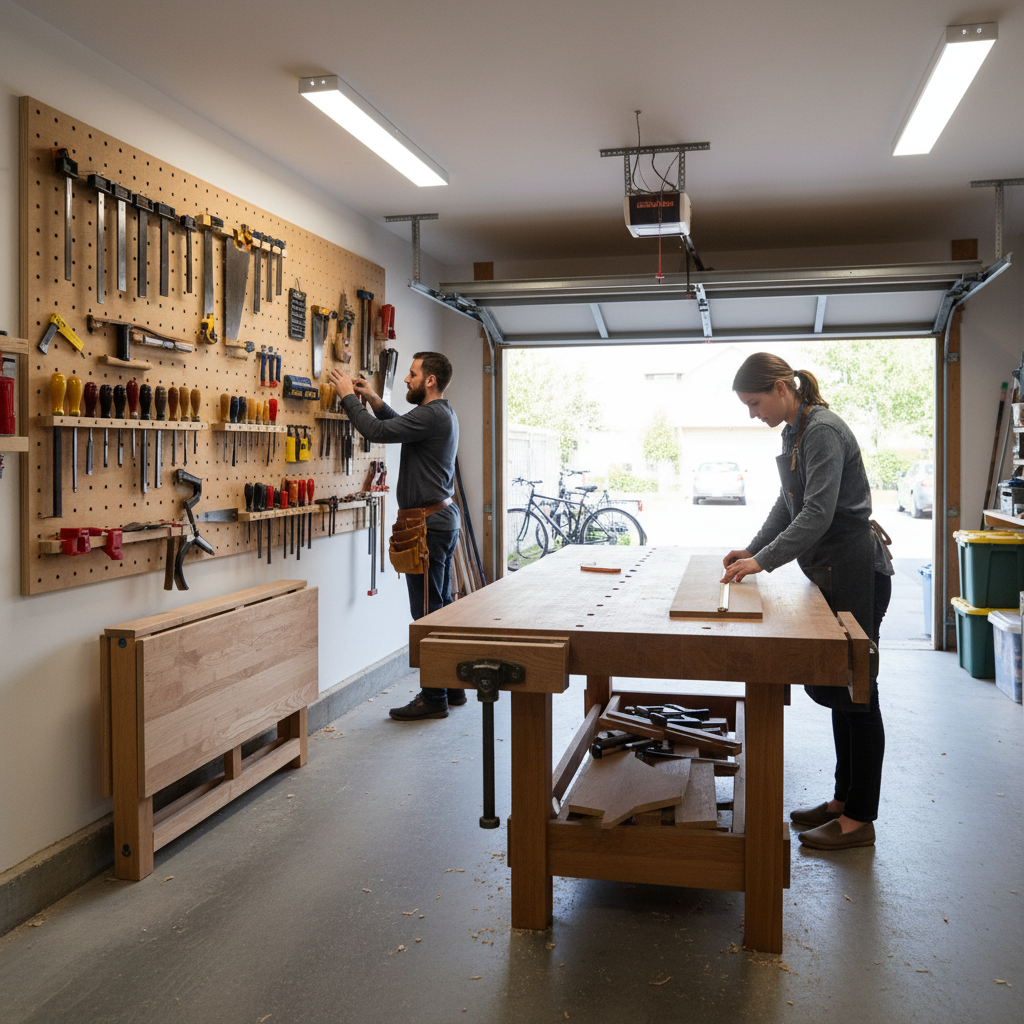
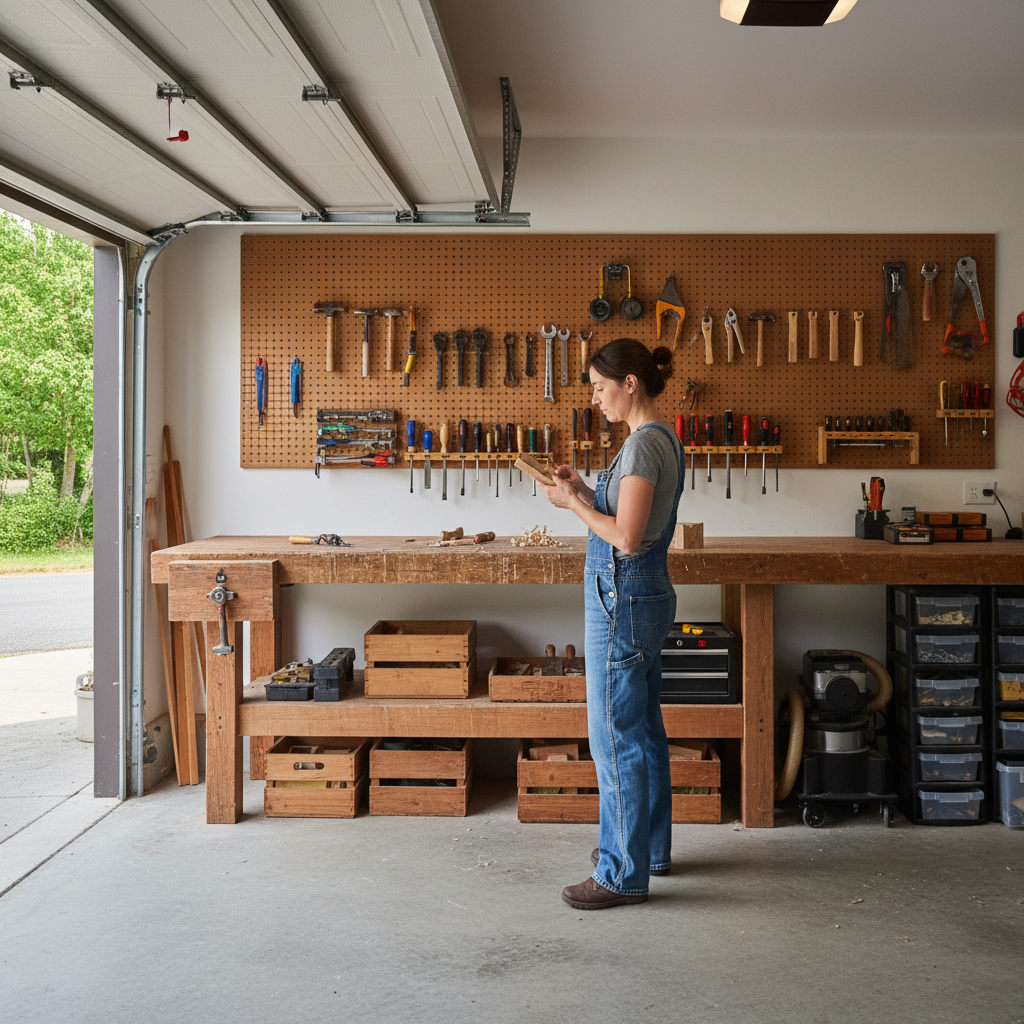
A carpenter will size up your floor space before recommending a bench, and there's a reason for that. In a small garage, the workbench you choose either opens the space up or collapses it. A two-car garage running around 400 square feet can support a full-depth, 8-foot bench along one wall without much compromise. A one-car garage at 200 square feet forces real trade-offs between bench depth, aisle clearance, and where you'll actually stand to work.
Finding the best workbench for a small garage isn't about picking the heaviest-duty option you can afford. It's about matching bench depth, weight capacity, and storage configuration to the specific jobs you'll do most. Three factors drive the decision more than price: surface depth (24 inches vs. 30 inches matters in tight quarters), the rated static load, and whether the bench is freestanding or wall-mounted. Most beginners skip the load rating entirely until their bench flexes under a bench vise or a bench-top drill press.
That last point is the tension most buying guides don't sit with long enough. A workbench that fits your floor plan perfectly can still fail you the moment you bolt anything heavy to it. Surface dimensions and load capacity pull in opposite directions in a small garage, and resolving that trade-off is the actual decision you're making.
What Actually Matters in a Small Garage
Floor depth is the variable that separates a usable bench from a frustrating one. A standard workbench runs 24 to 30 inches deep. In a garage where you need 36 inches of aisle clearance to walk past the bench and still open a car door, that 6-inch difference isn't minor. A 24-inch bench in a 10-foot-wide garage preserves functional circulation. A 30-inch bench in the same space may force you to park farther from the wall than you'd like, especially if you're storing tools or a rolling cabinet on the opposite side.
Or rather: depth alone doesn't tell the whole story. The bench height matters nearly as much, because a poorly matched height forces you to bend or hunch, and fatigue compounds across a project. A common guideline for workbench height is to stand with your arms relaxed at your sides and measure to your wrist crease. That puts most adults between 33 and 36 inches. Standard commercial benches ship at 34 inches, which works for someone around 5'8" to 5'10". If you're shorter or taller, adjustable-leg benches earn their premium.
Weight capacity gets listed on every product page, but the number that matters isn't the surface limit, it's the leg and frame rating under dynamic load. Pounding a chisel or hammering a joint creates impact force well beyond static weight. A bench rated at 1,000 pounds static may deflect noticeably under repeated hammer blows if the legs are thin-wall steel with no diagonal bracing. Look for cross-bracing on all four sides, not just front-to-back.
Storage is the third axis. Built-in drawers and cabinets are convenient, but they add cost and depth. In a genuinely small garage, an open lower shelf is often more practical: it keeps your most-used tools visible, it doesn't add frame depth, and it's easier to sweep under. I'd start with an open-shelf bench and add a rolling cabinet beside it only once you know what you actually reach for most.
Three Bench Types Worth Considering
Before narrowing to specific models, it helps to understand the three categories beginners realistically choose between. Each serves a different situation.
Freestanding steel-frame benches are the default choice for most beginners. They ship flat-packed, assemble in under an hour, and cost anywhere from around $150 to $400 for entry-level options. The trade-off is that cheaper steel-frame benches use thinner gauge tubing (often 18-gauge) that flexes under point loads. If you plan to mount a vise, look for benches built with 14-gauge or 12-gauge steel legs. The work surface on most production benches is MDF or particleboard with a hardboard facing. That surface dents. A replaceable hardboard top is a feature worth paying for.
Solid-wood workbenches, either kit-built or shop-built, are the traditional choice. A hardwood bench with a tail vise and dog holes is a serious tool, not beginner overkill, but it's also a $500-to-$1,200 investment before you've done a single project. For a beginner setting up a small garage workshop, the cost-to-benefit math rarely favors starting here. Build toward it.
Wall-mounted fold-down benches are the right answer for a genuinely tight space, specifically a one-car garage where the bench has to disappear when not in use. A properly built fold-down bench, anchored into wall studs with 3/8-inch lag bolts, can support 500-plus pounds and fold flat against the wall in seconds. The limitation is that you can't use the wall behind it for pegboard or shelving. That's a real trade-off, not a minor footnote.
Here's a quick summary of the three types against the key criteria:
The table below shows how the three bench types compare across the factors that matter most in a small garage workshop.
| Bench Type | Typical Cost | Floor Depth | Load Capacity | Best For |
|---|---|---|---|---|
| Steel-frame freestanding | $150-$400 | 24-30 in. | Varies widely by gauge | Most beginners; general use |
| Solid-wood workbench | $500-$1,200+ | 24-36 in. | High (frame-dependent) | Woodworking-focused shops |
| Wall-mounted fold-down | $100-$300 (DIY) or $200-$500 (kit) | 0 in. folded | 500+ lbs (stud-anchored) | One-car or shared garages |
The fold-down option is the one beginners discount too fast. If your garage doubles as parking, car storage, or a shared space, a fold-down bench is not a compromise. It's the right call.
Buying Used: The Option Most Beginners Skip
Buyers new to garage workshops tend to default to new benches from big-box stores. That's understandable. But the used market, particularly Facebook Marketplace and Craigslist, regularly surfaces solid-wood workbenches, steel fabrication tables, and ex-commercial tool benches at 30 to 60 cents on the dollar. A 60-year-old butcher-block bench that belonged to a retired machinist will outperform a new $200 flat-pack bench in every measurable way.
What to check when buying used: look for racking (grab the top and push diagonally, any flex means the frame joints are compromised), inspect the top surface for deep gouges that can't be planed flat, and verify the leg levelers still adjust. A surface that's rough but flat is fine. A surface that's warped is a problem you'll fight every project.
The downside case for used benches is specific: if you need the bench within a week, or if you're in a rural area with thin used inventory, the used market won't save you. Don't wait three months for a perfect deal when a functional new bench lets you start working now. A bench you actually use beats a theoretically superior bench you're still hunting for.
What Beginners Get Wrong About the First Bench
The most common mistake I see is over-specifying the first bench. A beginner who hasn't yet decided whether they'll focus on woodworking, metalworking, automotive repair, or general DIY shouldn't spend $800 on a specialized bench. Your first bench is a learning tool. It tells you what you actually want from your second bench.
Under-specifying is the other failure. A bench that flexes, wobbles, or tips when you put any real force into it doesn't just slow you down, it makes you sloppy. Chiseling against an unstable surface, running a hand plane into flex, using a mallet when the bench walks across the floor: these are safety issues, not just annoyances. The floor isn't going to catch a chisel that deflects. Spend enough to get genuine rigidity.
So the real framework is: spend the minimum needed for a bench that doesn't move, at a surface height that fits you, with a depth that fits your floor plan. That's it. Storage, finish, brand name, and color are all secondary. Check load rating, leg gauge, and surface height first. Then buy.
And if you skip this entirely and keep working on a hollow-core door balanced on sawhorses? (It happens more than shops like to admit.) You'll eventually miscalculate a cut, or the door will fail under a clamp, and you'll spend money replacing a project rather than building it. A real bench isn't a luxury item for serious hobbyists. It's the surface your accuracy depends on.
Making the Decision for Your Space
The right workbench for a small garage workshop is the one that fits your actual floor plan without sacrificing the load rating you need for the tools you'll attach to it. That sentence is the whole decision.
A one-car garage with shared parking should look at fold-down benches first. A dedicated one-car shop with no parking obligation can run a 24-inch-deep freestanding steel bench along the back wall and keep the side walls clear for pegboard and shelving. A two-car garage with one bay dedicated to the shop has enough room for a 6-foot bench with under-shelf storage and still leaves circulation space.
Before you buy, measure your aisle clearance requirements, not just your wall space. Decide whether you need the bench to fold, stack, or stay put. Check the frame gauge on any steel bench you're considering. If the spec sheet doesn't list gauge, contact the manufacturer or skip that product.
The workbench market is full of options that look identical in photographs and differ dramatically in rigidity. A bench that flexes under a 3-pound mallet is a bench you'll replace inside two years. Buy for stability first, surface size second, and storage last.