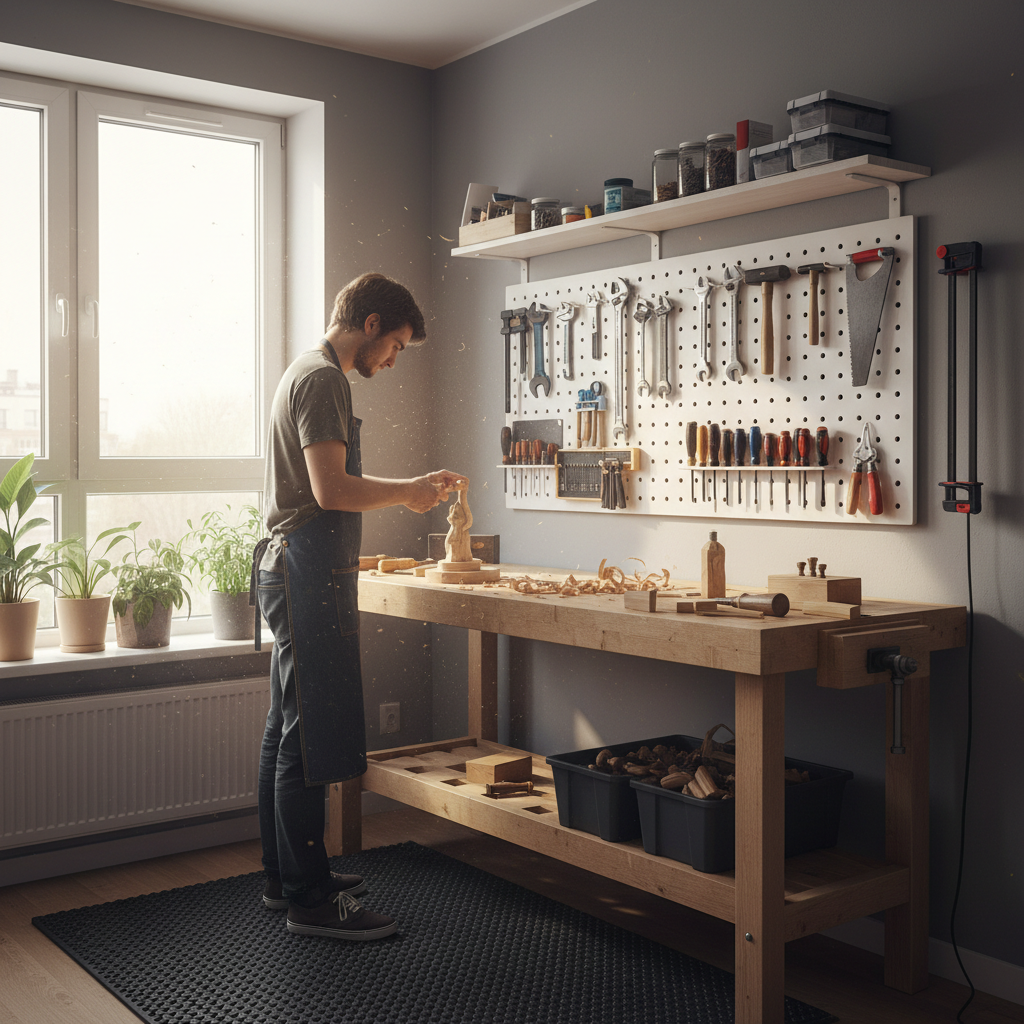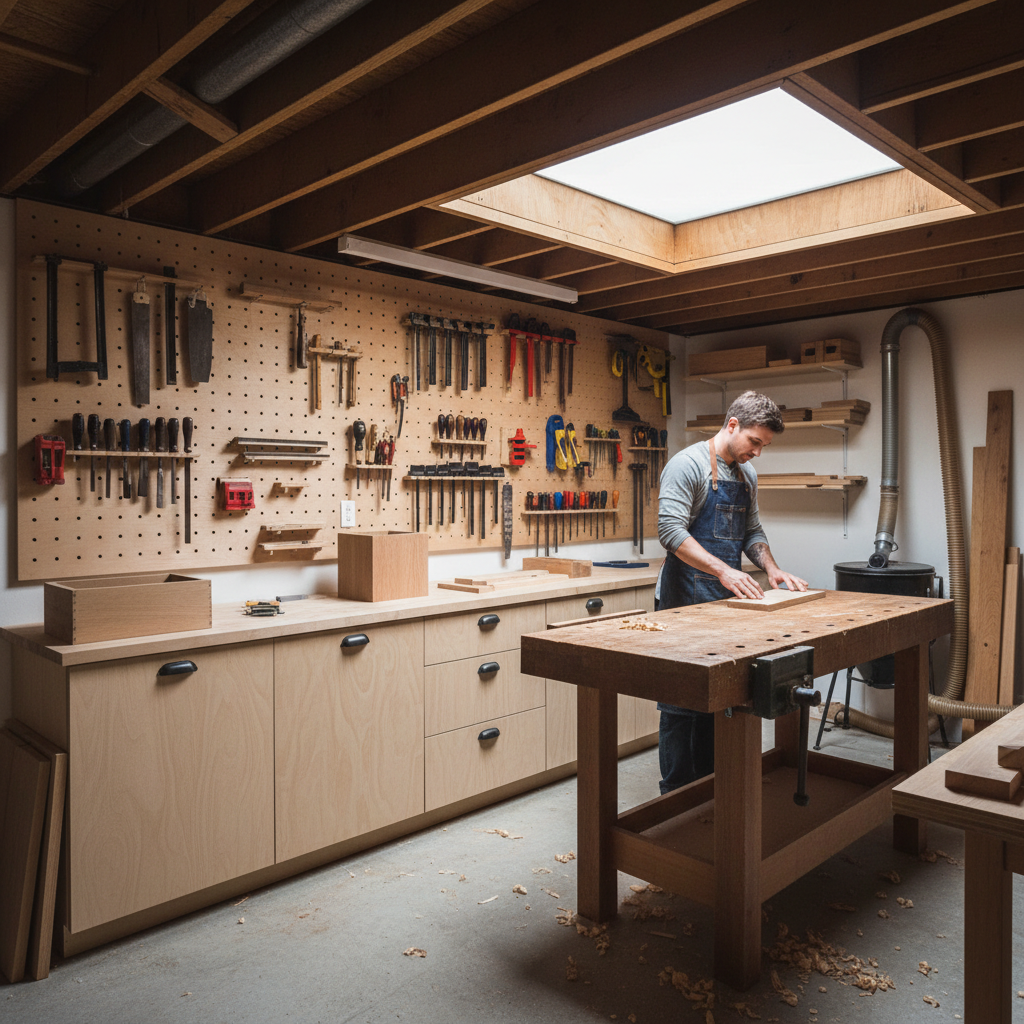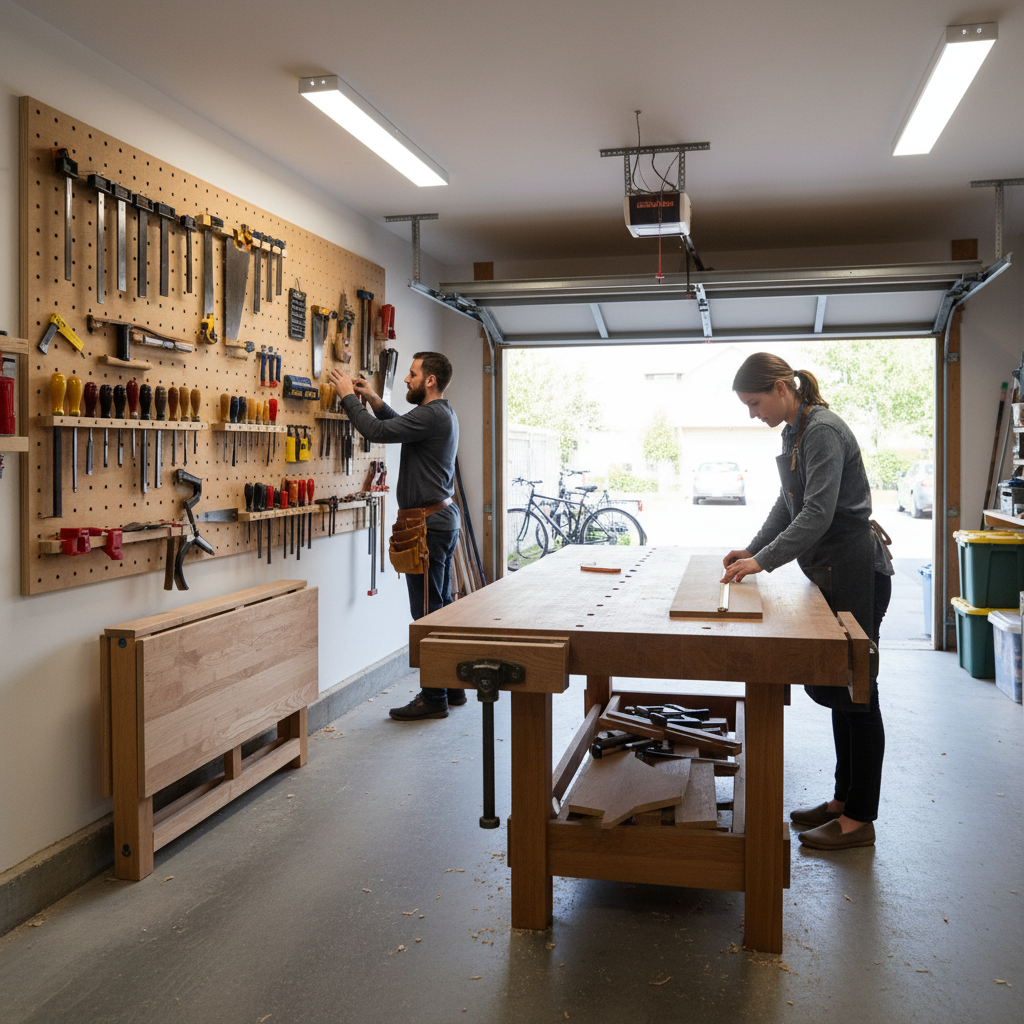
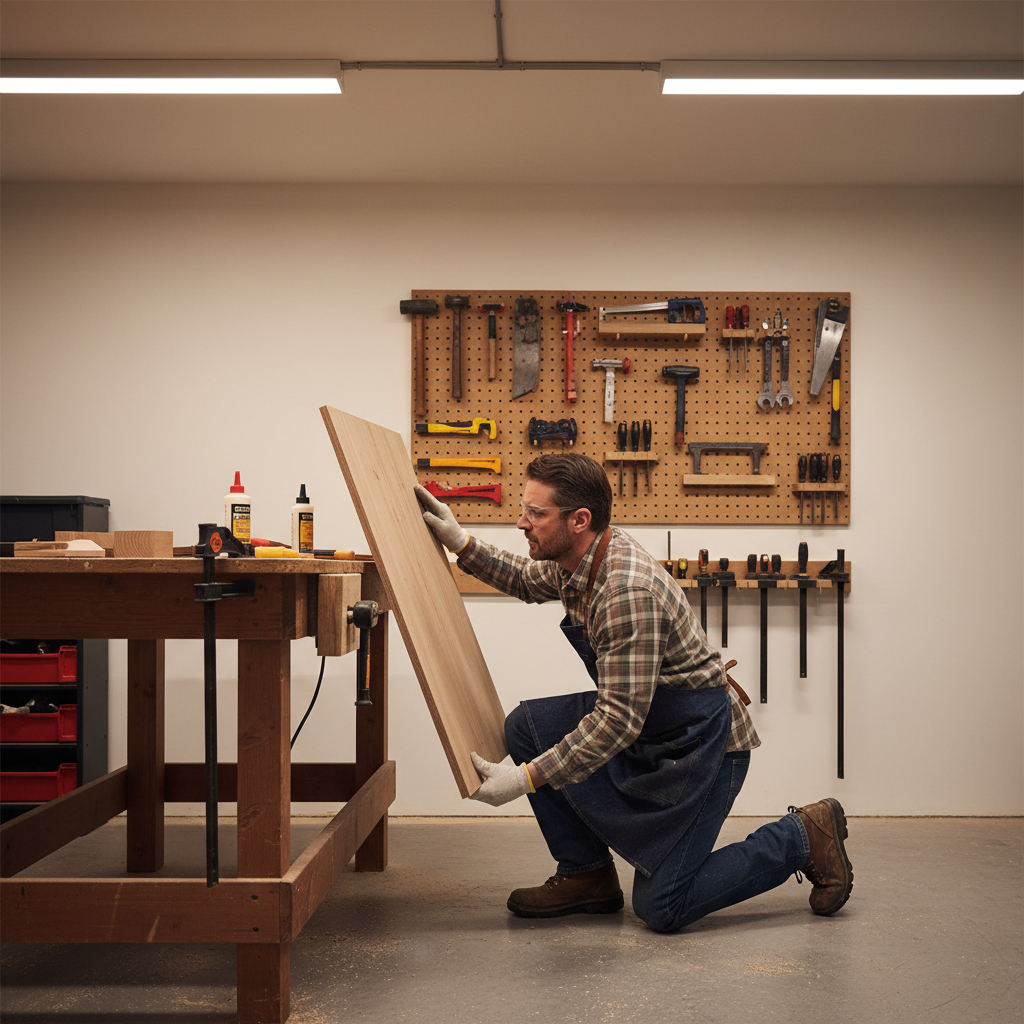
Electricians will tell you to figure out your lumens-per-square-foot target before you buy a single fixture, and there's a reason for that. Garage shop lighting for woodworking is one of those purchases where the cheap path and the correct path look identical at checkout and diverge badly the first time you try to rip a board on a dim table saw.
The gap between a functional woodworking shop and a frustrating one often comes down to color rendering, not just raw brightness. You can flood a garage with LED light and still lose a pencil line on dark walnut because the fixtures render color so poorly that grain contrast disappears. That's the variable most budget lighting guides skip, and it's the one that determines whether your $80 lighting overhaul actually works.
Your ceiling height, your garage's existing circuit capacity, and whether you work with figured or darker wood species all change what the right answer is. A two-car garage with ten-foot ceilings needs a different approach than a one-car shop with eight-foot ceilings, even at the same square footage.
Why Lumens and CRI Both Matter (and Which One Budget Guides Ignore)
Here's the foundational mechanism: your eye resolves fine detail by detecting contrast between adjacent surfaces. In woodworking, that contrast is what lets you see a layout line, read grain direction before a hand-plane pass, or spot a tear-out before it becomes a problem. Two numbers govern how well your lighting delivers that contrast: lumens (total light output) and CRI, or Color Rendering Index.
Lumens get all the marketing attention. CRI gets ignored on the box. That framing misses something. A fixture rated at CRI 80 renders colors at roughly 80% of how they'd appear in natural sunlight. CRI 90+ means 90% or better. The difference is subtle on white walls and invisible on raw pine. On cherry, walnut, or any figured wood, it's the difference between seeing the grain clearly and guessing at it. For a woodworking shop specifically, CRI 90 should be treated as a floor, not a luxury upgrade.
The practical heuristic widely used in trade and DIY communities is 50 lumens per square foot for general shop work, stepping up to 70-100 lumens per square foot at dedicated task areas like a workbench or table saw. Label that what it is: a guideline, not a code requirement. Your actual number depends on ceiling height (light dissipates with distance) and surface color (a white-painted garage reflects dramatically more light than raw OSB walls).
If you leave your garage walls unpainted, you're effectively wasting a meaningful fraction of every lumen you buy. That's the counterfactual worth sitting with: a shop with flat white walls and 4,000 lumens of CRI 90 LED output will outperform a dark-walled shop with 8,000 lumens of CRI 80 fixtures for fine woodworking tasks. Paint is the cheapest lighting upgrade you haven't budgeted for.
Choosing the Right LED Shop Lights: What to Look for at the Hardware Store
The LED shop light category sold at Home Depot, Menards, and similar US retailers has matured fast. You can find linkable 4-foot LED shop lights from brands like Hykolity, Barrina, and Lithonia Lighting in the $20-40 range per fixture, and several of them meet the CRI 90 threshold. Read the spec sheet, not just the box front. Some fixtures advertise "5000K daylight" prominently while burying a CRI of 80 in fine print. Both numbers matter; neither alone is sufficient.
Color temperature is a separate variable from CRI. For woodworking, 4000K to 5000K (neutral to cool daylight) is the practical range. Fixtures below 4000K cast a warm yellow tone that makes shadows flatter and fine detail harder to read. Above 5000K, some woodworkers find the blue-white cast fatiguing over long sessions. Or rather: the fatigue is real, but it varies by individual, so it's worth testing your tolerance before committing to twelve fixtures at 6500K.
Linkable fixtures deserve attention if your garage has limited outlet positions. Linkable means you chain multiple fixtures together from a single power connection, which reduces your wiring work substantially. Check the link capacity before you buy: some systems support up to four linked fixtures, others support eight. Exceeding the rated link count is a wiring safety issue, not just an annoyance.
For a typical two-car garage shop (roughly 400-500 square feet), a common starting point is six to eight 4-foot LED fixtures at 5,000 lumens each, delivering 30,000-40,000 lumens total. At 50 lumens per square foot, that covers 600-800 square feet, giving you meaningful headroom for ceiling loss. That's a derived estimate based on the lumen-per-square-foot guideline plus a ceiling-height buffer; it's a starting point, not a guarantee.
Check your circuit capacity before purchasing. A standard 15-amp circuit at 120V handles 1,800 watts safely (with a practical working limit closer to 1,440W at 80% load). Modern LED shop lights typically draw 40-65 watts each, so eight fixtures at 50W each pulls 400W total, well within a single 15-amp circuit. That's one of the genuine wins LED technology delivers over older fluorescent setups, which drew substantially more current for comparable output.
Layout: Where You Place Lights Matters as Much as How Many You Buy
Buyers skip the layout question until burned. Even CRI 90 fixtures positioned poorly create glare, hot spots, and deep shadows directly behind your hands at the workbench. The goal isn't even coverage of the floor; it's even coverage of the working plane, which is usually 34-36 inches off the ground at a bench and 40+ inches at a table saw.
A grid layout works best for most rectangular garages. Run fixtures in rows parallel to the long wall, spaced 4-6 feet apart laterally and 4-6 feet from side walls. For an 18-foot-wide two-car garage, two rows of fixtures centered at roughly 5 feet from each side wall covers the space without the fixtures fighting each other. Avoid clustering all your fixtures in the center: you'll light the middle of the floor and leave your bench and tool walls dim.
Supplemental task lighting at the bench and table saw is worth the extra investment even in a budget setup. A single 2-foot or 4-foot LED fixture mounted directly above the workbench, positioned so it doesn't cast your own shadow onto your work, adds targeted CRI 90 light exactly where you need it for layout, marking, and hand-tool work. This is also where undercabinet LED strips earn their keep, if you have wall cabinets above the bench.
One category of reader shouldn't follow the grid advice: if your shop ceiling is below 8 feet, close-spaced overhead fixtures can create uncomfortable glare at eye level when you stand up from bench work. In that case, indirect bounce lighting off white walls or a pegboard-backed upper cabinet system can soften the harshness. It's not ideal, but it's better than squinting.
The Budget Reality: What to Spend, What to Skip
A realistic budget for lighting a 400-square-foot single-car garage woodworking shop runs from about $150 to $350, depending on fixture count, quality, and whether you need an additional circuit or just have outlets to work with. That range assumes LED shop lights, not fluorescent replacements or high-bay industrial fixtures (which are overkill for residential garages and not worth the cost).
Here's where budget buyers typically go wrong: they buy the cheapest linkable fixtures without checking CRI, install them, and then wonder why their finish looks different under shop light than it does in daylight. The fix costs another $100-150 in replacement fixtures and a Saturday afternoon of re-hanging. Spending an extra $5-8 per fixture for a CRI 90 rated unit upfront is the correct financial decision.
What's genuinely worth skipping on a budget: smart home integration (unnecessary for a shop), motion sensors on overhead fixtures (annoying when you're standing still at the bench), and color-tunable fixtures (solve a problem you don't have in a shop environment). Check wattage, lumens, CRI, and linkability. Those are the four spec points that matter. Skip everything else.
The alternative approach some woodworkers take is to invest heavily in one premium task light at the bench and use cheaper general illumination overhead. It's not a waste of money as such, but it leaves you with uneven light levels that make moving around the shop disorienting. I'd start with getting the general overhead lighting right, then add task lighting at specific tools if you feel the need after working in the space for a few weeks.
When Budget Lighting Isn't Enough: Knowing the Limits
Good general shop lighting handles 90% of woodworking tasks well. The remaining 10% is where budget setups fall short, and it's worth knowing that boundary before you commit.
Finishing work, specifically evaluating stain color, assessing gloss level, and checking for brush marks or drips, is genuinely difficult under even good shop lighting. The reason is metamerism: two colors that match under one light source can look different under another. If you do serious finishing work and need color accuracy, a daylight-balanced fixture rated at CRI 95+ (sometimes marketed as museum-quality or photography lighting) at your finishing station is a different tool for a different job. Those fixtures cost more and the gap is justified. Don't use your $25 shop light to evaluate a $200 dye job on figured maple.
Shadow detection on assembled pieces, which is how you spot gaps in joinery or check that a panel is flat, also benefits from raking light at a low angle rather than overhead flood lighting. A simple shop-made raking light from an inexpensive clamp lamp and a standard LED bulb does this job better than any overhead fixture. Overhead fixtures are poor at creating the shadows you need for this task.
A Practical Starting Setup
If you're outfitting a garage woodworking shop on a budget right now, the decision checklist is short: measure your square footage, multiply by 50 to get your minimum lumen target, confirm fixture CRI is 90 or above, check that color temperature is between 4000K and 5000K, and verify the circuit can handle the load before you hang anything.
Lighting that actually works in a woodworking shop is not the same thing as bright lighting. The reframe that changes how most people approach this: you're not buying light output, you're buying contrast quality at your working surfaces. Lumens get you there only when CRI and placement do their jobs alongside them.
If your garage has existing fluorescent shop lights and they're working, don't replace them just because LED is newer. Replace them when the CRI is too low for the work you're doing, when tubes are failing repeatedly, or when you expand the shop and need more coverage. Replacing functional fixtures to chase a trend is a waste of money.
- Measure the shop floor area and calculate your lumen floor (square feet × 50).
- Select LED fixtures rated CRI 90+ at 4000K-5000K with linkable capability.
- Lay out a grid with rows parallel to the long wall, fixtures spaced 4-6 feet apart.
- Add one dedicated task fixture above the primary workbench.
- Paint the walls flat white if they aren't already - do this first.