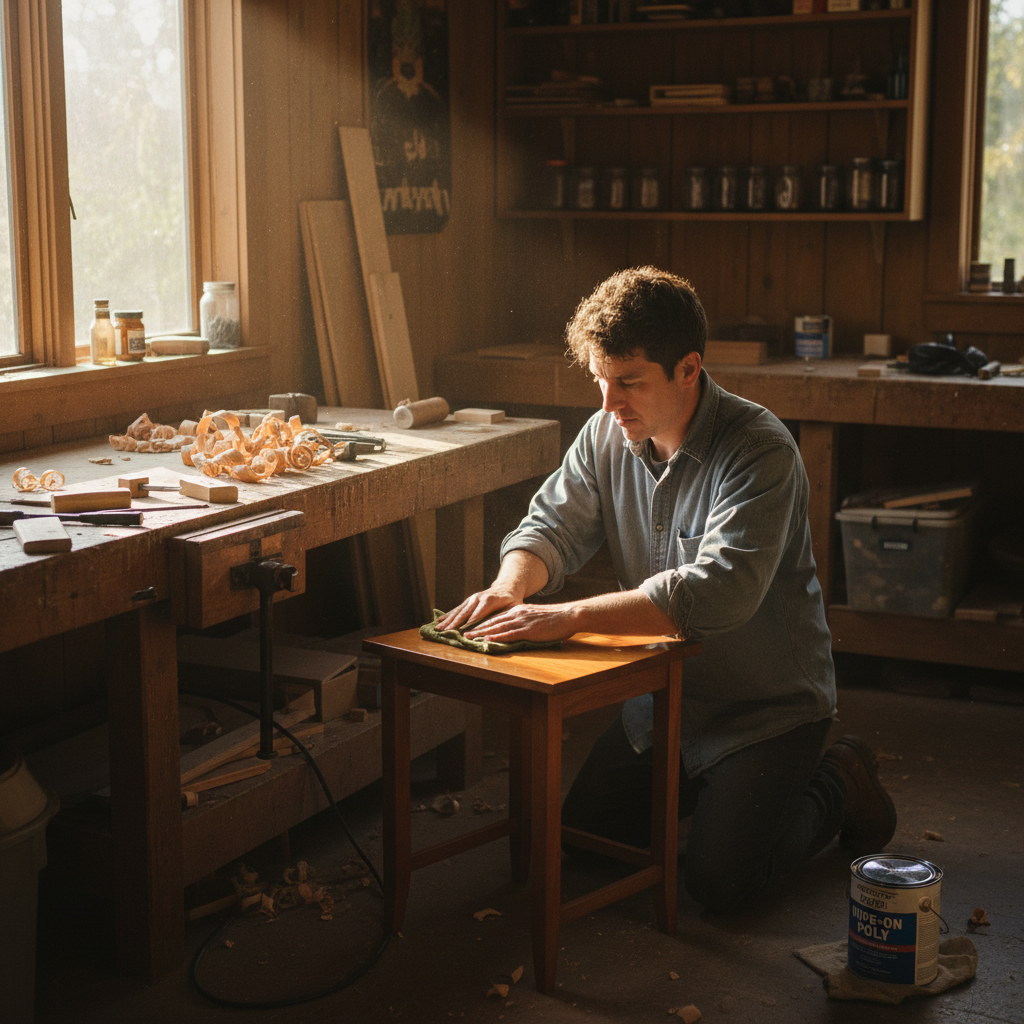

Carpenters will tell you to prep the wood before they discuss anything else, and there's a reason for that. With a natural oil finish, every flaw in the surface telegraphs straight through the finished coat. The oil doesn't build a film to hide imperfections the way polyurethane does. It soaks in, which means the wood you start with is the wood you end up showing.
That transparency is exactly why oil finishing is so satisfying when you get it right. The grain comes alive, the surface stays touchable rather than plastic, and the finish is repairable without stripping everything back to bare wood. But the process has a few genuine decision points that most beginner guides flatten into a single vague step called "apply the oil."
The tension most beginners hit is this: natural oils cure by oxidation, not by evaporation, which means extra coats don't speed anything up. They slow cure time down and can leave you with a surface that stays tacky for days or never fully hardens at all. Understanding that mechanism changes how you apply the finish entirely.
Choosing the Right Oil for Your Project
The oil you pick isn't a style choice. It determines how long you wait between coats, how hard the final surface gets, and whether the finish is food-safe. Get this wrong and no amount of careful application fixes it.
Pure tung oil and linseed oil are the two most common natural options in the US market. Tung oil, pressed from the nut of the tung tree, cures harder and is more water-resistant than raw linseed oil. It takes longer between coats (typically 24 hours minimum per coat in normal conditions) but builds a more durable surface. Raw linseed oil cures slowly. Boiled linseed oil, or BLO, cures faster because metallic driers have been added, but it's not food-safe and the "boiled" label is now mostly a historical misnomer. It isn't actually boiled.
Or rather: BLO is fine for furniture and tool handles, but keep it away from cutting boards and butcher blocks. For anything that contacts food directly, pure food-grade mineral oil or a dedicated cutting board oil (many use a blend of mineral oil and beeswax) is the correct choice. Neither tung oil nor linseed oil qualifies as food-safe once cured, and that exclusion matters for a specific group of beginners: anyone refinishing kitchen items should stop here and select a different product entirely.
Danish oil and teak oil are also common on US store shelves, but they're blends, not pure oils. Their composition varies by brand, they often contain varnish or mineral spirits, and they're not what this guide covers. This article is specifically about pure oil finishes, not blended wiping varnishes sold under oil-adjacent names.
Quick-reference: oil selection by use case
Match oil to purpose before buying anything else.
- Furniture, floors, decorative items: tung oil or BLO
- Outdoor furniture or decking: tung oil (better water resistance)
- Tool handles: BLO (affordable, adequate durability)
- Food-contact surfaces: food-grade mineral oil only
One product I'd start with for most indoor furniture projects is 100% pure tung oil, diluted 1:1 with citrus solvent for the first coat. It penetrates more deeply than full-strength oil on the first pass and cuts dry time without adding petroleum-based solvents.
Preparing the Wood Surface
Sand to 180-grit for most projects. Stop there. Going finer than 220-grit on open-grained woods actually closes the pores enough to reduce oil absorption, which means you've sanded more and gotten a worse result. That's the kind of thing finish carpenters know and beginner guides skip.
Work through grits progressively: 80 if the surface is rough, then 120, then 180. Each grit removes the scratch marks from the one before it. Skipping grits doesn't save time; it just means deeper scratches survive under a finer surface texture and show up once the oil goes on. The most common mistake I see is jumping from 80 straight to 220 and wondering why the oil looks uneven.
After sanding, raise the grain. Wipe the wood with a damp cloth, let it dry completely (at least an hour, longer in humid conditions), then sand lightly with 220-grit. This step makes the wood's fibers stand up and then cuts them off cleanly, so they don't pop up again when the oil's wet and leave a rough finish. Skip it and your final surface will feel slightly fuzzy.
Remove all dust before oiling. A tack cloth works, but a clean cotton rag barely dampened with mineral spirits does the job just as well and doesn't leave tacky residue if you use too much pressure. Let the surface dry completely before any oil touches it.
Applying the Oil: The Process That Actually Works
Flood the first coat on. Apply more oil than you think is necessary, let it soak for 15 to 30 minutes, then wipe off every bit of excess. Every bit. Oil left sitting on the surface doesn't cure into a smooth coat. It cures into a sticky, gummy film that takes days to harden and sands off as a gummy mess. This is where most first-time oil finishers go wrong, and the fix is simple: wipe off more than feels right.
Use a lint-free cotton rag (old T-shirt material is ideal) and work with the grain on the wipe-off pass. Apply in circular motions if you want, but always finish the wipe-off stroke along the grain direction. This reduces streaking.
Let the first coat cure fully before adding another. With pure tung oil at room temperature (around 65 to 75°F), that's typically 24 hours between coats. BLO in similar conditions can be ready in 12 to 18 hours. Humidity above 70% slows both significantly. If you press on the surface and it feels even slightly tacky, it isn't ready. Adding oil on top of an uncured coat traps solvents and can prevent the lower layer from ever fully hardening.
The better question is how many coats you actually need. Three coats is a practical benchmark for most furniture surfaces. The first coat is mostly absorbed; you're building the foundation. The second coat starts to show the finish. The third coat, if the surface is properly prepped, is where you decide whether you want to stop or refine further. Each additional coat past three adds diminishing returns on protection and increasing risk of buildup on the surface. For tool handles or items that take a beating, four or five coats is reasonable. For a tabletop that'll see daily use, consider a harder topcoat over the oil rather than stacking more oil coats.
If you skip all of the above and apply multiple coats without wiping off the excess, you won't get a thicker or more protective finish. You'll get a surface that stays tacky indefinitely and eventually has to be stripped. That's not a recoverable mistake on a nice piece of wood.
Drying, Curing, and When the Finish Is Actually Done
Dry and cured are not the same thing. This is where the oxidation mechanism matters most practically.
An oil finish is dry when it no longer transfers to a cloth under light pressure. It's cured when the oil has fully cross-linked through oxidation and reached its final hardness. For tung oil, that full cure can take two to four weeks at room temperature, even after the surface feels dry to the touch. BLO can take a similar timeline to reach full hardness. During that window, the surface is more vulnerable to water rings, scratches, and indentations than it will be at full cure.
That framing misses something. The surface can be used before full cure, just not hard. Put a glass of water on a two-day-old oil finish and you'll likely get a white ring. Wait two weeks and the same glass leaves nothing. Knowing this lets you plan: finish the piece, wait a week before putting it into service, and tell anyone using it to use coasters for the first month. That's practical, not precious.
Ventilate the workspace during application and curing. Linseed oil and tung oil vapors aren't acutely hazardous at typical DIY concentrations, but working in a well-ventilated space is standard practice. More urgently: oil-soaked rags are a genuine fire hazard. Linseed oil in particular generates heat as it oxidizes, and a balled-up rag can reach combustion temperature on its own. Lay used rags flat outdoors to dry, or submerge them in water in a metal container. This isn't theoretical. It's the one safety step in oil finishing that has real consequences if ignored.
Maintaining and Repairing an Oil Finish
The best argument for oil over film finishes is repairability. A scratched polyurethane coat needs to be sanded back and recoated over a large area to blend invisibly. A scratched oil finish gets a fresh coat of oil wiped on, left to soak, wiped off, and allowed to cure. Done correctly, the repair is invisible.
Maintenance frequency depends on how hard the piece works. A dining table in daily use benefits from a fresh oil coat once or twice a year. A wooden bowl or cutting board (using food-grade mineral oil) might need a coat every month or two in dry climates. The signal to re-oil is when the wood starts looking dry and the surface loses its slight sheen. Don't wait for the wood to crack.
And for pieces that have an old, failing film finish (peeling varnish, cloudy lacquer): you can't oil over it. The oil needs bare wood to absorb into. Strip the old finish first, sand back to clean wood, and start fresh. Trying to oil over a film finish gives you oil sitting on top of the old surface with nowhere to go. It won't bond, it won't cure properly, and you'll have wasted the effort.
When an Oil Finish Is the Wrong Choice
Oil finishes are not the right answer for every project. Floors are the clearest example. A pure oil finish on hardwood floors offers minimal abrasion resistance compared to a polyurethane or hard-wax oil specifically formulated for floor use. You can oil a floor, but it'll need maintenance every few months under normal foot traffic and won't stand up to a chair being dragged across it without showing wear fast. If you're finishing a floor, use a product rated for floor use.
Outdoor projects in harsh climates, particularly in humid coastal regions of the US or areas with freeze-thaw cycling, also push the limits of pure oil. Tung oil holds up reasonably well outdoors, but without UV inhibitors it will gray and degrade in direct sun. For outdoor furniture that lives in full sun, a dedicated exterior oil or modified tung oil product with UV protection is a better fit than pure tung oil alone.
Finally: if you need a surface ready for heavy use in days, not weeks, oil finishing isn't your answer. A waterborne polyurethane can be fully cured and ready for daily use in 72 hours. Oil finishing rewards patience. If the project timeline doesn't allow for two to four weeks of cure time before the piece goes into hard service, choose a different finish.
Getting a Natural Oil Finish Right
If you're standing in a hardware store right now trying to decide what to buy: pick a 100% pure tung oil for a first project, not a blended "Danish oil" or anything labeled as a wiping varnish. Read the label for actual ingredients. That single decision saves a lot of frustration later.
Sand to 180-grit, raise the grain with a damp cloth, sand lightly with 220. Apply oil generously, let it soak 15 to 30 minutes, wipe off all excess. Wait a full 24 hours before the next coat. Three coats covers most projects. Lay your rags flat or dunk them in water before throwing them away. Let the piece cure two weeks before treating it as fully finished.
If the surface stays tacky after 48 hours, you left too much oil on the surface. Sand lightly with 320-grit, wipe clean, and apply a thinner coat with a more aggressive wipe-off. That repair works. Starting over is rarely necessary.