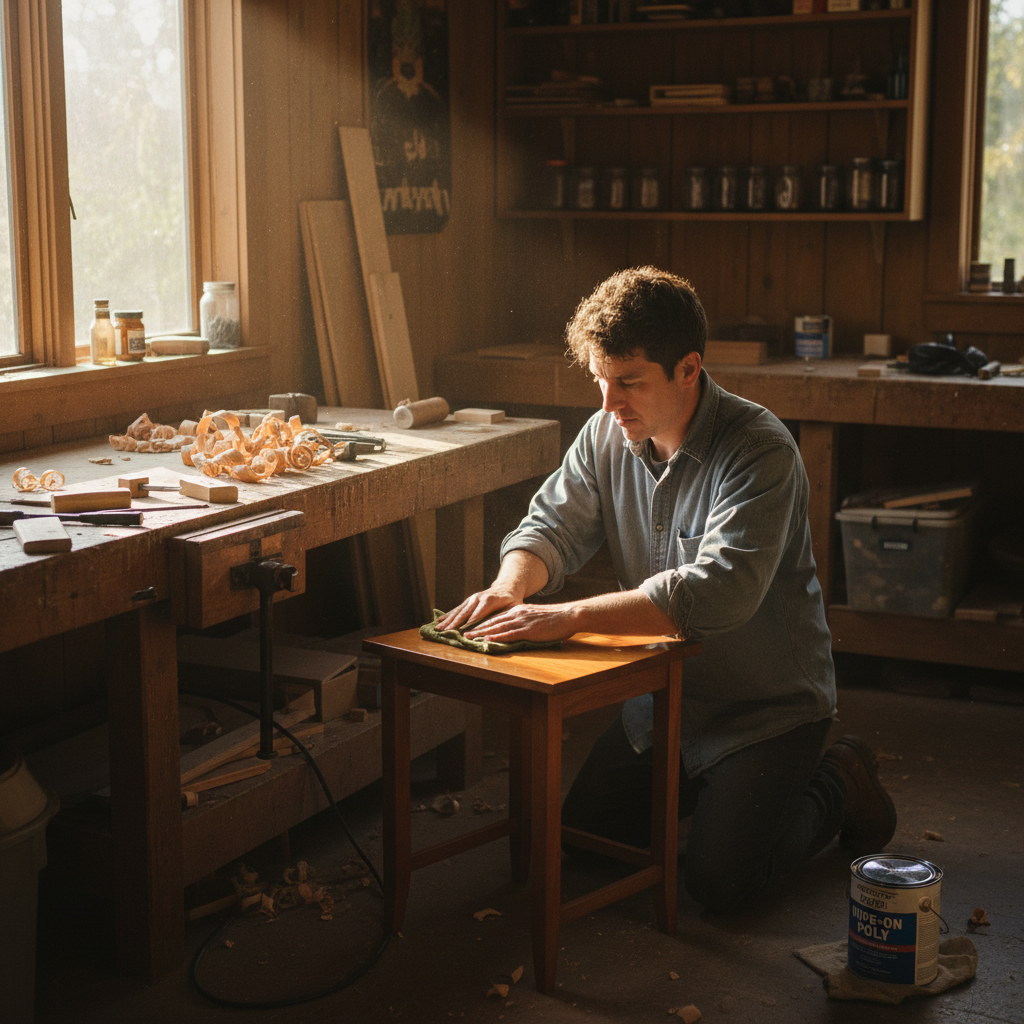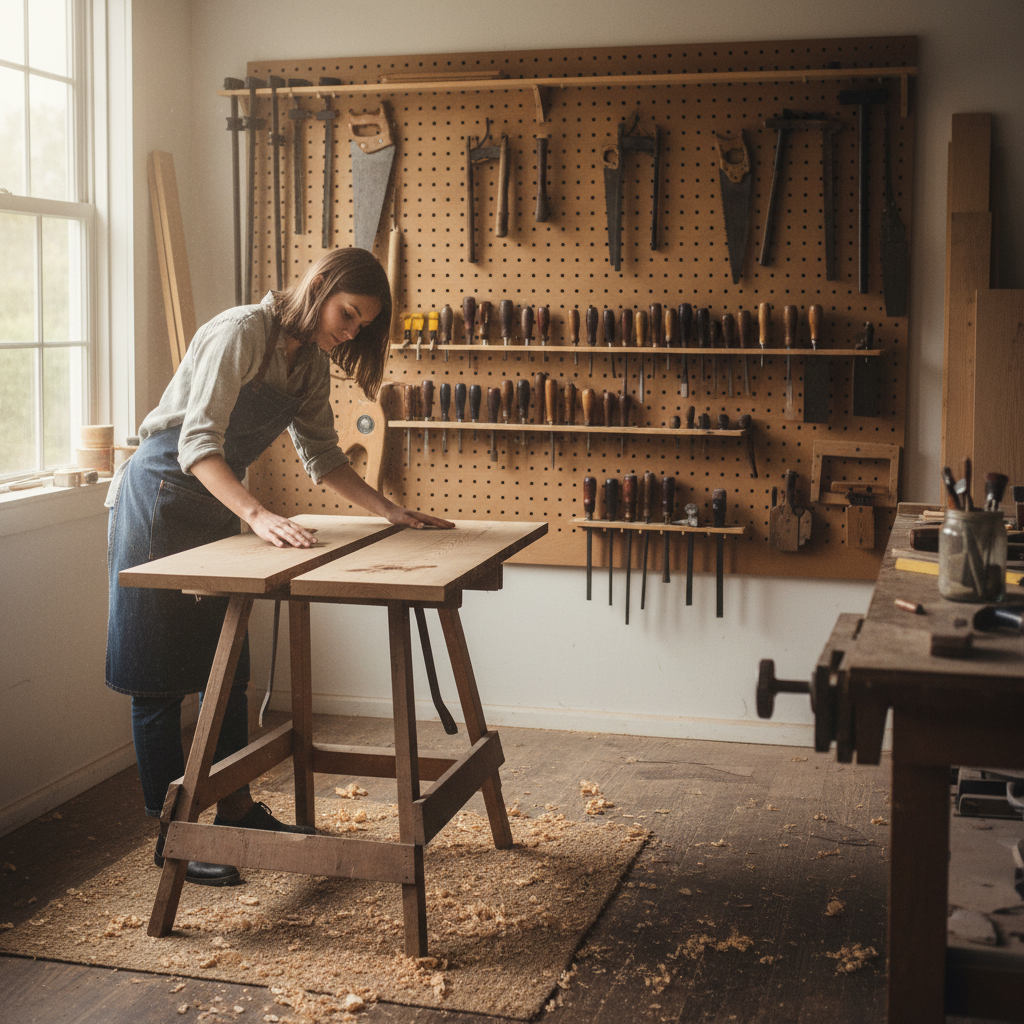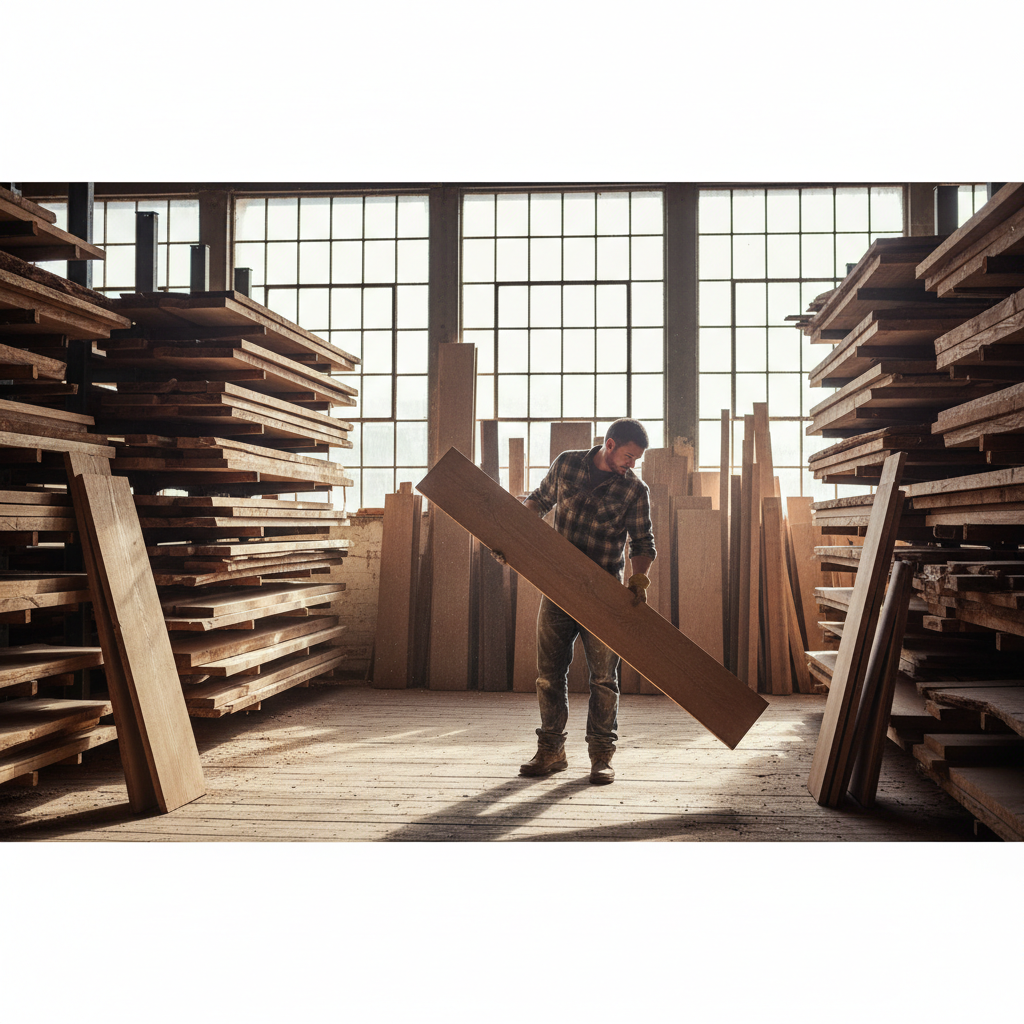
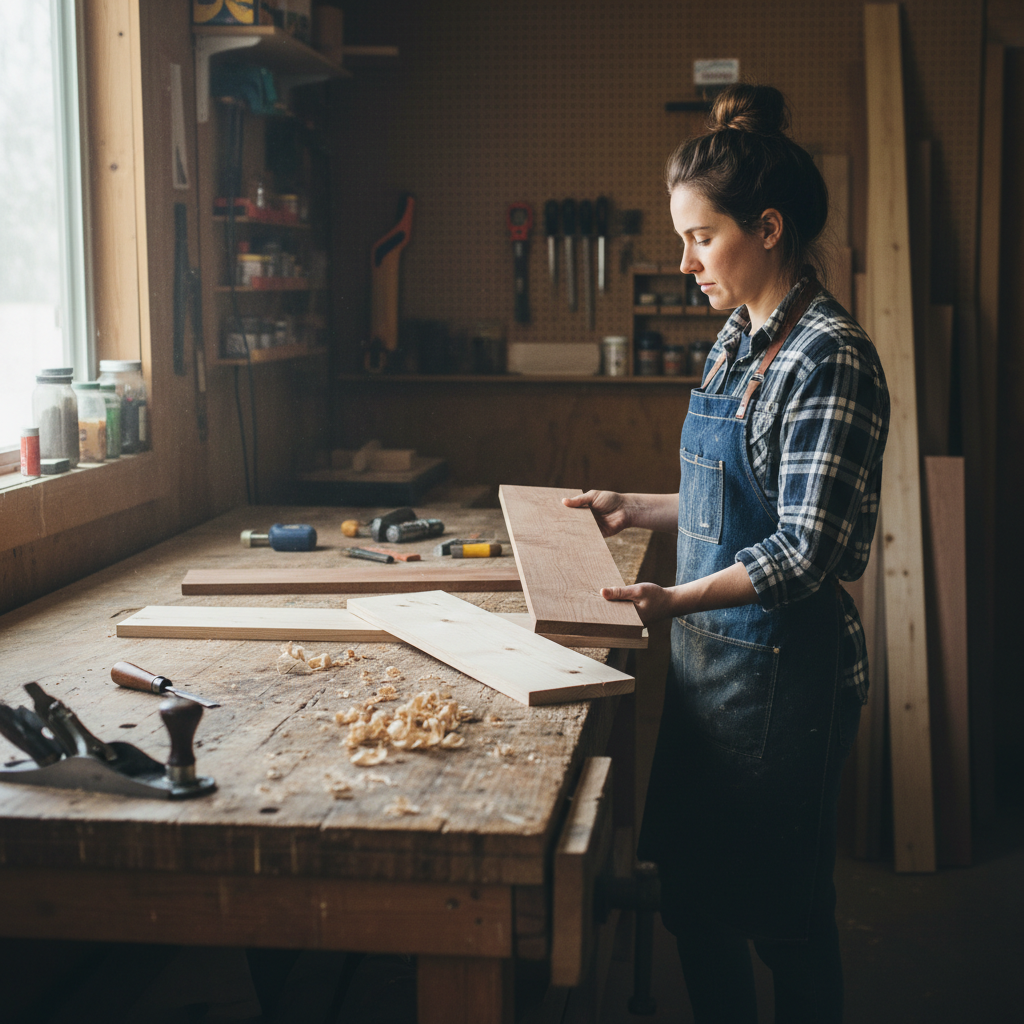
A woodworker will tell you to check moisture content before you buy a single board, and there's a reason for that. Wet lumber moves after you cut it, and your carefully fitted joints open up like they were never there. Choosing wood for your first project isn't just about species names on a rack at the lumber yard; it's about understanding why certain boards behave the way they do under a beginner's tools.
The honest answer is that the best beginner wood depends on three things most guides leave out: your specific tool set, whether you're working with hand tools or power tools, and how much the board needs to look finished versus just functional. Pine behaves very differently under a hand plane than under a router, and that distinction changes the recommendation entirely.
Here's the tension nobody mentions: the woods sold as "beginner-friendly" at big-box stores are often the hardest to get a clean finish on, because cheap pine is full of resin pockets and wild grain. The wood that actually teaches you the most is a little further down the rack and costs a few dollars more per board foot.
Why Wood Species Matter More Than Most Beginners Expect
Wood is not a uniform material. Even within a single species, boards cut from different parts of the tree behave differently, and a beginner picking up random boards from a stack at Home Depot is rolling the dice on grain direction, moisture content, and hidden defects. Understanding what you're selecting for changes what you buy.
The grain is the biggest variable. Straight grain means the wood fibers run parallel to the length of the board. Tear-out happens when you cut against the grain, and tear-out on soft pine can ruin a surface completely. Harder, tighter-grained woods like poplar resist tear-out better, which is the first reason poplar is a better learning wood than pine despite costing more.
Or rather: the issue isn't just grain direction. It's that softwoods dent easily, and a beginner's clamp pressure leaves marks that no amount of sanding removes cleanly. You learn bad habits from forgiving materials and can't always tell whether your technique is sound or whether the wood is just accommodating your mistakes.
Moisture content matters in a practical, immediate way. Lumber from a home center is often not fully dried to the equilibrium moisture content of an interior space, which runs roughly 6 to 8 percent in most US homes. Wood that dries further after you build with it shrinks, and shrinkage across the grain can crack glued panels or pop joints open. Buying S4S (surfaced four sides) lumber from a hardwood dealer gives you better control over this from the start.
The Best Beginner Woods, Ranked by Honest Criteria
This isn't a ranked list of every wood species available. It's a comparison of the four species beginners actually encounter and seriously consider, evaluated against three criteria that matter: workability with common beginner tools, availability at US lumber suppliers, and forgiving finish behavior.
The table below compares them directly.
| Species | Workability | Availability | Finish Behavior |
|---|---|---|---|
| Poplar | Excellent: machines cleanly, low tear-out | Wide: most hardwood dealers, some big-box | Takes paint very well; stain is blotchy |
| Pine (clear) | Fair: soft, dents easily, resin pockets | Very wide: every home center | Difficult: blotchy stain, requires conditioner |
| Hard Maple | Good but demanding: dulls tools faster | Moderate: hardwood dealers | Excellent: takes finish evenly |
| Red Oak | Good: predictable grain, forgiving cuts | Wide: most hardwood dealers | Very good: open grain needs filler for glass-smooth |
Poplar comes out ahead for most beginners because it sits at the intersection of all three criteria: it machines like a dream with basic power tools, it's stocked at most hardwood dealers in the US for roughly $2 to $4 per board foot, and it paints cleanly without blotching. If your first project is a painted bookcase or shop cabinet, poplar is the right answer. Not because it's the cheapest, but because it teaches you accurate cuts without punishing minor mistakes the way pine does.
Red oak is the better choice if you want a clear or stained natural-wood finish on your first project. The grain is open enough to be visually interesting and forgiving enough that you don't need museum-level technique to get a satisfying result. A coat of boiled linseed oil followed by a wiping varnish shows oak's figure beautifully, and that positive feedback matters when you're learning.
I'd start beginners on poplar for painted work and red oak for natural finishes, in that order. The price difference between them is small enough that choosing based on your finish plan rather than the sticker price is the right move.
Hand Tools vs. Power Tools Changes the Answer
Everything above assumes you're working primarily with power tools: a circular saw or miter saw, a drill, maybe a router. If you're building a hand-tool kit instead, the species ranking shifts.
Hard maple and cherry are notoriously difficult to hand-plane because they're dense and the grain can reverse unpredictably. Pine, which is genuinely terrible under a router, is actually pleasurable under a sharp hand plane because the fibers cut cleanly when your edge is good. English furniture makers learned on pine and fruitwoods for centuries. The softness that causes problems with power tools becomes an asset when you're paring with a chisel.
But here's where beginners get misled: pine is only pleasant under hand tools when the tools are sharp. A dull chisel on pine crushes the fibers instead of cutting them, and the result looks worse than the same chisel on oak would. The real beginner lesson isn't which wood to choose. It's that your tool's edge quality matters more than species selection for hand-tool work.
So the decision rule, stated plainly: power-tool beginners should start with poplar or red oak. Hand-tool beginners should start with clear pine or basswood, with the understanding that sharpening must come first. Basswood in particular is soft, consistent, and almost grain-free, which makes it the species carvers have used for practice for generations.
When Poplar and Oak Are the Wrong Choice
There are real situations where the standard recommendation fails, and it's worth being direct about them.
If your budget is genuinely tight and you're building something purely functional like shop storage or a workbench base, buying poplar from a hardwood dealer is unnecessary. Construction-grade lumber works fine for structural pieces that will be painted or covered. The recommendation to use poplar is for furniture or casework where the surface quality of the finished piece matters. It doesn't apply to shop infrastructure.
If you're working outdoors, neither poplar nor red oak belongs in your first project. Both are prone to rot without extensive finishing, and finishing exterior pieces correctly is its own skill set. Beginners building outdoor furniture should look at cedar or pressure-treated pine for structural parts, accepting that those come with their own workability quirks.
Beginners who skip species selection entirely and grab whatever dimensional lumber is cheapest at the home center often end up with warped, wet boards that move after the glue dries. That's not a bad-luck outcome. It's a predictable one, and the result is a project that teaches frustration rather than technique. Spending an extra ten to fifteen dollars on better material for a first project is not extravagance; it's how you ensure the experience is worth repeating.
Buying Wood the Right Way
Where you buy matters as much as what you buy. Home centers stock pine and sometimes poplar, but the boards are often not selected for quality, and you'll find cupped, twisted, and wet boards in the same stack as usable ones. A local hardwood dealer lets you sort through the rack yourself and buy exactly what you need by the board foot.
When you're at the dealer, check three things before any board goes in your cart: flatten it on the rack to check for cup and twist, sight down the length to spot bow, and look at the end grain to confirm it's been dried to a reasonable moisture level (end checking, the small cracks at the board ends, is a sign of faster drying and doesn't necessarily indicate a defective board). Board feet, not linear feet, is the unit hardwood dealers use; one board foot equals 144 cubic inches, so a 1-inch thick, 6-inch wide, 24-inch long board is exactly one board foot.
A common guideline is to buy 20 percent more material than your cut list requires. That accounts for defects you'll find after the first cut, grain direction adjustments, and the occasional mistake. It's not a hard rule, but it reflects how projects actually go in practice.