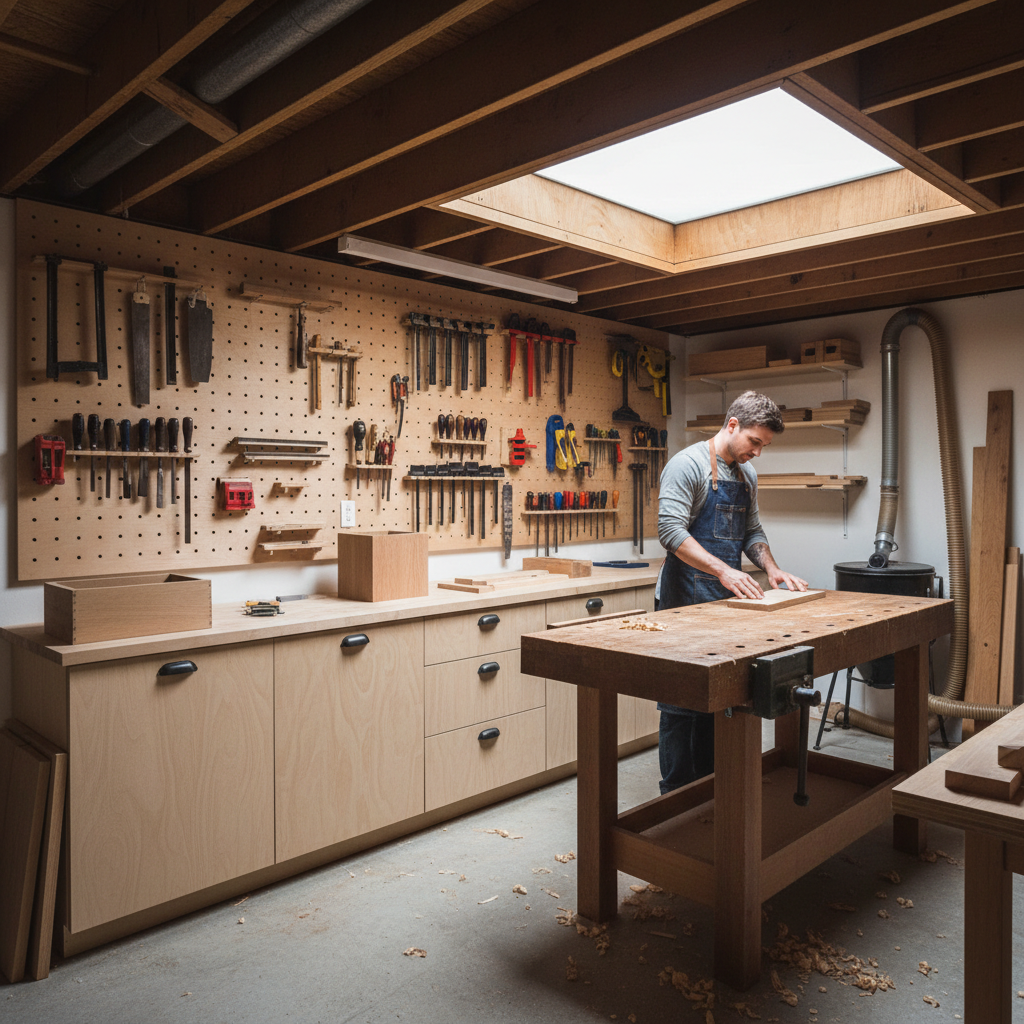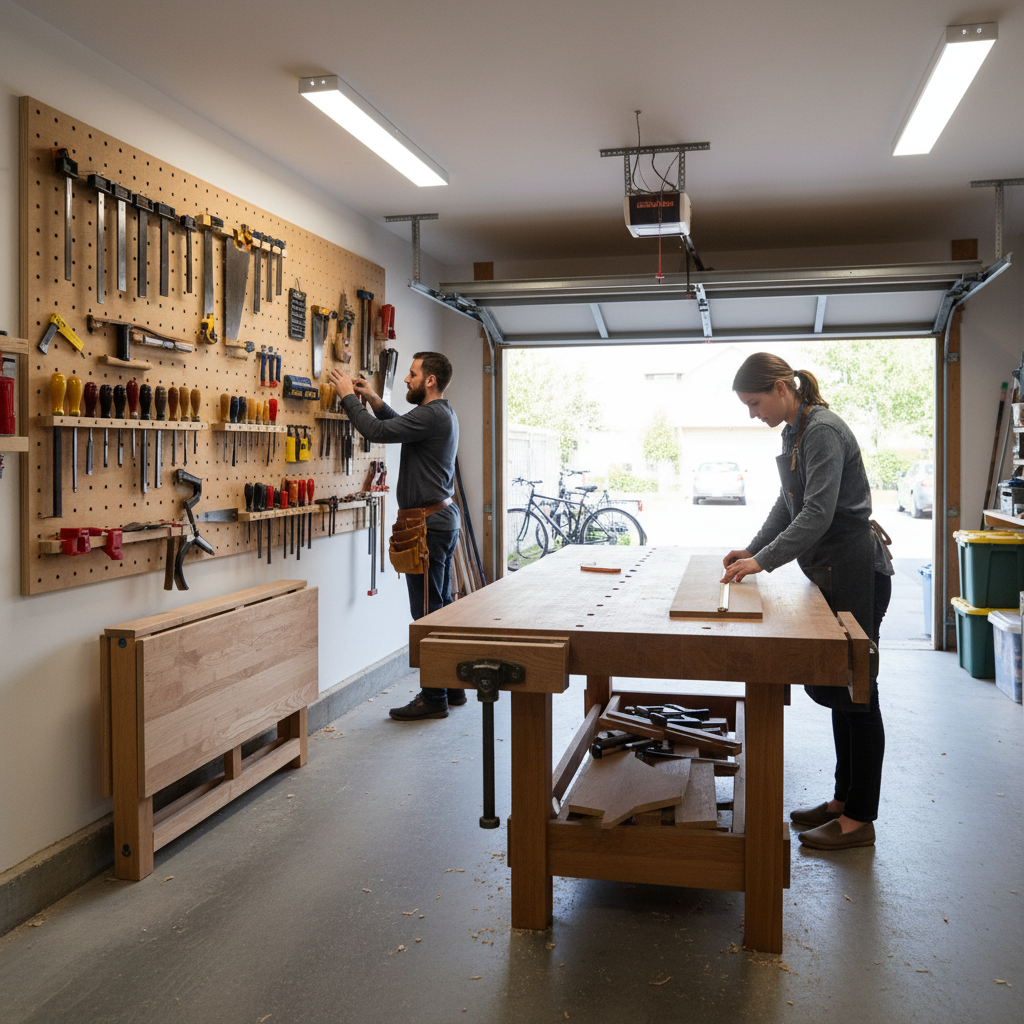
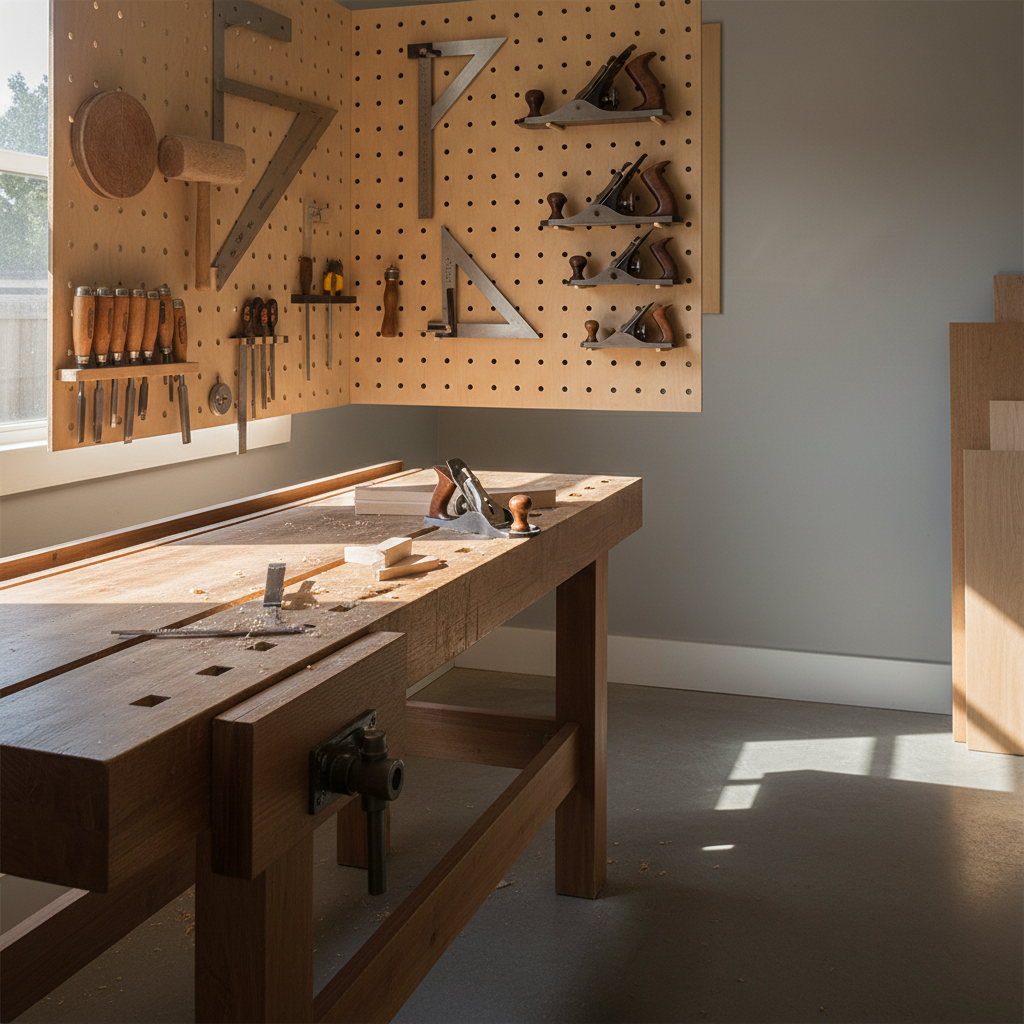
Woodworkers will tell you where your chisels hang before they discuss almost anything else about shop setup, and there's a reason for that. The pegboard isn't just storage. It's a decision about how you move through a workspace dozens of times per session, and a poor layout makes every cut slightly more annoying than it needs to be.
Organizing a pegboard for woodworking isn't hard, but it's also not as obvious as it looks. The tools that belong within arm's reach of your bench are different from the ones you'd store overhead. Your dominant hand changes what's efficient. And the pegboard you set up during your first month will probably look nothing like the one you're using in month six, once you know which tools you actually grab versus which ones you bought thinking you'd use them.
Here's the tension nobody mentions in the typical shop-organization post: a pegboard organized by tool type looks tidy in a photo but fights your workflow constantly. Organization by frequency of use looks messy in photos but saves real time. You can't have both, and if you optimize for aesthetics, you'll be re-routing every session.
The Zone Framework: Where Your Tools Should Actually Live
Think of your pegboard in three horizontal bands. The hot zone runs from roughly elbow height to shoulder height. The reach zone goes from knee level up to elbow and from shoulder up to eye level. Everything above eye level is dead storage for tools you use less than once a month.
The hot zone is where you hang every tool you touch mid-project without thinking: marking gauge, a square, your most-used chisels (typically a 1/4-inch, a 3/4-inch, and a 1-inch for beginners), a mallet, and the hand plane you actually reach for. These items should never require you to look away from your bench for more than a half-second. If you're hunting, they're in the wrong zone.
The reach zone handles tools you pull out at the start of a task but don't continuously grab: a combination square, a block plane, a card scraper, rasps. These don't need prime real estate. They need a consistent spot you can walk to without breaking concentration.
Or rather: the zones are really about frequency, not tool category. A marking knife used constantly belongs in the hot zone even though it's tiny. A router plane used occasionally belongs in the reach zone even though it's substantial. Category thinking will mislead you here. Frequency thinking won't.
What Goes on the Pegboard First (and What Doesn't Belong There)
Start with your hand tools. Chisels, mallets, squares, marking tools, hand saws, and clamps under 12 inches are natural pegboard residents. They're grab-and-go by design. Hang them handle-up or blade-up depending on what lets you grip without adjusting your hand, and that answer is different for chisels (handle up, gripped from above) versus hand saws (hang by the hole in the toe, vertical, so the blade is parallel to the board).
This article isn't about power tool storage, cabinet organization, or lumber racks. Routers, sanders, and drills are heavier than standard pegboard hooks handle safely without a backing board reinforcement most beginners skip. Those tools earn a dedicated shelf or cabinet. Pegboard for a beginner should stay in its lane.
Clamps deserve a specific note. Bar clamps and pipe clamps are too heavy and awkward for pegboard. F-clamps under about 10 inches can work with heavy-duty double hooks, but honestly, a simple horizontal dowel strip below the pegboard handles clamps better than any hook arrangement. Spring clamps and small C-clamps are genuinely pegboard-friendly and worth the hook real estate since you grab them constantly.
What actively doesn't belong: measuring tape (pocket), pencils (apron or cup on the bench), sandpaper (drawer or labeled box), consumables of any kind. Pegboard is for tools with a fixed shape and a fixed hook. Every time someone hangs a box of screws on a pegboard hook, a woodworker somewhere sighs.
Hook Selection and Board Setup: The Part That Actually Determines Whether This Works
Standard 1/4-inch pegboard from a home center is adequate for most hand tools. Go with 1/2-inch pegboard if you're hanging anything over about two pounds per hook, which includes most mallets and heavier hand planes. The difference in cost is negligible; the difference in sag over two years is not.
Hooks matter more than most beginners expect. The plastic hooks that come in starter kits pull out under light loads and rattle constantly. Locking metal hooks (the kind with a secondary tab that catches the board from behind) stay put. They cost more per hook but you'll buy them exactly once. A mixed-hardware starter set might look economical at $15 to $25 but you'll replace half of it within a season.
Before hanging anything, trace your tools onto the board with a marker. Lay them on the floor in the zone arrangement you've planned, photograph it, then transfer to the board. This step feels unnecessary until the third time you relocate everything because the arrangement didn't account for handle clearance or hook spacing. Do it once.
Standoffs are non-negotiable if you're mounting to drywall or studs. A pegboard mounted flush against the wall gives hooks nowhere to engage from behind. You need at least 3/4 inch of clearance between the board and the wall. Furring strips along the top and bottom edges handle this cleanly and cost almost nothing.
Check your bench height, your tool count, and your dominant-hand reach before you drill the first hole. Those three inputs determine where your board goes and how wide it runs.
When Pegboard Layout Fails (and What to Do Instead)
Pegboard works brilliantly in shops where the workbench faces the pegboard and the woodworker moves parallel to the wall. It works poorly in L-shaped or U-shaped bench configurations where the board ends up behind the worker or requires a 180-degree turn for every tool grab. If your shop layout puts your back to the pegboard during most operations, a wall-mounted tool cabinet or a rolling tool cart positioned beside the bench will serve you better.
Beginners with fewer than 20 hand tools should seriously consider whether they need pegboard at all. A 24-inch wide pegboard holding 12 tools with gaps between them is less useful than a French cleat strip at bench height with purpose-built holders for each tool. French cleats let you reconfigure without re-drilling and they handle uneven tool shapes better than hooks. The pegboard vs. French cleat decision is real, and the answer depends on how many tools you have and how often the collection changes.
Humidity is worth naming. Unfinished pegboard in a garage shop (no climate control) will swell and warp in humid summers, loosening every hook. If your shop isn't climate-controlled, either seal the pegboard with a coat of paint or shellac, or use a hardboard product rather than raw MDF-core board. A warped pegboard isn't just ugly. It drops tools.
A Starter Layout That Actually Works
The table below shows a practical starting layout for a beginner with a standard 48-by-24-inch pegboard mounted directly behind a workbench. This isn't the only right arrangement. It is a tested starting point that avoids the most common beginner mistakes.
Each zone reflects frequency of use, not tool category. Adjust column widths based on your dominant hand: right-handed woodworkers should shift the hot-zone tools slightly left of center so they're reachable without crossing the body.
| Zone | Height on Board | Tools to Hang Here | Hook Type |
|---|---|---|---|
| Hot Zone | Elbow to shoulder | Chisels (1/4, 3/4, 1 in.), mallet, marking gauge, combination square, most-used hand plane | Locking metal hooks, chisel rack |
| Reach Zone (upper) | Shoulder to eye level | Block plane, card scraper, second square, cabinet scraper | Locking double hooks |
| Reach Zone (lower) | Knee to elbow | Small C-clamps, spring clamps, rasps, files, marking knife | Locking single or J-hooks |
| Dead Storage | Above eye level | Specialty tools used less than monthly (router plane, shoulder plane) | Any secure hook; retrieval speed unimportant |
The hot zone earns its name. Every tool listed there should be reachable from your bench position without taking a step. If even one of them requires moving your feet, shift the board position or rethink which tool belongs in that zone for your specific setup.
Leave deliberate blank space. A pegboard with no open hooks is a pegboard you've already outgrown. Budget roughly 30 percent open hooks when you first set up. Your collection will grow, your preferences will shift, and that space absorbs both without a full reorganization.
Building a Layout That Evolves With You
The most common mistake in beginner shop organization isn't hanging tools in the wrong zone. It's treating the first arrangement as permanent. Your pegboard at month one should look different from your pegboard at month twelve, because you'll discover that the shoulder plane you thought you'd grab constantly has lived untouched on its hook for eight weeks, and the block plane you almost didn't hang gets pulled down forty times per session.
Photograph your board every couple of months and look at the dust patterns. The tools with clean hooks are getting used. The tools with dusty handles have found a home that's too inconvenient, or they're tools you bought optimistically and don't actually need yet. Move them out of prime real estate without guilt. Buyers skip this honest self-audit until they've reorganized their whole shop twice because of tools they were emotionally attached to placing prominently.
I'd start with just the chisels, a mallet, a marking gauge, and one hand plane in the hot zone. Add tools to the board only as you actually use them, not as you acquire them. A half-empty pegboard at month one that gets filled organically by month six is a more honest shop layout than a fully loaded board that never quite matches how you work.
If you never do this, you'll spend roughly five to ten minutes per session hunting, repositioning, or working around a layout that doesn't match your actual habits. That's not catastrophic. But across a year of regular shop time, it adds up to hours of friction that could have been a decent afternoon of actual woodworking.
Setting Up Your Pegboard This Weekend
Mount the board with standoffs first. No standoffs means no functioning hooks, and that's a Sunday afternoon wasted. Use locking metal hooks only. Trace your tools before you hang them, photograph the arrangement on the floor, then transfer it to the board. Start with tools you've actually used in the last two weeks in the hot zone, everything else in the reach zones, and leave 30 percent of the hooks empty.
Resist the urge to make it look complete. A pegboard that works beats a pegboard that photographs well every time.