A woodworking instructor will tell you to pick a project smaller than you think you need before they discuss anything else, and there's a reason for that. Beginners who start one-day woodworking projects almost always underestimate how long the finishing stages take, and that gap between expectation and reality is where first projects go unfinished and the hobby quietly dies.
The good news is that genuinely impressive beginner pieces exist, and finishing one in a single day is realistic if you match the project to what you actually have: a specific tool list, a specific wood budget, and a workspace that may or may not have a workbench. Those three constraints matter more than ambition, and ignoring any one of them is how a Saturday turns into three weekends of frustration.
This guide focuses on projects that look handmade in the best sense, not rough or remedial, while staying achievable with basic tools and no prior experience. It won't cover anything requiring a table saw, a router, or lumber you'd need to mill yourself. If your shop is a garage with a circular saw and a drill, you're exactly who this is written for.
Why Your First Project Choice Is a Skill Multiplier
The right first project doesn't just produce an object. It teaches you the three fundamentals that every subsequent project relies on: measuring accurately, making square cuts, and sanding through grits in sequence. A project that practices all three gives you a usable skill stack. One that skips them gives you a trinket and no forward momentum.
Or rather: it's not just about difficulty level. The deeper issue is whether the project has natural feedback loops. A small wall shelf teaches you immediately if your cuts weren't square, because the shelf will sit crooked on the wall. A floating phone stand shows you instantly if your angles were off. That immediate feedback is what accelerates learning faster than watching any tutorial.
The projects below are organized by the skills they build, not by some vague difficulty rating. Pick the one that matches the skill you most need right now, not the one that looks most impressive on Pinterest. That said, all of them photograph well, and none of them look like a first attempt when finished properly.
One more thing worth knowing: the wood species you choose changes the difficulty more than most beginner guides admit. Pine and poplar are forgiving and cheap, typically $3 to $6 per board foot at home centers like Home Depot or Menards. Hardwoods like oak and maple look better but expose every wobbly cut. Start with pine. You can always build the same project in oak six months from now and see the difference clearly.
Five Projects Worth Your Saturday
These five represent a real range of skills and finished appearances. Each one is achievable in six to eight hours including sanding and finishing, assuming you have the materials prepped before you start.
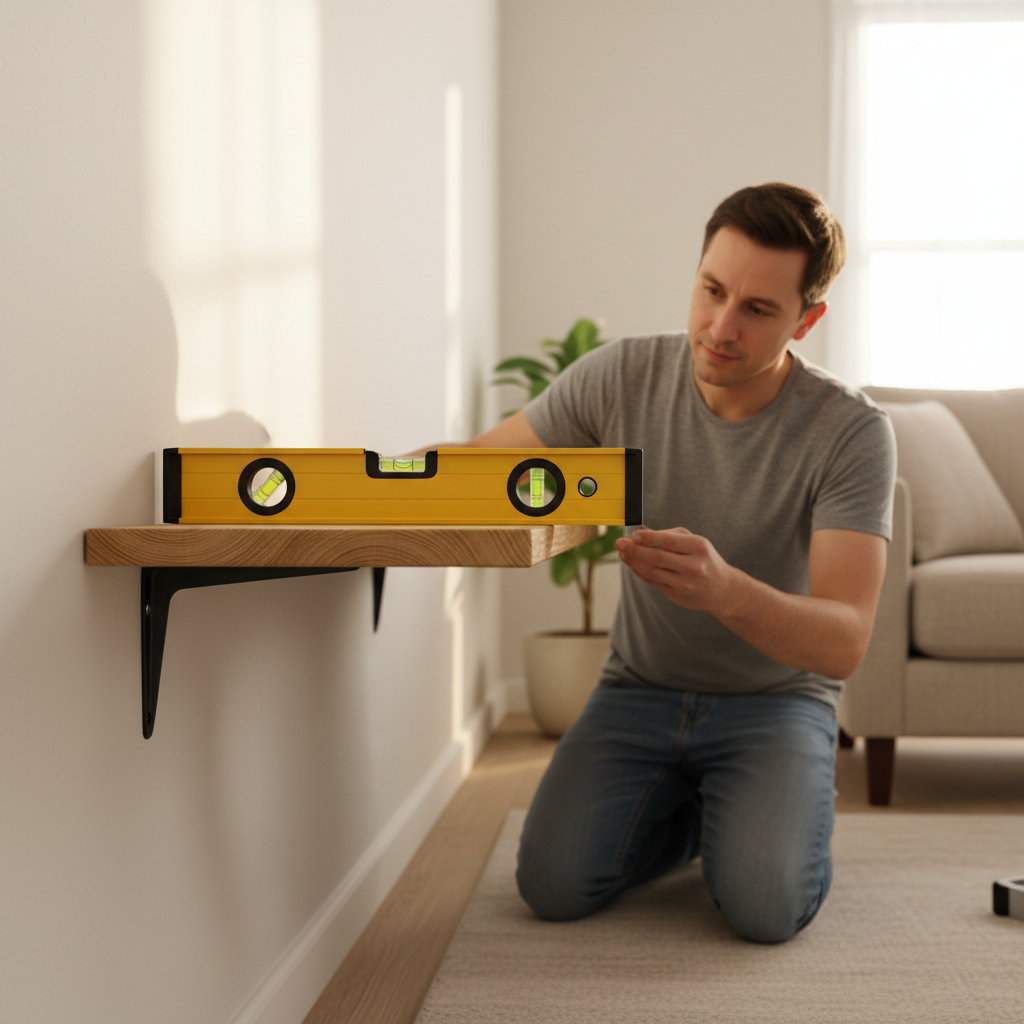
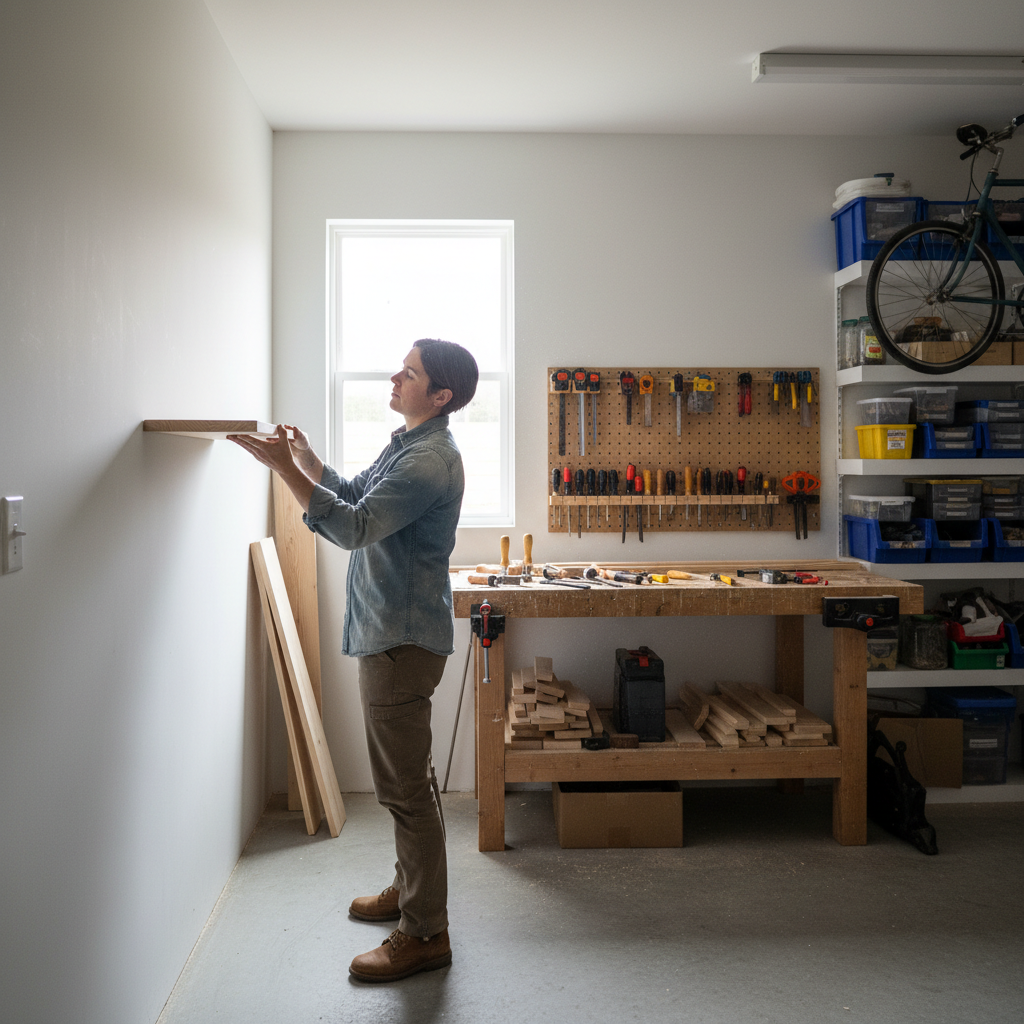
The small floating shelf is the single best first project for most beginners. A shelf 18 inches long, 6 inches deep, with a simple bracket made from a 1x6 pine board costs around $12 in lumber and teaches you square cuts, pilot holes, and wall anchoring all at once. The finished piece looks intentional in any room. If you skip the pilot holes and drive screws directly into the end grain, the wood will split. Do the pilot holes.
A simple step stool with two steps is more ambitious but still one-day friendly. You'll need a handsaw or circular saw, a drill, and wood glue plus screws. The structural requirement (it has to hold weight) gives you a reason to care about square joints that decorative projects don't. Use 3/4-inch pine or poplar, not 1/2-inch; the thinner stuff flexes under load and won't hold screws reliably.
A phone or tablet stand made from a single 1x4 board cut at two angles is almost embarrassingly quick, maybe two hours, but the design looks deliberate and modern. The challenge is cutting the angled slots cleanly. A miter box and handsaw work fine here. Sand to 220-grit before you do anything else, because this piece will be handled constantly.
A small wooden serving tray with side handles cut from a 1x8 is one of those projects that people assume took much longer than it did. Two handle cutouts with a jigsaw, a quick sanding sequence, and a coat of food-safe mineral oil and you're done. Mineral oil from a pharmacy is functionally identical to woodworking-branded versions and costs a third of the price.
A wall-mounted coat hook board using a piece of 1x4 or 1x6 pine with three or four dowel pegs or purchased Shaker hooks is genuinely useful and extremely forgiving. The only cut is a length cut, and the rest is drilling straight holes and driving screws. Buy the hooks at a hardware store rather than making them; shaped pegs are one of those things that look worse the more you try to hand-shape them as a first-timer.
Check your situation against these four before committing: available tools, finished dimensions that fit your space, whether you need food-safe finish, and your actual Saturday start time. Starting at 2 PM and expecting to finish a step stool by dinner is not realistic.
What Actually Decides Whether a Project Looks Amazing
Beginners almost universally obsess over cuts and almost entirely ignore finishing, and that's backwards. A slightly imperfect cut, once sanded, largely disappears. Sanding that stops at 80-grit instead of going to 120 and then 220 stays visible forever, especially under any stain or oil finish.
The sanding sequence is non-negotiable: start at 80-grit for any rough surfaces or mill marks, move to 120-grit to remove the scratches from 80, finish at 220-grit before applying any finish. If you skip 120 and jump from 80 to 220, the 80-grit scratches will show through your finish. This is the single most common reason beginner projects look amateurish, and it costs nothing to fix except fifteen extra minutes.
What you'll notice when you compare a piece finished with one coat of polyurethane versus two thin coats sanded lightly between them with 320-grit is that the second approach looks like furniture. The first looks like a school project. Thin coats, patience between them, and a light scuff-sand are the actual secrets.
For wood selection: straight grain hides imperfection better than figured grain. When you're at the lumber yard or home center, pick boards by looking down their length like a rifle barrel. Any bow, cup, or twist in that board will fight you the entire project. Reject it and pull the next one. This takes thirty seconds and saves hours.
If you skip the finishing steps entirely, you'll have a piece that looks rough and absorbs moisture unevenly, which causes warping over time. That's not hypothetical. Pine without any finish in a humid environment will start to move within weeks. One coat of Danish oil, wiped on and wiped off, takes twenty minutes and protects the wood adequately for indoor use.
When a One-Day Project Is the Wrong Goal
There's a real scenario where pushing to finish in one day produces worse results than spreading a project over two shorter sessions. Glue joints need time. Most wood glues, including standard PVA carpenter's glue, need at least thirty minutes of clamp time and ideally one to two hours before the joint takes stress. If you're rushing to finish in a day, you're likely to unclamp too early, stress the joint during assembly, and get a failure that won't show up until the piece is already on the wall or in use.
Beginners with no workbench face a compounding problem here. Without a stable surface to clamp against, you'll be improvising your setup, which takes longer and produces less accurate results. If your workspace is genuinely a kitchen table and a few clamps, pick the phone stand or the coat hook board over the step stool. The structural projects require more setup infrastructure than the decorative ones.
This is also not the right approach for anyone who wants to work with reclaimed or pallet wood. That lumber needs to be denailed, planed or thicknessed, and dried before it's workable, none of which is a one-day setup. Reclaimed wood is a great material, but it's a different project category entirely.
Tools You Actually Need (and One You Don't)
The minimum honest tool list for the projects above is: a circular saw or handsaw, a drill/driver, a tape measure, a combination square, clamps (two minimum), and sandpaper in three grits. That's it. You don't need a random-orbit sander for a first project, though it's worth buying before your second.
The tool beginners most often buy too early is a miter saw. It's a great tool and produces clean crosscuts quickly, but for the projects in this guide, a circular saw with a simple cutting jig (a straight board clamped as a fence) produces cuts accurate enough. A basic miter saw runs $150 to $250 for an entry-level model from brands like Ryobi or DeWalt. Save that money until you've finished three or four projects and know you'll keep doing this.
A combination square is the most underrated $15 tool in woodworking. Every beginner should own one before they own a second clamp. Use it to check every cut before you make it and every joint before you glue it. The combination square is what separates a piece that sits flat from one that rocks.
Buy clamps in pairs. A single clamp on a glue-up creates uneven pressure and the joint will shift. Two clamps, placed roughly equidistant from each end, distribute the pressure evenly. Cheap clamps from Harbor Freight work fine for pine and poplar at the scales we're discussing.
Finishing Your First Project
Pick one finish and learn it rather than experimenting with three. For indoor decorative projects, Danish oil is the most forgiving choice: it's hard to apply wrong, dries in a few hours, and produces a low-sheen result that looks intentional on pine. For the serving tray or anything food-adjacent, use food-safe mineral oil or a board cream that specifies food-safe on the label.
Apply Danish oil with a lint-free cloth, not a brush. Wipe on, let it penetrate for five minutes, wipe off the excess. One coat is adequate for protection. Two coats separated by a light 320-grit scuff produce a noticeably better result. Let the first coat cure for the time specified on the can (usually four to six hours) before applying the second.
The most common mistake I see in beginner finishing is applying too much. Danish oil that pools on the surface instead of being wiped off leaves a sticky, gummy residue that takes days to cure and looks uneven. Wipe it off. More is not better here.
Stain is a separate category and significantly less forgiving on pine, which absorbs stain unevenly due to its grain structure. If you want a colored finish on pine, use a pre-conditioner (Minwax makes one widely available at home centers) before applying stain. Skip the conditioner and you'll get blotchy results that no amount of additional coats will fix. I'd start with natural oil finishes for the first several projects and save stain for when you're working with a more consistent wood.
Your Saturday Plan
Start with the floating shelf or the coat hook board if this is your first time cutting wood. Start with the step stool if you've done any basic home repair and want something that builds structural skills. Start with the phone stand if you have two hours, not eight, and want a finished object today.
Buy your lumber the day before, not the morning of. Home centers are busiest on Saturday mornings, the cut station takes longer, and you'll burn an hour of your best energy on logistics. Have everything staged before you start: lumber, tools, sandpaper, finish, and fasteners laid out in the order you'll use them.
Sand before you assemble. This is the advice that separates good-looking beginner projects from rough ones. Interior surfaces that are hard to reach after assembly are easy to sand before. Take the extra ten minutes.
One project, finished properly, teaches you more than three projects started and abandoned. That's not a platitude. The finishing steps are where most of the learning lives, and you only encounter them if you actually get there.