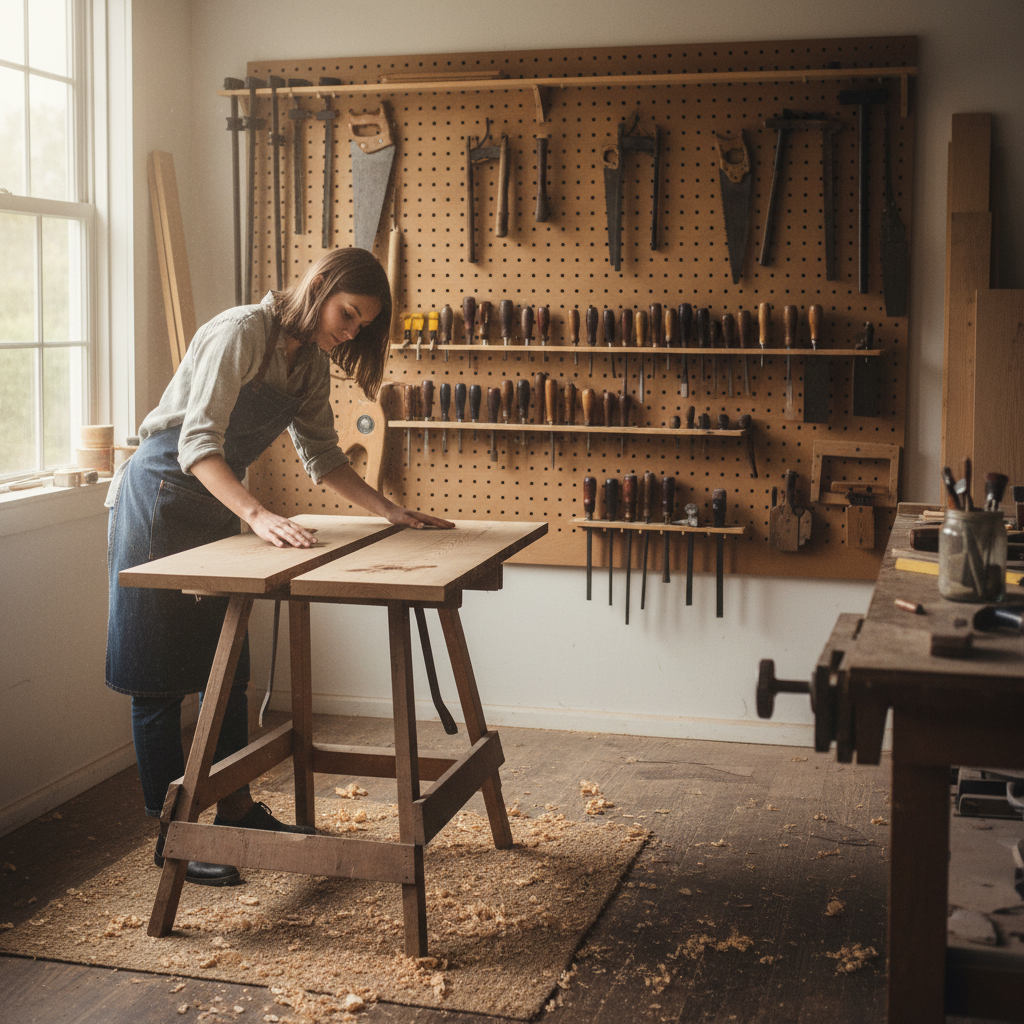

Woodworkers who've been at the bench for a decade will settle on walnut before they discuss anything else, and there's a reason for that: the wood makes difficult things easier. But that logic inverts almost completely for someone who hasn't cut a proper mortise yet.
The oak vs walnut question for beginner furniture builds comes down to three variables that most buying guides treat as preferences rather than decision gates: grain behavior under a hand plane, price-per-board-foot at your local hardwood dealer, and how forgiving the wood is when a cut goes slightly wrong. None of those are trivial, and they don't all point the same direction.
Here's the tension worth sitting with before you spend anything: walnut's reputation for being easy to work is real, but it's earned in the context of sharp tools and clean technique. Put walnut in front of a beginner with a slightly dull chisel and the wood will telegraph every mistake in a way that oak, with its more consistent structure, simply won't. That gap between walnut's reputation and its actual behavior for a first or second project is where most beginner buying decisions go wrong.
What You're Actually Comparing
Before deciding which wood to buy, it helps to understand what makes these two species genuinely different at the bench, not just aesthetically.
Red oak, which is what most US hardwood dealers sell when they just say "oak," has a Janka hardness rating of around 1,290 lbf. Walnut comes in at roughly 1,010 lbf. Harder isn't always better for furniture, but the gap matters for two beginner-specific reasons: oak resists denting and tear-out during rough handling more reliably, and it holds a routed edge more cleanly when your router speed isn't perfectly dialed in.
Walnut's open grain is where the workability reputation comes from. The wood cuts cleanly with a sharp chisel, planes beautifully with the grain, and finishes with almost no preparation beyond a light sand. But "sharp chisel" is doing serious work in that sentence. A chisel that's even slightly dull will crush walnut's softer cell walls rather than slicing them, leaving a fuzzy surface that's genuinely hard to clean up. Oak is less sensitive to tool sharpness at the entry level, which is a practical advantage most comparisons skip over.
Or rather: it's not that walnut is harder to work. The better framing is that walnut is less forgiving of the specific mistakes beginners make most often, even though it's technically softer. That's a meaningful distinction.
White oak, which has become common in US furniture retail and increasingly available at hardwood suppliers, behaves differently from red oak. It's slightly harder, has a tighter ray figure, and finishes more cleanly. If you're shopping at a specialty dealer, ask specifically. For this comparison, the default assumption is red oak unless you specify otherwise.
The Real Cost Gap (And What It Actually Means for a First Project)
Hardwood pricing fluctuates by region and dealer, but the ratio between red oak and American black walnut has been fairly stable at most US lumber yards: walnut typically runs two to three times the board-foot price of red oak. At a well-stocked Midwest dealer in 2024, expect red oak in the $5 to $7 per board-foot range for 4/4 stock, while comparable walnut runs $12 to $18, sometimes higher for figured or wide boards.
That puts it around $80 to $120 more in material cost for a simple side table, depending on your cutting list. That's not catastrophic. But it changes the risk calculus for a first build in a way worth naming directly: when you're learning joinery, you will waste wood. Tear-out on a practice cut, a mortise that's 2mm off, a panel that cups because you didn't let the lumber acclimate, a glue line that doesn't close cleanly. These are normal. In red oak, that waste costs you $6 a board foot. In walnut, it costs you $15.
I'd start with red oak for the first two or three projects for exactly this reason. Not because walnut is too hard to work, but because the cost of learning is lower, and the skills transfer completely. Dovetails cut in red oak will be the same dovetails cut in walnut once your technique is reliable.
If you ignore the price gap and go straight to walnut, what happens isn't dramatic: you'll finish the project, probably, but you'll be more conservative about practicing cuts on scrap, which is the opposite of what a beginner needs. Conserving expensive material and learning to woodwork are goals that fight each other.
Where Walnut Actually Wins
This article isn't arguing that oak is categorically better. Walnut earns its price for specific reasons that matter once technique is in place.
Finishing is the clearest one. Red oak's open, porous grain structure absorbs stain unevenly, particularly around the large rays that make quartersawn oak dramatic but make flatsawn oak blotchy under a wiped stain. Getting a clean, even color on red oak without a pre-conditioner or a gel stain takes practice. Walnut, by contrast, takes an oil finish or a wiped varnish with almost no fuss. The natural color variation in walnut is also more forgiving aesthetically: even a slightly uneven finish reads as character rather than error.
Hardware joinery is another area. Walnut's moderate hardness makes it easier to chop mortises by hand and to fit tenons, which matters for traditional joinery methods like wedged through-tenons or drawbored joints. The wood compresses slightly under a mallet blow rather than splitting, which gives a beginner more room to correct. Red oak will split more readily if a mortise chisel drifts toward the end grain.
Check board-foot price, grain figure preference, and finishing method before you decide: those three inputs together will tell you more than any general recommendation. If you're planning to use a wiped oil finish and cut hand-chopped mortises, walnut closes the gap considerably even for a second project.
The boards themselves also matter. Walnut's color is consistent enough that a beginner can glue up a panel from three or four boards without spending time on color-matching or grain orientation in the same way red oak demands. That's a real time and frustration saving on a first panel glue-up.
When Oak Is the Wrong Call Too
Red oak's limitations are real, and sticking with it beyond the learning phase has actual costs.
The tannin content in red oak reacts with water-based finishes and iron fasteners. This isn't theoretical: a water-based polyurethane brushed directly onto red oak will often pull a gray or black discoloration from the grain, especially in humid shop conditions. If you're finishing with oil-based products, this isn't an issue. If you prefer water-based finishes for cleanup convenience (which many beginners do), red oak requires a barrier coat or a deliberate switch to a product without that reaction. Walnut doesn't have this problem.
Red oak also doesn't take milk paint well. If you're building painted furniture, neither oak nor walnut is the right choice anyway: poplar or soft maple will save you money and finish more smoothly under paint. This article isn't for painters. If your plan is an opaque finish, buy poplar at a fraction of the price of either hardwood and put the savings toward better tooling.
The third limitation is aesthetic longevity. Red oak was dominant in US furniture manufacturing through the 1980s and 1990s, and that association is real. A red oak side table with a golden stain will read as dated to many buyers and designers, even if it's well built. If you're building to sell or building something you'll live with for decades, the style weight of the wood matters. Walnut ages out of fashion far more slowly, and white oak has a more contemporary association in current US furniture design.
The Decision Rule for Beginners
The comparison table below covers the decision-relevant criteria, not the full list of differences between these species. Use it alongside your own build context.
A note before reading: "workability" scores below reflect beginner-specific conditions, not experienced craftsman conditions. Walnut scores lower for beginners not because it's objectively harder to work, but because its sensitivity to tool sharpness and technique precision penalizes the most common beginner errors.
| Criterion | Red Oak | Walnut |
|---|---|---|
| Typical price (4/4, per board foot, US 2024) | $5 - $7 | $12 - $18 |
| Janka hardness (lbf) | ~1,290 | ~1,010 |
| Workability for beginners | More forgiving of dull tools | Requires sharp tools, clean cuts |
| Finishing ease | Prone to blotching under wiped stain | Finishes cleanly with oil or varnish |
| Grain consistency for glue-ups | Requires careful color-matching | More consistent board-to-board |
| Water-based finish compatibility | Risk of tannin discoloration | No reaction |
| Cost of mistakes (typical small project) | Lower | Higher |
| Aesthetic versatility (2024 US market) | Can read dated in golden tones | Broad contemporary appeal |
The clearest takeaway from that table: oak's advantages are front-loaded toward the learning phase, while walnut's advantages compound once technique is reliable. That asymmetry is the actual decision rule, not a general preference for one species.
If you're on your first or second build, buy red oak. If you're on your third or fourth project and your joinery is getting consistent, walnut's finishing and glue-up advantages start paying for themselves. That's not a timeline, it's a skill threshold, and you'll know when you've crossed it because your waste rate will have dropped.
Buyers who skip oak entirely and start with walnut aren't making a catastrophic mistake. But they'll spend more per board foot, waste more expensive material on practice cuts they're reluctant to make, and likely finish with a piece that has less joinery practice in it than it should. That's the real cost: not the extra $80 in material, but the practice sessions that didn't happen because the wood felt too expensive to experiment on.
One More Option Worth Naming
Hard maple is the alternative most beginners don't consider, and it's worth knowing why.
Hard maple runs close to red oak in price, machines cleanly, and finishes well under both oil and water-based products without the tannin reaction risk. Its Janka rating is around 1,450 lbf, which makes it harder than either oak or walnut. That hardness makes it slower to hand-cut but very forgiving of router and dado work, which is where most beginner power-tool setups spend their time. The grain is tight and consistent, which means glue-ups are straightforward and blotching under wiped stain is less of an issue than with red oak (though it still requires a conditioner for even stain absorption).
Hard maple won't replace walnut aesthetically, and it lacks the visual warmth that draws many beginners to one of those two species. But if your goal is skill development on a budget, maple gives you most of red oak's price advantages with fewer of its finishing complications. It's the wood several community college furniture programs in the US use for exactly that reason: forgiving, consistent, and cheap enough to practice on without guilt.
The Bottom Line
If you're newer than three completed projects, buy red oak. You'll pay less per board foot, waste less money on inevitable learning cuts, and develop the technique that makes walnut worth using later. If you're finishing with an oil-based product, cutting hand-chopped joinery, and building something you'll keep, walnut becomes reasonable on the third or fourth build when your waste rate has dropped.
The one condition where this advice weakens: if you're building a single statement piece, cost is secondary, and you have a mentor or class environment where technique feedback is available, walnut from the first project is defensible. The math changes when learning waste is minimized by instruction rather than experience.
Buy the species that matches where your skills are now, not where you want them to be.