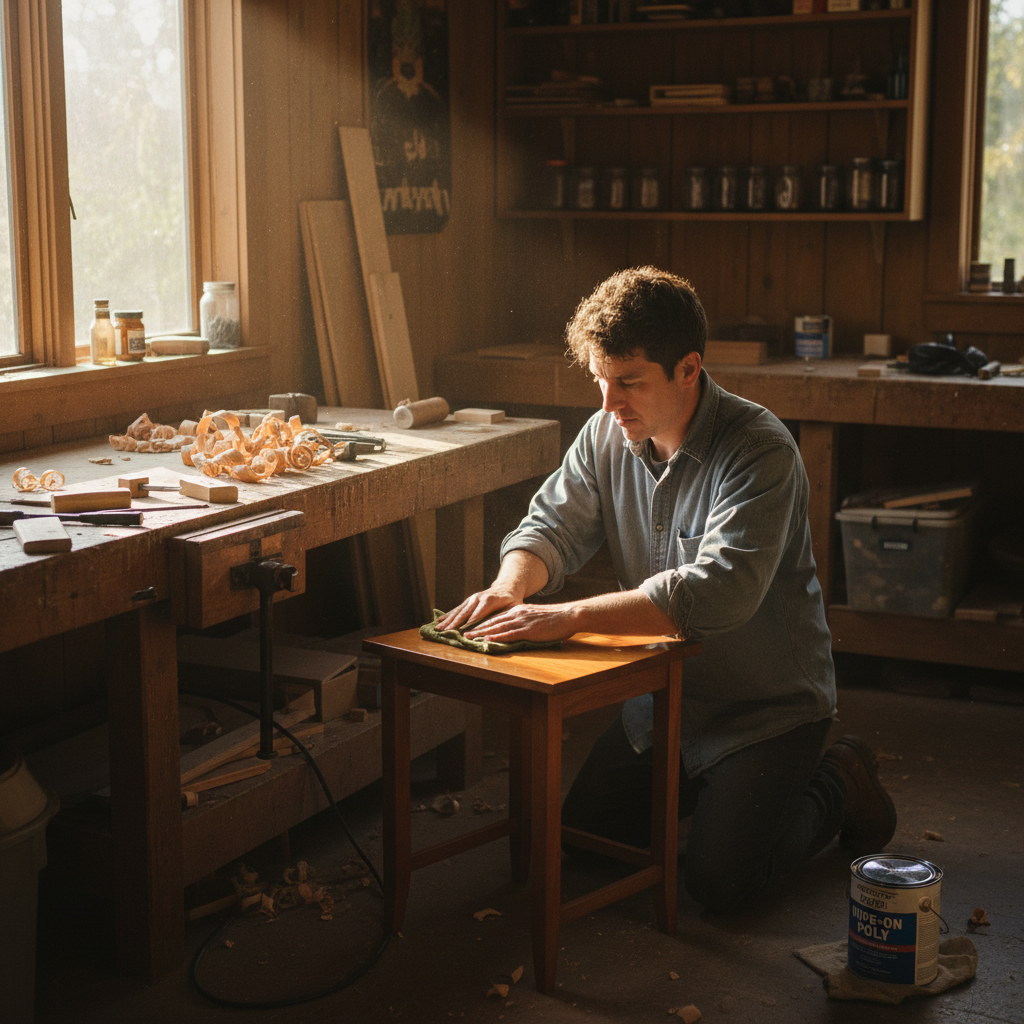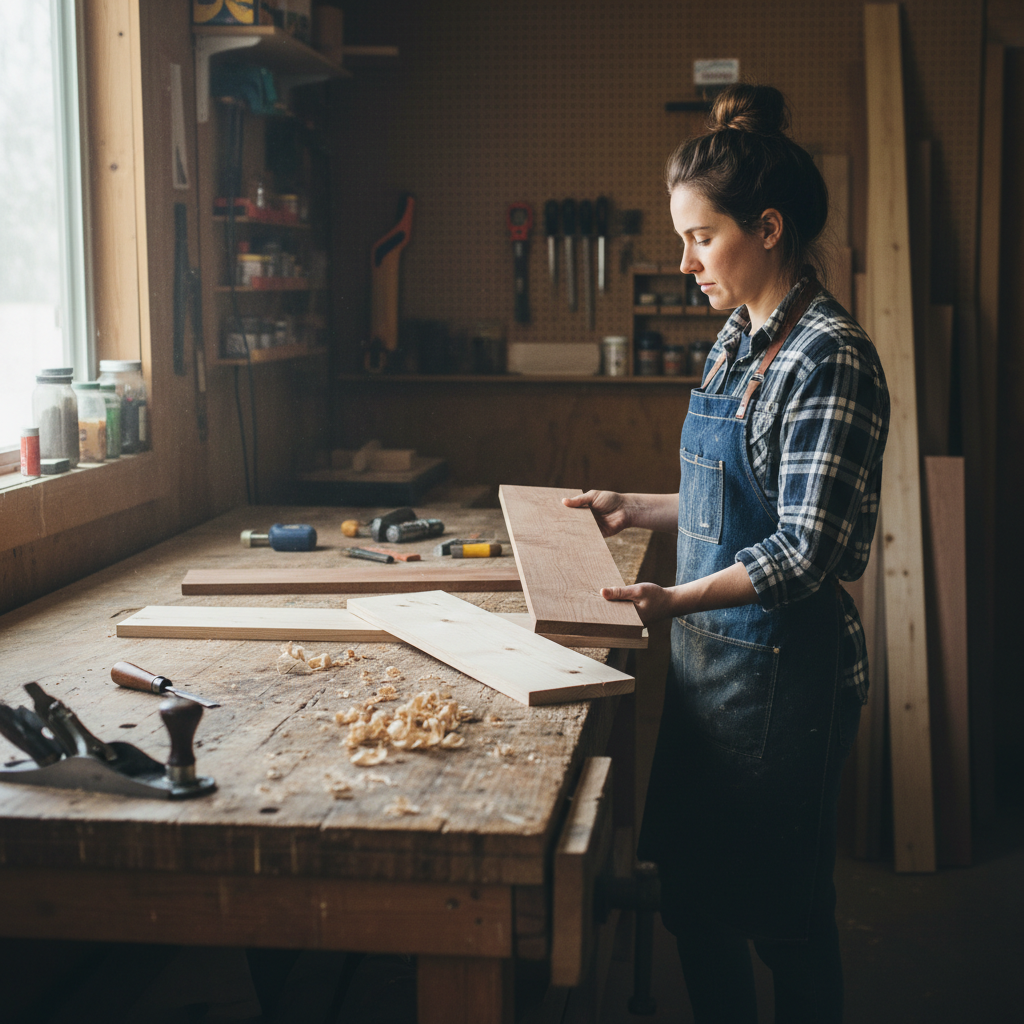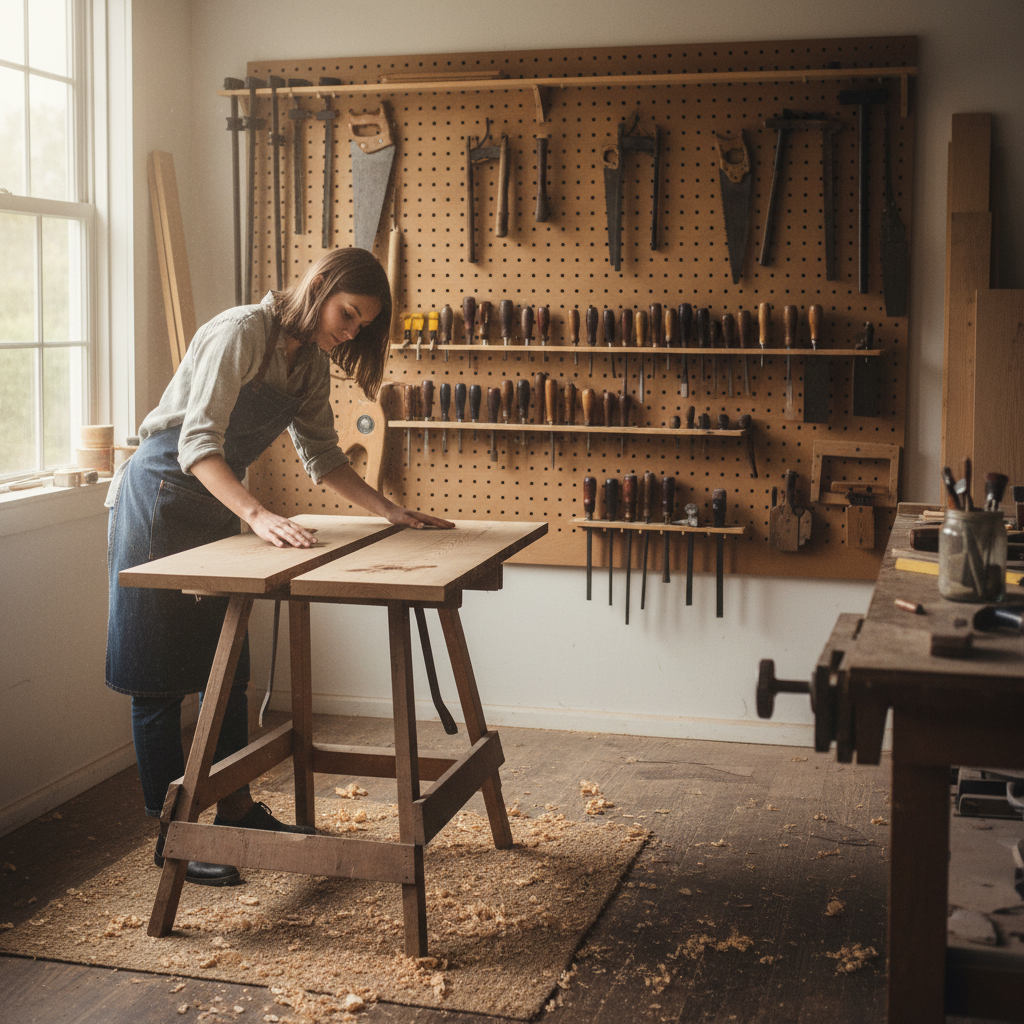
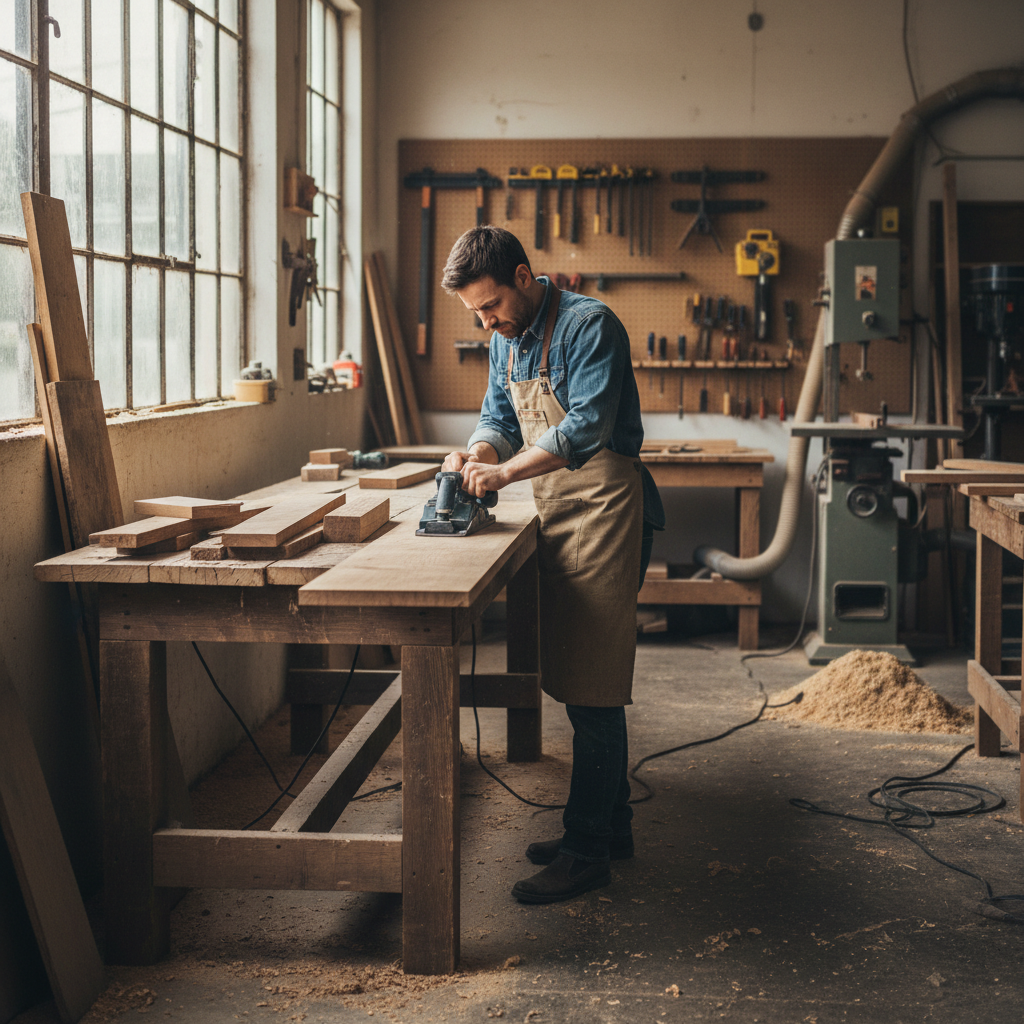
Carpenters and experienced hobbyists will tell you to flatten and metal-check every reclaimed board before anything else touches it, and there's a real reason they lead with that. Reclaimed wood for beginner woodworking projects sounds like a win on paper: cheap material, character you can't fake, environmental upside. The reality is more conditional than that.
Three variables determine whether reclaimed wood helps or wrecks a beginner's first few projects: moisture content, embedded metal, and dimensional inconsistency. None of them are obvious from the surface, and all three can send a project sideways before the glue is even open.
Here's the tension worth sitting with before you haul a pallet home: reclaimed wood genuinely rewards the beginner who prepares it correctly, and genuinely punishes the one who doesn't. The gap between those two outcomes isn't skill level. It's a twenty-minute inspection routine most beginners skip because no one told them it was non-negotiable.
What Makes Reclaimed Wood Hard to Work With
New dimensional lumber from a big-box store like Home Depot or Menards is kiln-dried, surfaced on all four sides, and sold at predictable moisture content, typically between 6% and 19% depending on species and grade. Reclaimed wood is none of those things by default. A barn board pulled from a Midwest structure could have absorbed decades of humidity cycles. A pallet plank may have been treated with methyl bromide or IPPC-marked HT (heat treated), and only the HT boards are safe for indoor projects.
The moisture problem is the most consequential one. Wood expands and contracts with moisture changes. If you build a shelf from reclaimed boards at 22% moisture content and bring them into a climate-controlled house, they'll dry to roughly 8%, and they'll move. Joints open. Panels cup. A beginner who doesn't own a moisture meter won't see it coming. That framing misses something. It's not just that the wood moves; it's that the movement is asymmetric across a reclaimed board because the density varies in ways surfaced lumber doesn't.
Embedded metal is the second hard problem. Nails, staples, lag screws, and occasionally wire get buried under surface oxidation and are invisible until a planer blade or router bit finds them. A single hidden nail can chip a carbide planer blade, which runs $40 to $80 to replace, or worse, throw a fragment at speed. Before any reclaimed board goes through a power tool, it needs a pass with a handheld metal detector or a strong rare-earth magnet dragged slowly across every face and edge.
Dimensional inconsistency is the third issue, and it's the most underrated. Reclaimed boards were milled to older nominal standards, or they've lost thickness unevenly to weathering. Running inconsistent-thickness stock through a table saw or router table without accounting for that variation produces gaps, tearout, and joints that don't close. A beginner without a thickness planer is either hand-planing everything flat, which is a real skill, or accepting variation that compounds into visible problems at assembly.
When Reclaimed Wood Actually Makes Sense for Beginners
Not every beginner project demands tight tolerances or stable joinery. That's the actual decision gate, and most guides on reclaimed wood skip it entirely.
Projects where reclaimed wood works well for beginners share three traits: they're forgiving of dimensional variation, they don't require precision joinery, and they benefit visually from character marks. A simple wall-mounted floating shelf, a rustic picture frame built with pocket screws, a planter box where gaps are irrelevant. These projects let a beginner learn surface prep and material handling without punishing them for the wood's inconsistency.
Projects where reclaimed wood causes real problems for beginners include anything with drawer boxes, cabinet carcasses requiring square corners and flat panels, or furniture where racking resistance depends on tight joinery. If you're cutting dovetails or building a bookcase that has to stand plumb, start with S4S (surfaced four sides) pine or poplar. The tolerances are forgiving and the cost is low. Reclaimed wood for those applications isn't a beginner challenge. It's a beginner trap.
I'd start with pallet wood for a first reclaimed project, specifically pallets marked HT, not MB. The boards are thin enough that a hand plane can true them up without a powered planer, the dimensions are consistent enough within a single pallet, and the cost is often zero. A simple wall shelf from HT pallet boards with pocket-screw joinery is a realistic first project that teaches prep habits without requiring equipment most beginners don't own yet.
Or rather: the value of starting with pallet wood isn't just the cost. It's that pallet boards are short, which means mistakes are cheap, and the material forces you to develop the metal-checking and moisture-reading habits that transfer to every reclaimed project after it.
Preparing Reclaimed Wood: The Non-Negotiable Steps
Preparation isn't optional with reclaimed wood. Skip it, and the wood's history becomes your problem mid-project.
Start with metal detection. Run a rare-earth magnet or handheld stud finder in metal-detect mode across all six faces of every board. Mark hits with chalk and cut around them or extract them with locking pliers before the board goes anywhere near a blade. This step takes about three minutes per board. Not doing it can ruin a blade and cost more than the wood was worth.
Check moisture content with a pin-type moisture meter. For interior furniture, you want readings below 8%. For outdoor projects, below 15% is workable. A decent pin meter runs $20 to $35 and pays for itself the first time it stops you from building a shelf that warps in three weeks. If readings are too high, stack the boards with spacers in a dry indoor space for two to four weeks before milling.
Flatten at least one face before any other milling operation. A hand plane works for shorter boards. A powered thickness planer handles longer stock faster, but it requires the metal-check step to already be complete. Once one face is flat, run the opposite face through to bring it to consistent thickness. From there, joint one edge square to the face and rip the opposite edge parallel on the table saw.
Clean the surface last, not first. Wire brushing and sanding before flattening removes material you'll need for the planer to reference against. Surface dirt and mill scale come off during the final sanding passes, after the board is dimensioned.
- Metal-detect all faces before any power tool contact
- Moisture meter to confirm below 8% for interior use
- Flatten one face, then thickness-plane opposite face
- Joint one edge, rip second edge parallel
Reclaimed Wood vs. New Lumber: What the Cost Comparison Actually Looks Like
The cost argument for reclaimed wood is real but narrower than it appears at first.
New No. 2 pine from a home center currently runs roughly $1.00 to $1.80 per board foot depending on region and species. S4S poplar, which is a better choice for painted furniture, runs $3.00 to $4.50 per board foot. Those are approximate ranges based on common retail pricing as of mid-2024; actual prices vary by location and market conditions. Reclaimed boards from a demolition salvage yard typically run $1.50 to $3.50 per board foot for common species like oak, pine, and fir, plus the time and equipment cost of preparation.
Here's where the comparison shifts. Reclaimed hardwood, particularly wide-plank oak or heart pine from older structures, can run $6 to $12 per board foot at specialty dealers, which is genuinely cheaper than comparable new hardwood at $8 to $15 per board foot for clear-grade material. The savings are real for hardwood, marginal or nonexistent for softwood once prep time is accounted for.
What the cost comparison misses entirely is yield. A reclaimed board that's 8 feet long might have usable material in only 5 of those feet once checking (end cracks), knots that blow out, and embedded metal are accounted for. A beginner building from reclaimed wood needs to buy 30% to 40% more board footage than the project plan calls for. That's a practical heuristic based on typical salvage yard material, not an official standard, but it's a number experienced reclaimed-wood workers consistently apply. If you're buying reclaimed softwood and factoring in that buffer, new dimensional lumber frequently wins on total cost. The math favors reclaimed wood most clearly when the species or aesthetic you want doesn't exist in new stock.
Where Beginners in the US Actually Find Reclaimed Wood
The sources matter as much as the material. Not every source produces wood that's safe or workable for a beginner.
Habitat for Humanity ReStores operate in most US metro areas and sell donated building materials, including dimensional lumber, flooring, and occasionally barn wood, at prices well below retail. The material quality varies widely, but ReStore staff can often tell you the source, which helps with the methyl bromide question for pallets. This is a genuinely good starting point for beginners because the prices are low enough that buying extra for waste doesn't hurt much.
Salvage yards and architectural salvage dealers carry higher-quality material, particularly old-growth Doug fir and heart pine that's denser and more stable than comparable new stock. Prices are higher, and the yards in major cities (Portland, Chicago, Philadelphia) often cater to designers and contractors, so selection and quality are predictable. Craigslist and Facebook Marketplace are less predictable but routinely list free or cheap pallet wood, barn wood, and demolition salvage. The methyl bromide check matters here: always look for IPPC stamps on pallets. HT means heat-treated and safe. MB means methyl bromide-treated and not safe for indoor use.
What beginners should avoid: wood from old railroad ties (creosote-treated, toxic), painted boards from pre-1978 structures without testing (lead paint risk), and any unidentified wood with a strong chemical smell. The EPA has published guidance on lead paint in older homes that applies to demolition salvage from structures built before 1978. If the source is unknown and the structure is old, treat the wood as potentially contaminated until tested.
The Honest Verdict
If you skip the prep steps because reclaimed wood looked ready to use, you won't just waste the material. You'll waste the project, possibly damage tools, and walk away with a wrong lesson about why reclaimed wood is difficult. The wood isn't the problem. The skipped inspection is.
Reclaimed wood is worth using for beginner woodworking projects when the project tolerates dimensional variation, the wood has been metal-checked and moisture-tested, and the species or visual character is actually better than what new lumber offers. Those conditions are met more often than not on simple shelf and box projects. They're rarely met on furniture requiring tight joinery or cabinetry demanding flat, consistent panels.
New S4S lumber exists so beginners can learn joinery, tolerances, and tool technique without fighting the material. Start there for projects where precision matters. Bring reclaimed wood in when you understand what the prep requires and you're choosing it for a specific reason, not because it was free.