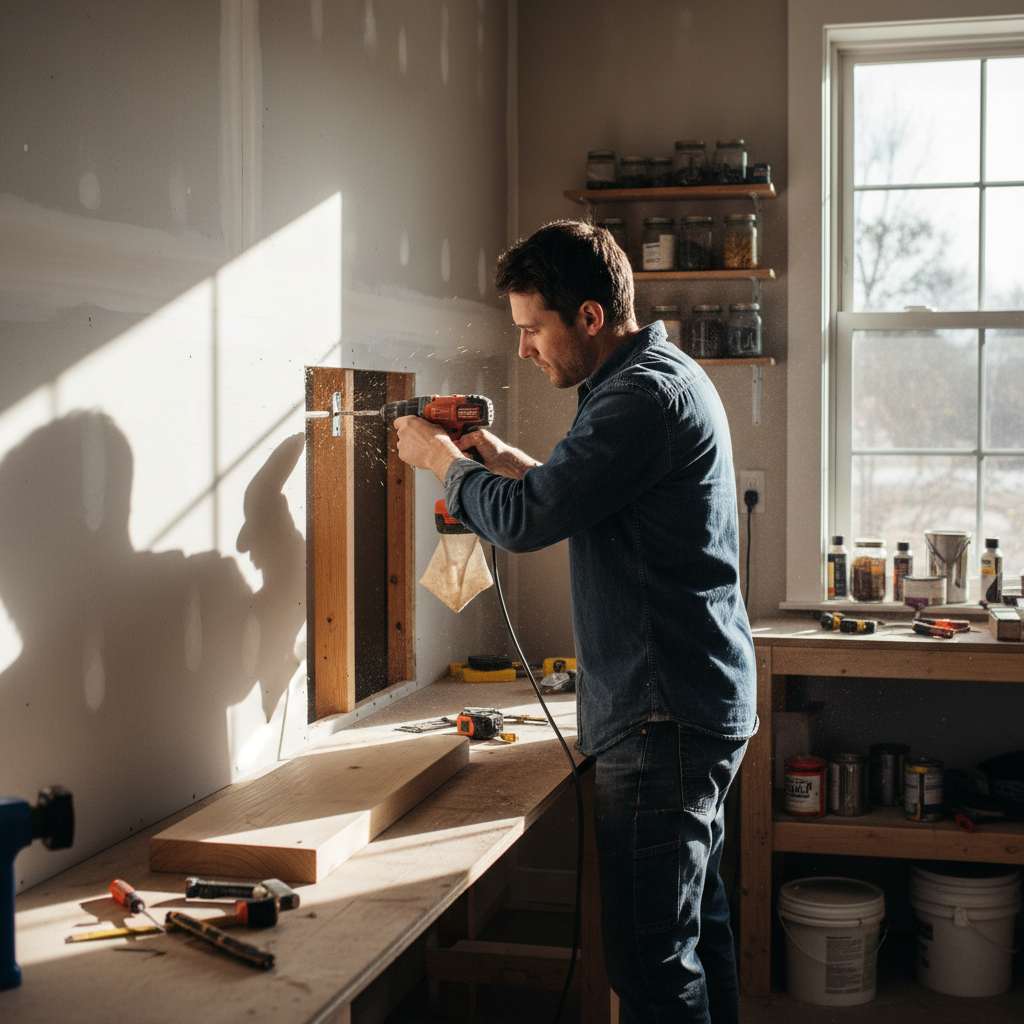
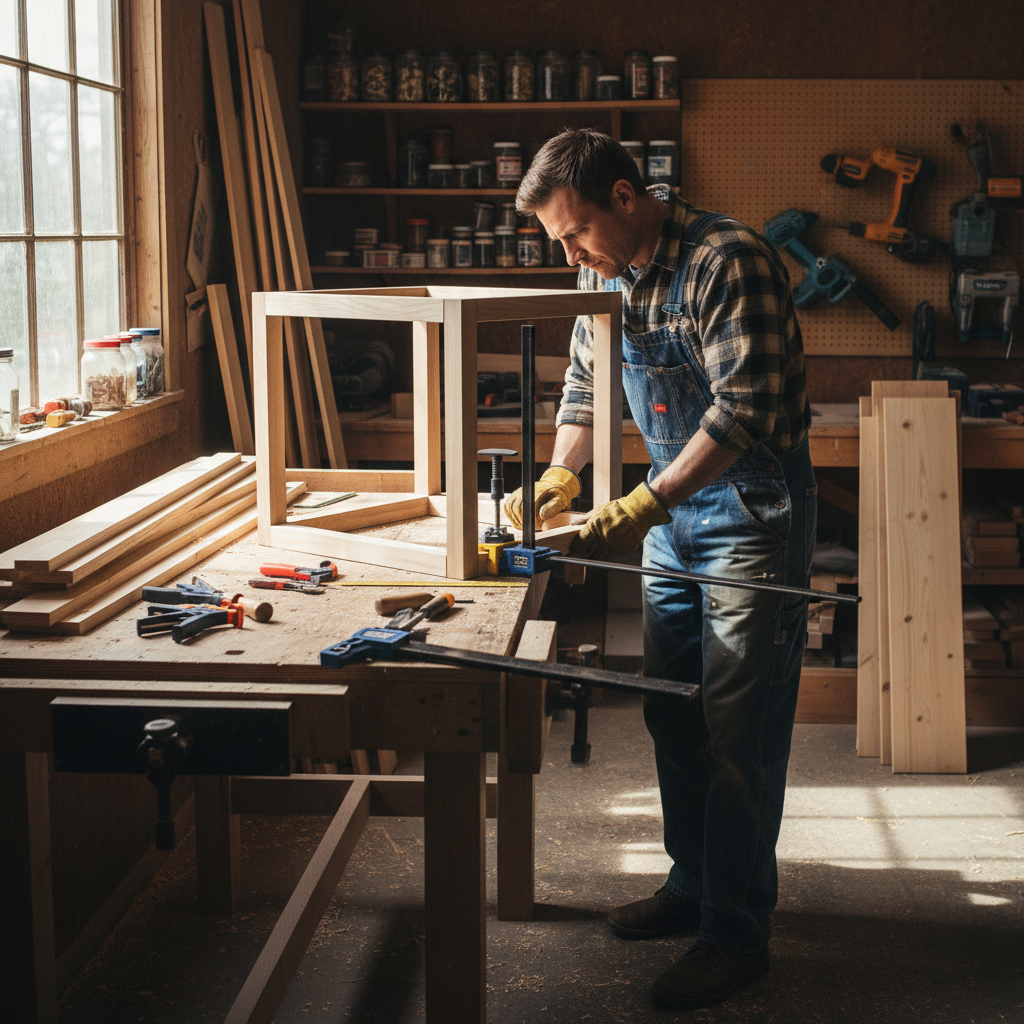
Woodworkers will tell you the joint is where a project succeeds or fails before they discuss anything else about a build, and there's a reason for that. For someone picking up a saw for the first time, the question of whether to build a wooden stool or a wooden side table isn't really about aesthetics. It's about how many things can go wrong at once.
Both projects use similar materials. Both finish in a weekend. But one of them asks you to solve a structural puzzle that has humbled people with decades of bench time, and the other is forgiving enough that a small error disappears under sandpaper. Knowing which is which changes what your first Saturday in the shop actually looks like.
The tension here is real: the stool looks simpler because it has fewer parts, but fewer parts doesn't mean fewer problems. That gap between apparent simplicity and actual difficulty is what sends beginners to the lumber yard for a second sheet of pine before noon.
Why Joint Complexity Is the Only Number That Matters
A side table with four square legs, a stretcher frame, and a flat top asks you to cut mortise-and-tenon joints or, more practically, to use pocket screws and wood glue at predictable 90-degree angles. Every joint in that assembly is either square to a face or square to an edge. You can check every connection with a $12 combination square before the glue sets.
A four-legged stool doesn't give you that luxury. The legs splay outward, which means every joint is cut at a compound angle: angled side-to-side and angled front-to-back simultaneously. A common guideline for beginners tackling angled leg joinery is to expect at least three dry-fit failures before the assembly pulls together cleanly. That's not a flaw in the beginner; it's the geometry of the problem.
Or rather: the issue isn't just the angle. It's that a small error in one leg's compound angle propagates through all four legs, so the stool rocks. A wobbly side table is annoying. A wobbly stool is a safety problem you discover when someone sits on it.
The side table's 90-degree joinery also means you can use pocket-hole joinery (the Kreg system is the standard entry point in US home shops) and cut your learning curve in half without sacrificing a structurally sound result. Pocket screws pull at roughly 175 pounds of shear force in pine, which is more than adequate for a side table that holds a lamp and a glass of water. You don't need to nail down the exact figure; you need to know the margin is wide.
What the Side Table Actually Teaches You
The argument for starting with a side table isn't that it's easy. It's that it's educationally dense without being punishing. In one project you'll encounter stock dimensioning, face-jointing decisions, glue-up sequencing, and surface preparation. That's four distinct skill nodes, each one applicable to every project you build afterward.
And here's where most first-time builders undersell the side table: the apron-to-leg connection on a simple side table is essentially a scaled-down version of the same joint used in dining tables, workbenches, and bed frames. Learning it at small scale, with low material cost, is the right order. Pine dimensional lumber at a US home center runs roughly $1.50 to $2.50 per linear foot in 2024, so a side table's worth of material costs you $25 to $40 before hardware. A scrap pile from a failed stool costs the same.
The better question is what skill you're actually buying with each project. The side table buys you layout precision, squareness verification, and controlled glue-up. The stool, done first, buys you frustration and a firewood candidate.
That framing misses something. There's a version of the stool that's genuinely beginner-appropriate: a three-legged stool. Three legs always contact the floor, so rocking is geometrically impossible regardless of how precise your compound angles are. But a three-legged stool is a niche object most builders don't actually want in their homes, and it still requires angled joinery. So it's a solution to the wrong problem.
When the Stool Is the Right Call Anyway
This article isn't for someone who wants to build a specific style of stool for a specific purpose and already has a reason to tackle the challenge. If you're building a shop stool with a flat seat and vertical legs, that's a different animal: the geometry is the same as a side table, the material is thicker, and the structural demands are higher but not more complex. Build that version and this comparison doesn't apply to you.
The stool recommendation weakens for anyone working without a reliable way to test and adjust compound angles before cutting. Without a bevel gauge (around $15 at any US home center or online) and a basic understanding of how to transfer angles to your saw, you're guessing. Guessing on compound angles in a first build is how you end up with a three-legged stool that became four-legged by accident.
Buyers who've already built one or two box projects, such as a simple shelf or a small crate, have the squareness instinct the stool demands. For them, a four-legged stool with a slab seat is a legitimate next step. For a true first build, that instinct isn't there yet, and no amount of YouTube prep installs it.
Making the Side Table Worth Building
A flat-pack side table from a big-box store costs $30 to $60 and takes twenty minutes to assemble. If your handmade version is just a cheaper version of that, you haven't gained anything except splinters. The point is to build something that flat-pack can't replicate: proportions you chose, wood grain you selected, joinery that's actually glued and not just friction-fit into a cam lock.
I'd start with a design that uses 1.5-inch-thick legs rather than the 1-inch tapered stock some beginner plans specify. Thicker stock forgives layout errors, accepts screws more reliably, and produces a piece that feels solid rather than toy-like. The visual difference is immediate.
Check wood thickness, joint count, and finish complexity first. Those three variables determine whether your first build teaches you something or just teaches you that woodworking is hard. A side table built with pocket screws, 1.5-inch pine legs, and a wipe-on polyurethane finish gives you a clean surface by Sunday afternoon. If you skip the project entirely and keep buying flat-pack, you never build the muscle memory that makes the next project faster and the one after that genuinely good.
The woodworking skill that matters most in a first build isn't cutting or sanding. It's recognizing when a joint is square. Build something that lets you practice that recognition at every connection, not just hope the angles work out.