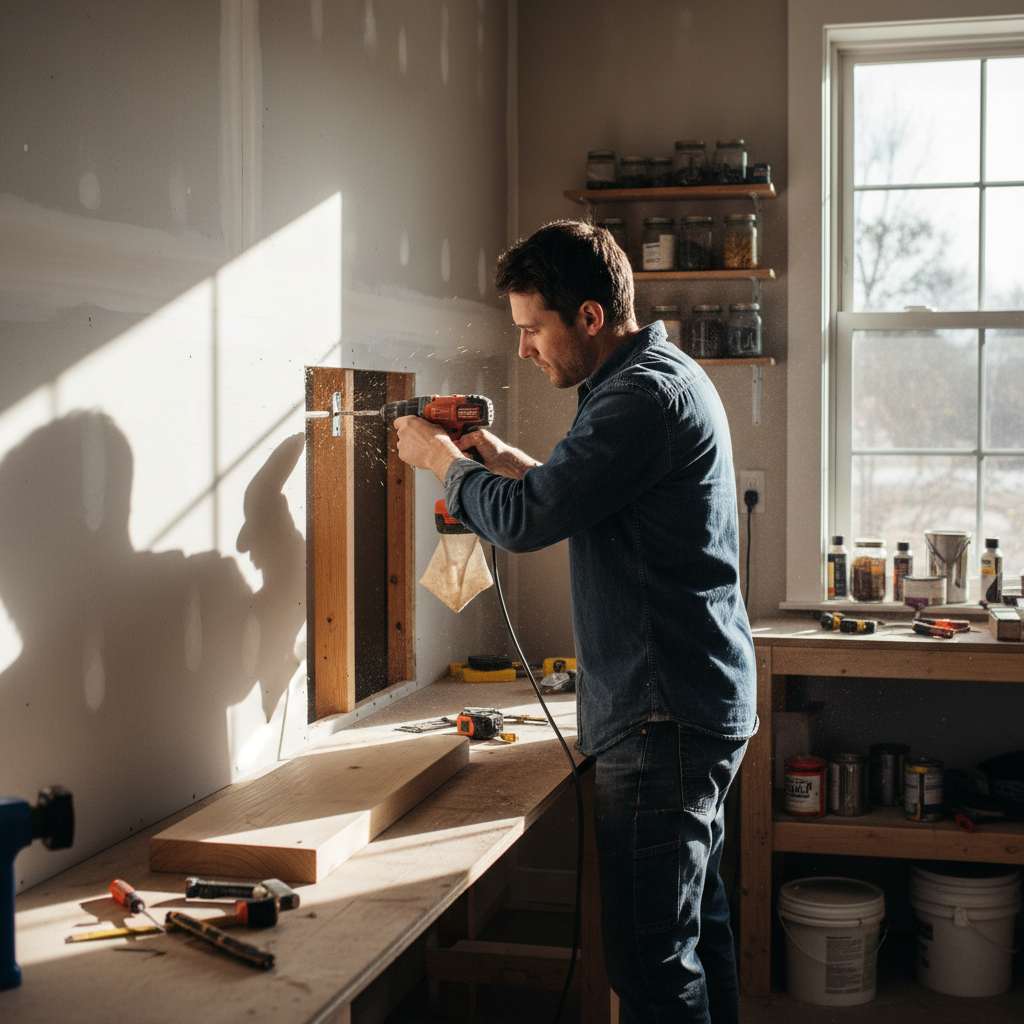

Woodworkers will tell you to nail your wood selection before picking up a saw, and for a knife block that advice carries real weight. A knife block sounds like a straightforward beginner project, and in many ways it is. But the gap between a block that looks decent and one that actually protects your blades comes down to a handful of decisions most beginner tutorials gloss over entirely.
Wood hardness, slot width, and grain orientation all interact. Get one of them wrong and you end up with a block that either scratches your knives every time you pull one out or splits along the slot after a year of use. Neither outcome is obvious until it is too late.
This guide covers the construction process from wood selection through final finishing, with specific attention to the mistakes that turn a simple project into a frustrating one. If you are brand new to woodworking and own only basic tools, you are in the right place. This article is not for people building custom commercial knife storage or laminated magnetic-strip alternatives. A freestanding slotted block is the target, nothing else.
Choosing the Right Wood
The single most consequential decision in this project is wood species, and the reasoning is mechanical rather than aesthetic. A knife block slot is essentially a long narrow channel that your blade edge contacts twice every time you use it. Hardwood with a tight, straight grain resists the micro-abrasion that dulls edges over months of daily use. Softwoods like pine look appealing at the lumber yard because they are cheap and easy to cut, but the grain is open enough to act like a mild abrasive on fine edges. Avoid them for anything the blade actually touches.
Three species work well for beginners in the US: hard maple, cherry, and walnut. Hard maple is the most durable and the least expensive of the three, typically running $6 to $10 per board foot at a hardwood dealer or a big-box store with a decent lumber section. Cherry is a step up in appearance and cuts beautifully, though it darkens significantly with age. Walnut costs more, often $12 to $18 per board foot, but it machines predictably and the open grain, while slightly coarser than maple, is still safe for blade contact when finished correctly.
Or rather: grain orientation matters as much as species. You want the slot walls to be edge grain or face grain, not end grain. End-grain construction is beautiful and popular in cutting boards, but for knife slots it creates short fibers that compress and splinter under the constant lateral pressure of blade insertion. A beginner who buys beautiful end-grain walnut and then wonders why the slots are fraying after six months has run into this exact problem. Stick to long-grain cuts for your first build.
Board thickness determines slot depth. A standard chef knife needs at least 4 inches of slot depth to seat securely without the handle resting on the block top. A block body of 5.5 inches tall, built from two pieces of 1-by-6 lumber glued face-to-face, gives you enough material to achieve that depth while leaving a solid base.
Tools, Materials, and a Realistic Shopping List
You do not need a full shop for this. The realistic minimum tool list is a miter saw or circular saw for crosscuts, a drill press or a handheld drill with a steady hand, a set of forstner bits in the slot-width sizes you need, a random-orbit sander, and basic clamps. A table saw makes ripping boards cleaner but is not required if your lumber yard will dimension the stock for you, which most will do for a small fee.
For a block holding eight knives, budget around $40 to $70 in materials depending on species. That covers roughly 4 to 5 board feet of hardwood, wood glue (Titebond II is the standard choice for indoor projects), 120- and 220-grit sandpaper, and a food-safe finish. The finish matters: mineral oil or a food-safe cutting board oil is appropriate here because the block lives in a kitchen near food. Standard polyurethane is fine for the exterior faces but should not go inside the slots where blade contact occurs.
A quick pre-build checklist before you buy anything: measure your longest knife blade, count how many knives you actually use daily, decide whether you want an angled top or a flat top, and check whether your drill press has enough depth capacity for your planned slot length. That last one catches beginners off guard. A benchtop drill press with a 3-inch quill travel cannot drill a 4-inch-deep slot in a single pass, which means you need to flip the workpiece or use a different method.
Building the Block: Slots, Glue-Up, and Assembly
The construction sequence matters. Drill your slots before you glue the pieces together, not after. This is the step that trips up first-time builders more than any other.
Here is why the order is non-negotiable. Drilling accurate slots through a fully assembled, glued-up block is difficult even with a drill press because you are working against the full depth of a thick laminate. Drilling into individual boards before glue-up lets you work in shorter, more manageable passes and align the slots precisely. The joint between boards, once glued, falls somewhere in the middle of the slot depth, which is structurally fine as long as your glue lines are clean.
For slot sizing: a standard slot for a chef knife or slicing knife needs a width of roughly 3/8 inch (a 3/8-inch forstner bit) and a height of about 3/4 inch to allow the blade to seat without binding. Steak knife slots can be narrower, around 1/4 inch. Space slots at least 1.25 inches apart, center to center, to prevent the walls between slots from becoming thin and fragile. If you plan eight slots across a 7-inch-wide block face, run the math: eight slots at 1.25-inch spacing needs 8.75 inches minimum. Either widen the block or reduce to six slots. Do not crowd them.
Glue-up: apply Titebond II to both mating faces, clamp with even pressure, and let it cure a full 24 hours before doing any further machining. Light clamping pressure leaves gaps; excessive pressure starves the joint of glue. You want a thin, consistent squeeze-out line along the entire joint. Wipe it off while wet. Dried glue squeeze-out inside a slot is a pain to remove and will affect finish adhesion.
Sanding sequence: start at 80-grit if you have any mill marks or tearout, move to 120, then finish at 220. The exterior faces should feel glassy at 220. The interior of the slots needs at least a 120-grit pass, which you can do by wrapping sandpaper around a dowel of the appropriate diameter. Skip this step and you get rough slot walls that drag on blades.
Finishing: two to three coats of mineral oil on all surfaces, including inside the slots. Let each coat soak in for 20 minutes, then wipe off the excess. This is not a film finish so there is no curing time to worry about, but you do want to let the final coat absorb overnight before loading the block with knives.
Where Beginners Go Wrong and When This Project Is Not the Right Choice
The most common mistake is underestimating wood movement. Hardwood expands and contracts with seasonal humidity changes. A block glued up in a dry winter garage and then brought into a humid summer kitchen will move. If you built the block with slots running perpendicular to the grain direction, that movement can crack the slot walls over time. Orient your slots parallel to the grain and the movement is accommodated rather than resisted.
Buyers who skip building entirely often reach for a bamboo block from a mass-market retailer. Bamboo is not wood in the traditional sense; it is a grass, and its silica content is high enough that it can dull edges faster than hardwood over long use. A handmade hard maple block is genuinely better for your knives. But if you ignore the wood selection and grain orientation advice above and build with pine or end grain, the mass-market bamboo block will outlast your project. The recommendation depends on execution, not just intention.
This project is not a good fit if you do not have access to a drill press or a very steady hand with a forstner bit. Freehand-drilled slots at inconsistent angles look bad and create uneven blade contact. If your tool situation is limited to a basic cordless drill, consider a simpler variation: a knife block made from a solid piece of lumber with horizontal saw-kerf slots cut on a miter saw. The saw cuts are easier to keep straight and require no drilling at all. The aesthetic is different but the function is the same.
The framing misses something. This is not just a storage project. A well-built knife block protects the geometry of your blade edges in a way that a drawer, a magnetic strip improperly mounted, or a universal block with plastic rods cannot. If you let your knives rattle around in a drawer for another year while you decide whether to build this, expect to be sharpening two to three times more often than someone who stores blades properly. Edge damage from contact storage is cumulative and largely invisible until the knife stops performing.
Finishing Touches and Long-Term Care
A completed block needs re-oiling two to three times per year, more often if your kitchen is dry in winter. Mineral oil is cheap and available at any pharmacy. Do not use olive oil or vegetable oil; they go rancid inside the slots and the smell transfers. This is one of those maintenance details that owners of store-bought blocks often learn the hard way.
If you want to add a personal touch, a router chamfer along the top edges and a slight bevel on the slot openings makes the block easier to use and looks intentional rather than rough. Neither requires advanced skill. A chamfer bit in a trim router takes about ten minutes and transforms the feel of the finished piece.
I would start with a six-slot block rather than eight. Fewer slots means less drilling, a narrower blank that is easier to manage, and a faster first build. You can always make a second block once you have the process dialed in. Get the first one right, then scale up.
Document your slot spacing and dimensions before you start. Write them on the blank in pencil. That record becomes your template for every knife block you build after this one, and you will build more than one.
Putting It Together: Your Next Steps
Pick up a 6-inch-wide, 24-inch-long piece of hard maple from a hardwood dealer this week and cut it in half. That gives you the two pieces for your glue-up, costs under $20, and gets the project off the planning stage and into your hands. Once the wood is in front of you, the rest of the decisions become concrete rather than theoretical.
If your lumber yard does not stock hard maple, cherry is a fine substitute. If neither is available locally, check woodworking specialty retailers; many ship dimensioned hardwood at reasonable cost. Do not substitute pine because it is convenient. The whole point of building this yourself is ending up with something better than what you can buy, and that outcome depends on the wood.
Sand it well. Oil it properly. Give it 24 hours before you load it. Your knives will thank you.