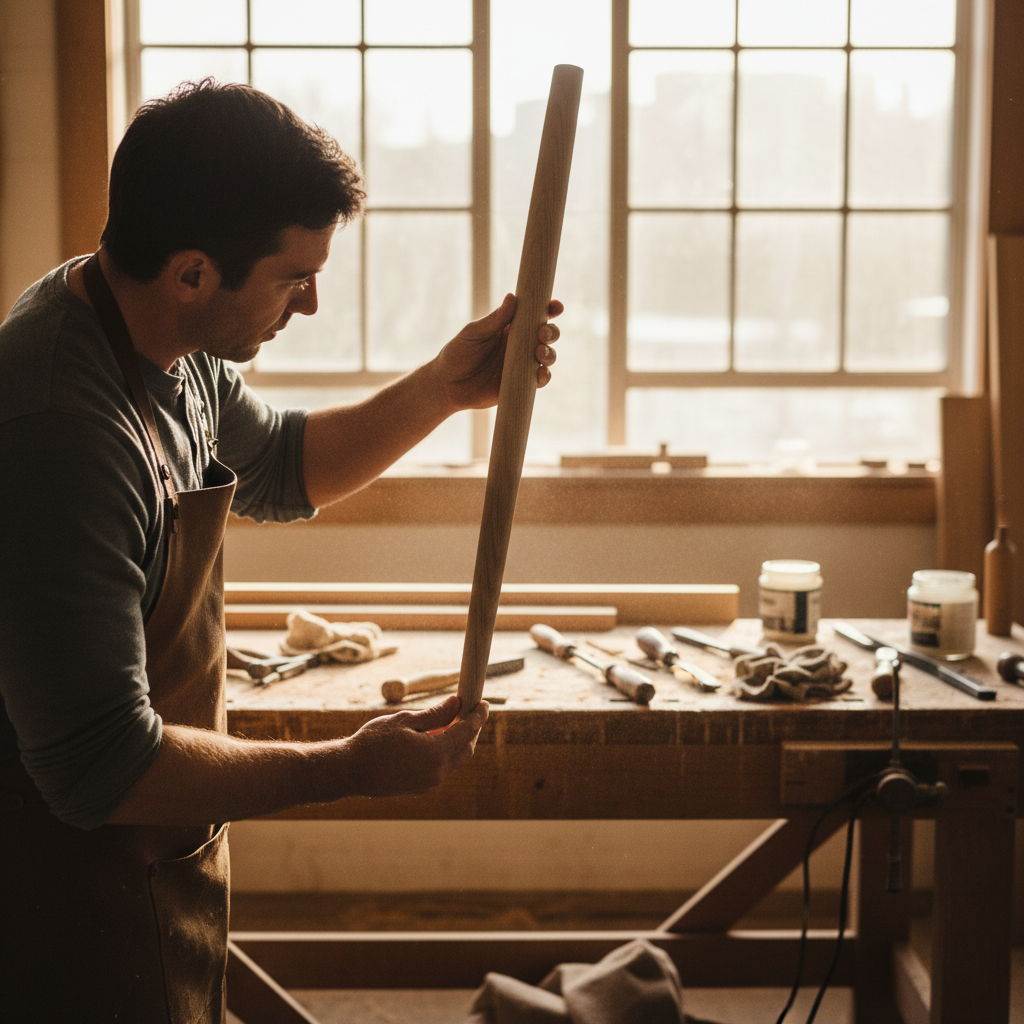
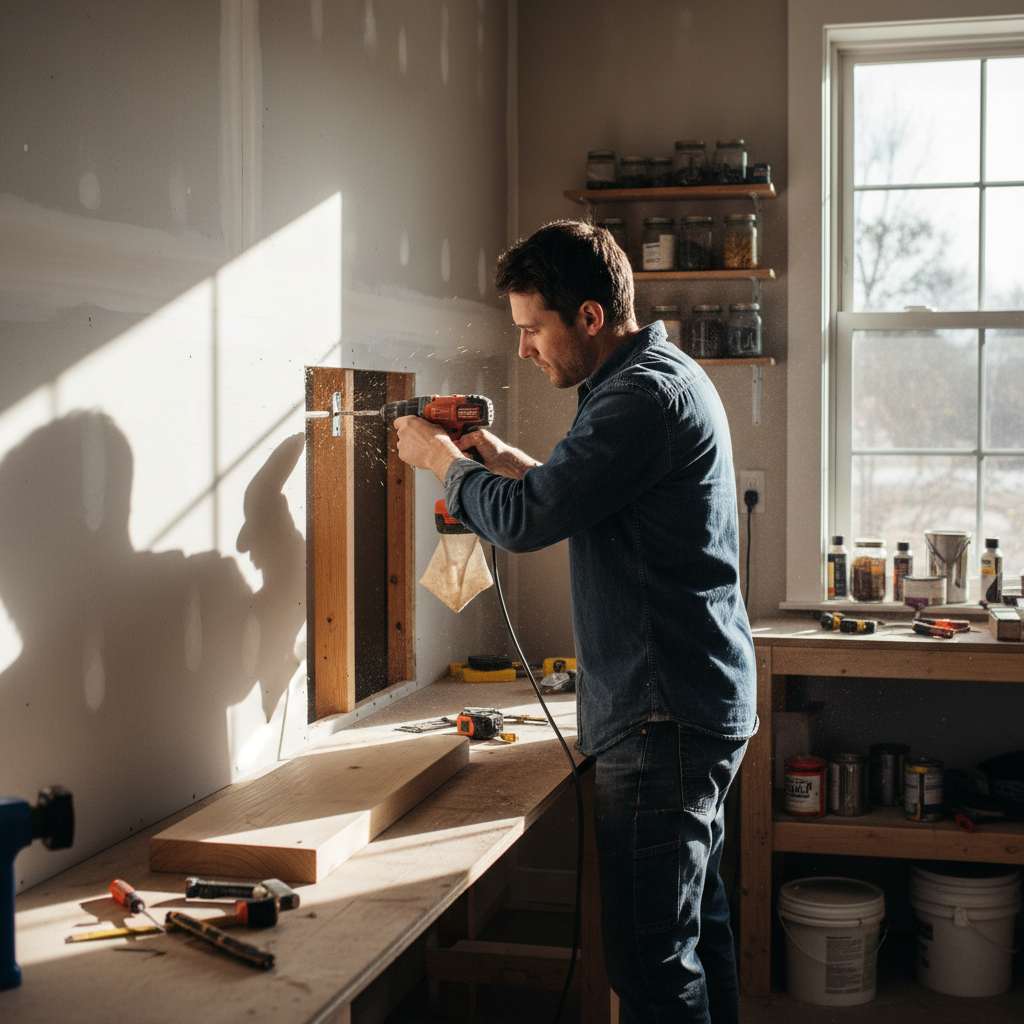
Woodworkers will tell you that the joint matters more than the lumber before they discuss anything else, and with shelves, that principle shows up fast. A picture ledge and a floating shelf look like cousins from across the room, but they ask completely different things from you at the workbench. One forgives a slightly off-plumb wall and a modest tool kit. The other punishes imprecision with a visible sag that no amount of rearranging will hide.
For a first-time builder, the choice between a picture ledge shelf and a floating shelf comes down to three variables: how much you trust your wall anchoring, whether you own (or want to buy) a pocket-hole jig, and how much weight you actually need to hold. Nail those three and the decision nearly makes itself.
Here's the tension most beginner guides skip past entirely: floating shelves look simpler because they're just a board on a wall, but that invisibility is the hard part. The hardware doing the work is hidden, which means every mistake is hidden too, until the shelf starts to lean.
What Each Build Actually Requires
A picture ledge is three pieces of wood: a back, a base, and a front lip. You glue and fasten them into a shallow tray, then mount the whole assembly to studs or anchors. The lip keeps art from sliding off. The assembly itself is forgiving because you're working with flat-to-flat joints, and you can do the entire glue-up on a workbench before a single screw touches your wall.
Floating shelves work differently. The shelf board slides over a hidden bracket that's lag-bolted directly into studs, or uses a French cleat or keyhole system mortised into the back of the board. That bracket-to-board fit needs to be tight enough that the shelf doesn't wobble, but the bracket placement has to be precise or the shelf won't sit level. There's no forgiving assembly step on the bench. You're committing to the wall immediately.
Or rather: the real difficulty gap isn't in the cutting, it's in the sequencing. Picture ledge construction lets you fix errors before mounting. Floating shelf construction forces you to be right the first time on the wall. That distinction matters more than any individual skill level.
For a first project using basic tools (a miter saw or circular saw, a drill, a level, and clamps), a picture ledge requires roughly the same cuts but gives you two recovery points: the glue-up stage and the mounting stage. A floating shelf gives you one.
How the Two Designs Compare
Before getting into the numbers, a note on what this table captures: it compares a standard 36-inch picture ledge built from 1×4 pine against a 36-inch floating shelf using a steel bracket system. Both assume a beginner builder with a basic tool kit mounting into drywall over wood studs.
| Factor | Picture Ledge (36 in, pine) | Floating Shelf (36 in, bracket system) |
|---|---|---|
| Cut count | 3 pieces (back, base, lip) | 1 board plus wall bracket |
| Joinery method | Glue + brad nails or pocket screws | Bracket mortised or inserted into board |
| Wall precision required | Moderate (assembly is pre-done) | High (bracket placement is final) |
| Typical material cost | $15 to $30 (pine, hardware) | $20 to $60 (board plus bracket hardware) |
| Load capacity | Up to roughly 20 to 25 lbs distributed | Varies by bracket; heavy-duty steel brackets can hold 50+ lbs per stud anchor |
| Finish flexibility | Paint or stain before mounting | Must finish before assembly if drilling in back |
| Error recovery | Two stages (bench + wall) | One stage (wall only) |
The load capacity difference is real and worth factoring in before you commit. A picture ledge built with 1×4 pine and brad nails is fine for lightweight art and small frames. Put a row of heavy hardcovers on it and you'll exceed what those joints handle comfortably. Floating shelves with proper stud anchoring can hold significantly more, which is why kitchens and offices tend to use them for functional storage rather than display.
Where Beginners Actually Get Stuck
The most common mistake I see with first floating shelves is drilling the bracket holes too far apart or slightly off-level, then discovering the board doesn't slide on cleanly. At that point you're either filling holes and redrilling or living with a shelf that requires a shim. Neither is a great outcome on a first build.
Picture ledges have their own failure mode, and it's the front lip. If you glue the lip slightly out of square (even 1 to 2 degrees), the whole ledge reads as off to anyone looking at it straight on. Brad nails help clamp things while the glue sets, but if you skip the clamps and rely on the nails alone, the joint can wander. Pocket screws are more reliable for keeping the lip flush, which is why a pocket-hole jig (the Kreg R3 or similar entry-level models, available at most hardware stores for around $20 to $30) is worth having for this build.
So the practical comparison looks like this: picture ledge risk is concentrated in the glue-up (fixable before mounting), floating shelf risk is concentrated in the wall installation (not fixable without patching). For a beginner who hasn't yet built confidence with a drill driver and a stud finder, that distinction is the whole decision.
If you skip the stud finder entirely on a floating shelf and anchor only into drywall, you're depending on toggle bolts rated for a fraction of what lag screws into studs provide. That's not a beginner technique issue. That's a load failure waiting to happen.
When a Floating Shelf Is Actually the Right Call
Picture ledges are easier, but they're not always right. If you need to hold more than 25 pounds, display objects that won't fit behind a lip, or want the shelf to read as seamless and architectural, a floating shelf is genuinely the better product. Building the easier version badly serves nobody.
There's also a wall-type consideration. In a home with plaster walls over wood lath (common in pre-1940s construction throughout the Northeast and Midwest), locating studs is harder and anchoring a floating bracket requires more care. A picture ledge mounted with two or three screws into studs is actually more forgiving in that scenario because the load distribution is simpler and the bracket system is external and visible, so you know exactly where the fasteners are.
The better question is whether you're building for display or for storage. Display (art, frames, small objects, candles) favors the picture ledge. Functional storage (books, plants, kitchen items, anything over 15 to 20 lbs) favors the floating shelf, provided you anchor into studs and use hardware rated for the load.
One last thing worth naming: beginners who build the floating shelf first and struggle with it often conclude they're not good at woodworking. That framing misses something. Floating shelves punish imprecision at the wall, where errors are invisible until they compound. The picture ledge rewards systematic work and lets you catch problems earlier. Starting with the ledge isn't settling. It's sequencing the learning correctly.
The Build That Sets You Up for What Comes Next
Start with the picture ledge. Here's the specific path that minimizes frustration: use 1×4 common pine for the back and base, 1×2 for the front lip, and a pocket-hole jig to join them. Cut at 36 inches for a standard wall span, sand to 150 grit before assembly, prime and paint before mounting. Mount with two 2.5-inch screws into studs, spaced no more than 16 inches apart on center (standard US residential framing).
That sequence gives you practice with measuring, cutting, joining, finishing, and wall anchoring, in that order, and each step is recoverable before the next. When you build the floating shelf afterward (and you will, because the look is genuinely worth it), you'll already know how to find studs confidently, how to pre-drill without splitting, and how to use a level without second-guessing yourself.
If you do the floating shelf first and it goes sideways, you'll spend the next three hours on YouTube trying to diagnose whether your bracket is off-level or your wall is out of plumb. Both can be true simultaneously, and sorting it out without a baseline of experience is genuinely demoralizing. Build the ledge. Learn the wall. Then build the shelf that hides all the work.