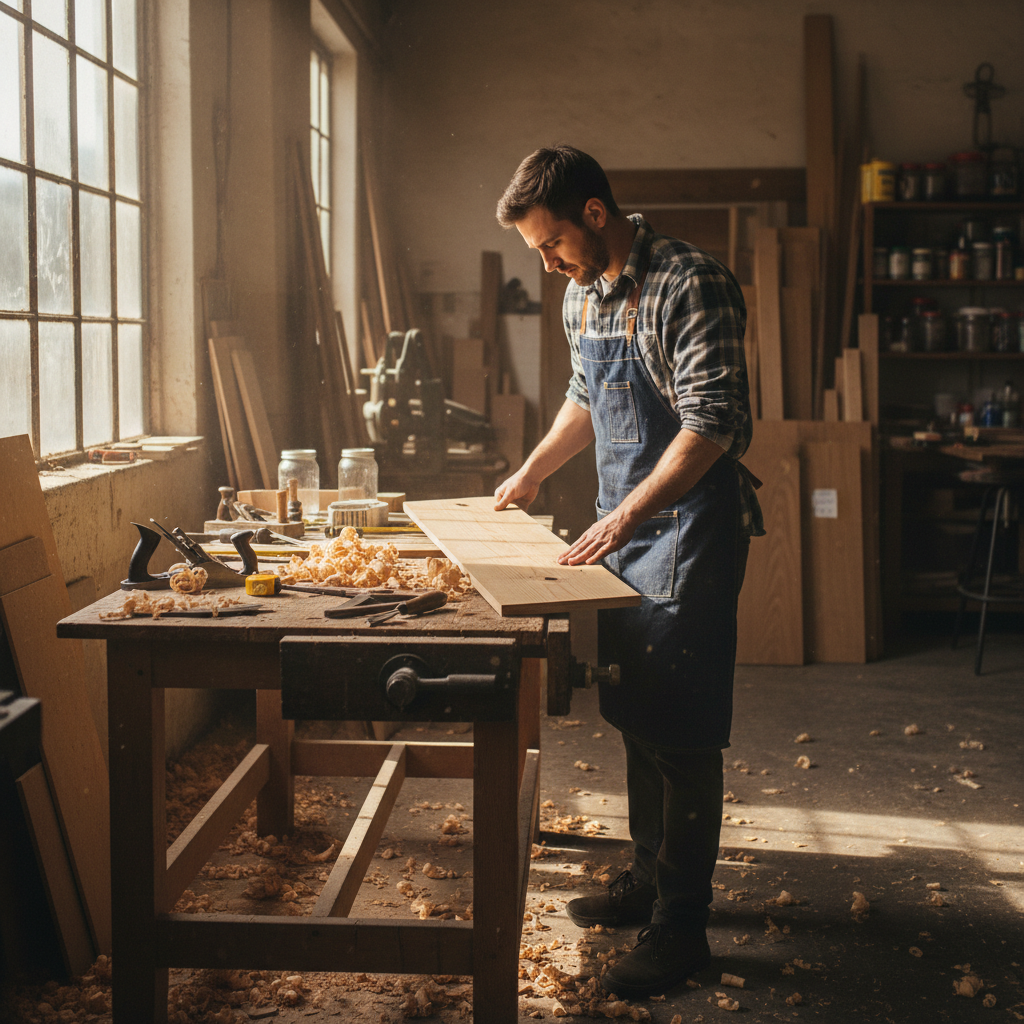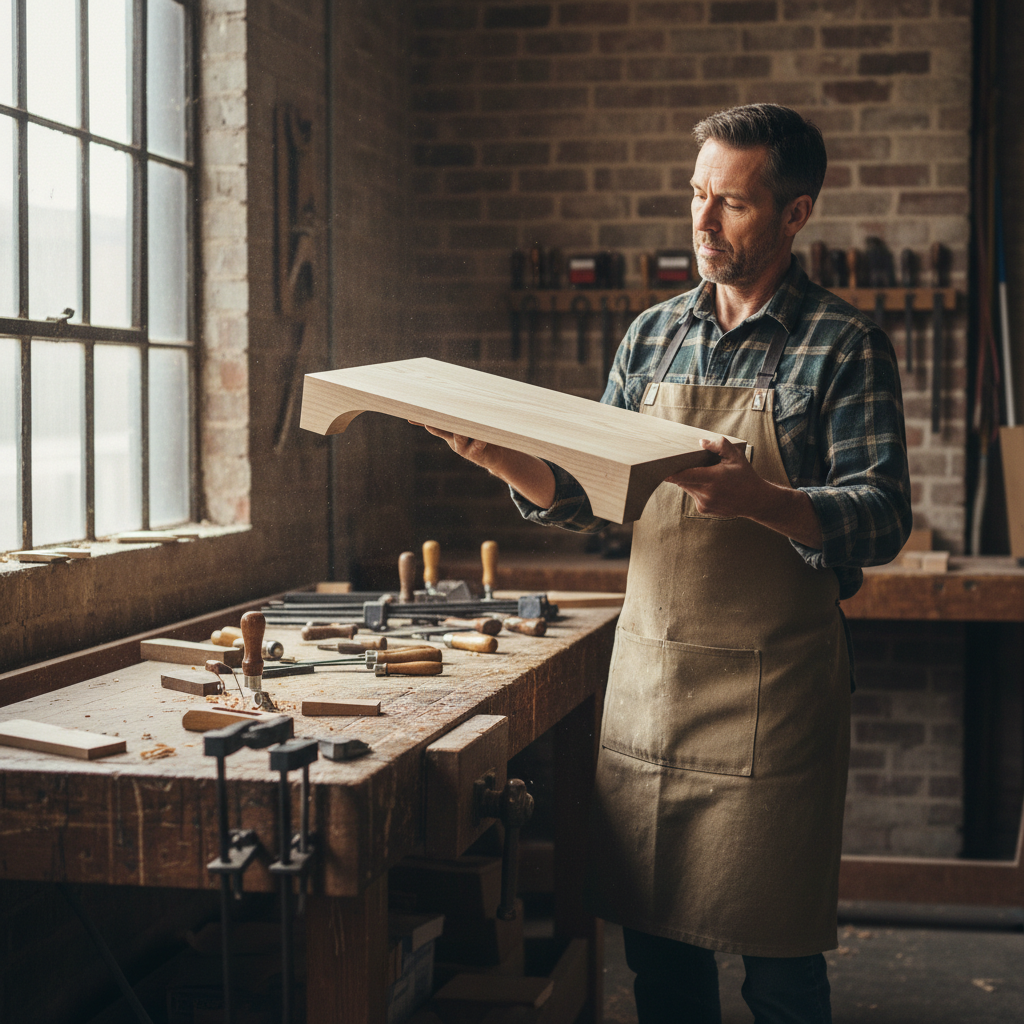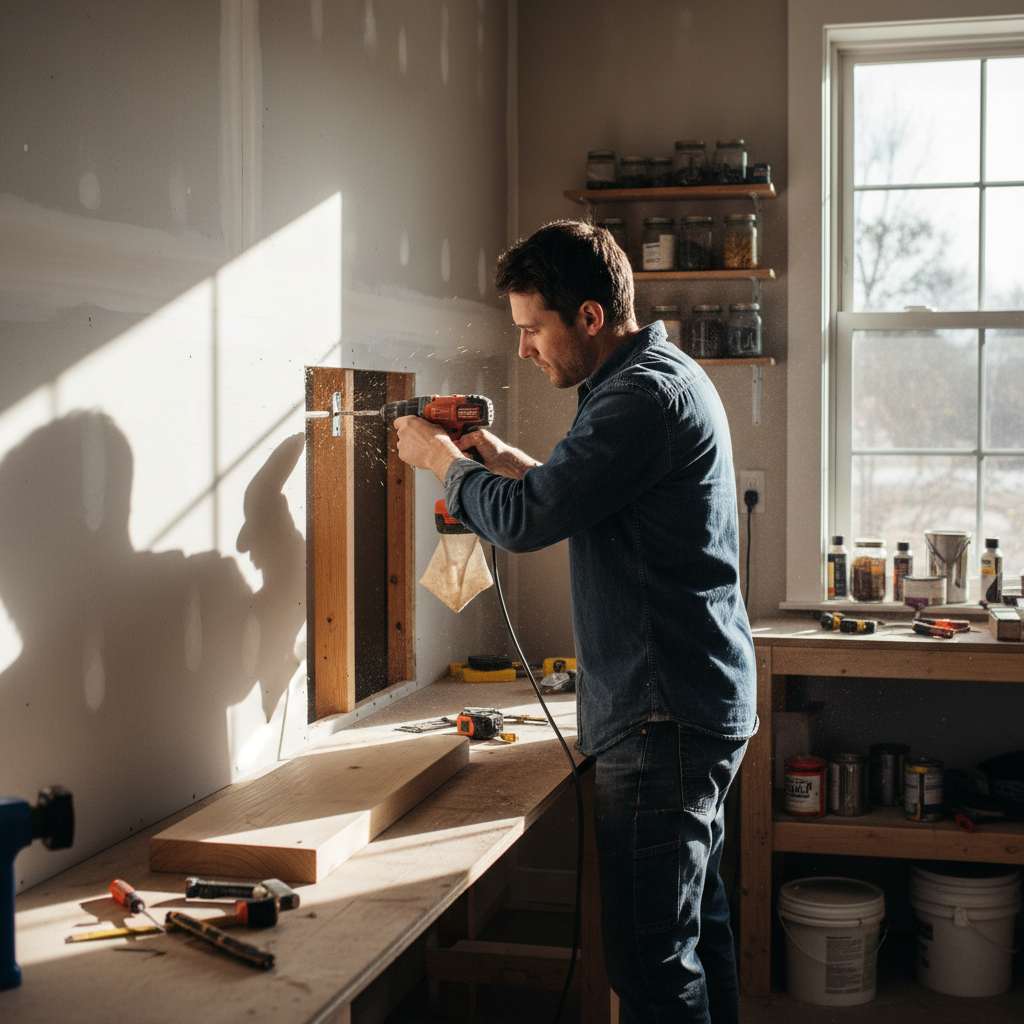
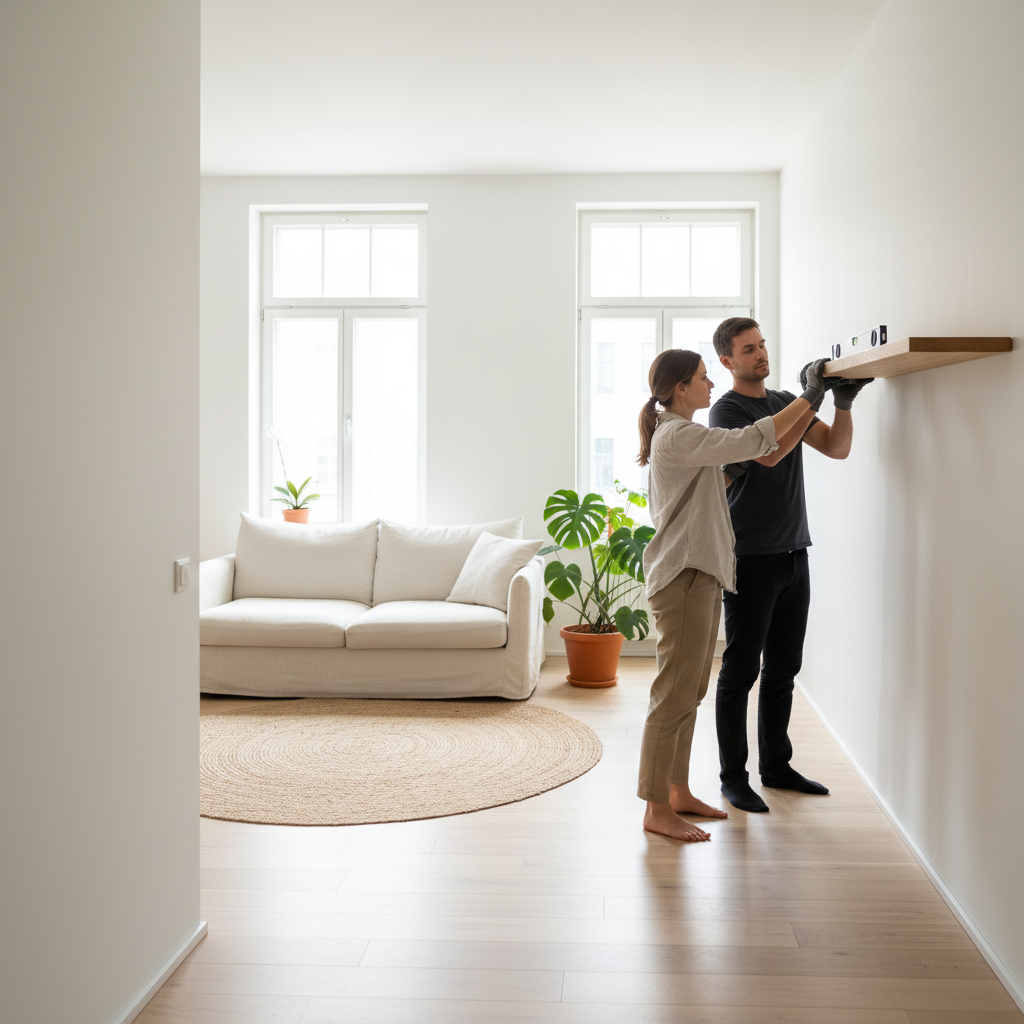
A lumber yard will quote you $18 - $35 for a single pine board long enough to make one standard floating shelf, and that figure doesn't include brackets, fasteners, sandpaper, or stain. Meanwhile, a factory-made shelf in roughly the same dimensions sits on a big-box shelf for $25 - $55, fully finished and ready to hang.
That tight price overlap is where the real question lives. Building floating shelves yourself can cost less than buying them, but only under conditions most guides treat as guaranteed. The break-even calculation shifts depending on whether you already own a miter saw, what your walls are made of, and how forgiving you're willing to be about grain consistency.
The honest tension here: DIY floating shelves almost always beat store-bought on quality for the same dollar amount, but they rarely beat store-bought on cost unless you're building at least three to four of them in one session. A single shelf built from scratch often costs more per unit than the equivalent off-the-shelf option, once tools and finishing supplies are factored in.
What It Actually Costs to Build Floating Shelves
Building a floating shelf from scratch has three real cost buckets: the board itself, the mounting hardware, and the finishing materials. People consistently undercount the second and third.
For lumber, a 1×10 or 1×12 pine board at 36 inches runs roughly $8 - $14 at a home improvement retailer like Home Depot or Lowe's, depending on your region and current lumber pricing. Upgrade to poplar (paints more cleanly) and you're looking at $14 - $22 for the same cut. Move to oak or walnut and a single shelf board can run $28 - $60 or more before you've touched it. These are approximate ranges that fluctuate with the lumber market, but they're realistic for 2024 - 2025 US pricing.
Brackets are where DIYers reliably get surprised. Decorative floating shelf brackets from retailers like IKEA or Wayfair start around $6 - $12 per pair for lightweight options, but those are rated for 20 - 30 lbs. If you're putting books or kitchen items on the shelf, you want hardware rated for 50 lbs or more per shelf, and that means spending $18 - $45 on a two-bracket set from brands like Rockler or a local hardware supplier. Hidden rod-style brackets (which give a truly cantilevered look with no visible hardware) cost more, typically $25 - $60 for a set of two, and they require studs or a solid mounting surface to work safely.
Or rather: the bracket cost isn't just a price issue. It's a structural decision. Underspending on brackets is the single most common reason DIY floating shelves fail, and a shelf that pulls out of drywall damages the wall, the items on it, and occasionally whatever is sitting below.
Finishing supplies for one shelf: sandpaper progression (80, 120, 220 grit), wood conditioner if using pine, one quart of stain or paint, and a can of polyurethane. If you're buying all of this fresh, budget $35 - $55. If you have most of it already, the marginal cost drops to under $10. This is the variable that most changes whether DIY is cheaper.
A realistic full build cost for one 36-inch DIY floating shelf, assuming you own basic tools but need to buy finishing supplies:
| Item | Low Estimate | High Estimate |
|---|---|---|
| Pine or poplar board (36") | $10 | $22 |
| Brackets (pair, 50 lb rated) | $18 | $45 |
| Finishing supplies (partial kit) | $12 | $35 |
| Fasteners and anchors | $4 | $8 |
| Total per shelf | $44 | $110 |
That range is wide on purpose. A pine shelf with modest hardware and supplies you mostly have on hand lands near $44 - $55. An oak shelf with quality hidden brackets and fresh finishing supplies can push past $100 before you pick up a drill. The midpoint for a competently built DIY shelf is around $65 - $80 per unit, which is more than a basic store-bought shelf and roughly comparable to a mid-grade retail option.
What Store-Bought Floating Shelves Actually Cost (and What You Give Up)
Retail floating shelves span a wide price spectrum, but the useful categories are narrower than the marketing suggests. There are three tiers worth knowing: budget particleboard, mid-grade MDF or solid wood, and solid hardwood or custom-finished options.
Budget shelves at IKEA, Target, or Amazon run $18 - $40 for a single unit in common lengths (24 - 36 inches). These are almost always particleboard or MDF with a laminate or vinyl wrap. They look fine on a wall at normal viewing distance. They will not hold heavy loads without sagging over time, they cannot be refinished, and they chip at the edges if bumped. For a home office displaying lightweight items or a bathroom holding toiletries, they're a reasonable choice.
Mid-grade options from West Elm, Pottery Barn, Wayfair's better lines, or floating shelf brands like Rustic Strength or Floating Shelf Co run $45 - $120 per shelf depending on size and wood species. These are often solid pine or MDF with a real wood veneer. Finish quality is generally consistent. Hardware included is usually adequate but not heavy-duty. The major limitation is customization: you get the lengths, finishes, and depths they offer.
Solid hardwood retail shelves (white oak, walnut, maple) from specialty retailers or Etsy makers start around $80 - $180 per shelf in standard sizes, and custom dimensions push that higher. At this tier, you're often paying for someone else's labor at roughly the same materials cost you'd spend building it yourself. That's where DIY starts to win clearly on value.
The practical comparison that matters most: a store-bought shelf at $35 is not competing with a DIY shelf at $65. It's competing with a DIY shelf at $65 that is thicker, uses real solid wood, matches your existing trim color exactly, and can be refinished in five years when you repaint the room. Those are different objects.
Where DIY Wins, Where It Loses, and Who Should Skip It Entirely
DIY floating shelves make clear financial sense under a specific set of conditions: you're building three or more shelves in one project, you already own a circular saw or miter saw and a drill, you have paint or stain from another project, and you want a wood species or dimension that retail doesn't offer in your budget. In that situation, your per-shelf cost drops toward $35 - $50 even for solid wood, because finishing supplies and tool depreciation spread across multiple units.
One shelf built from scratch rarely beats buying. The math doesn't work. You'll spend $15 - $25 on finishing supplies alone for a single shelf, and that purchase is nearly wasted because a quart of stain and a can of poly cover eight to twelve shelves. Buying a single shelf at a mid-grade retailer and spending the two hours on something else is often the smarter call.
The buyers who consistently overpay are people who start a DIY project, encounter a snag (bad stud spacing, a wall that's plaster rather than drywall, boards that cup after cutting), and then buy tools or materials to solve problems they didn't anticipate. Plaster walls require different anchors than drywall. Toggle bolts and specialized plaster anchors add $8 - $20 per shelf installation and require more careful drilling. If you don't know your wall type before you start, factor that uncertainty into your cost estimate.
Buyers who should skip DIY entirely: renters who can't patch walls freely, anyone building one shelf for a specific room with a tight deadline, and anyone whose tool kit is limited to a hammer and a screwdriver. The time cost of tool acquisition (or rental) plus the learning curve of a first floating shelf install often exceeds any material savings.
That framing misses something. The real argument for building your own floating shelves isn't usually cost, it's dimensional control. Retail shelves come in standard depths (typically 6, 8, or 10 inches) and standard lengths (typically 24, 36, or 48 inches). If you need an 11-inch-deep shelf at 42 inches to fit a specific alcove, or you need four shelves in a wood that matches 20-year-old red oak trim, the retail market doesn't have what you need at a reasonable price. DIY stops being a cost decision and becomes a capability decision.
The Cost of Getting the Hardware Wrong
A common guideline in the contractor trade: size your shelf brackets for at least double the load you plan to put on the shelf. Books are heavy. A single row of trade paperbacks across a 36-inch shelf weighs 15 - 25 lbs. Add a small plant and a few decorative objects and you're at 30 - 40 lbs without noticing. Brackets rated for 30 lbs with that load in an imprecise installation can pull free, especially in drywall without studs.
The hidden rod bracket system (also called blind shelf supports or floating shelf pins) is the gold standard for a truly floating look, but it demands studs or solid wood blocking in the wall. Standard stud spacing in US residential construction is 16 inches on center, though older homes vary. A 36-inch shelf needs at minimum two anchor points into studs. If your studs don't align with where you want the shelf, you have three options: use a French cleat behind the shelf (visible but strong), install solid blocking between studs (a bigger project), or use heavy-duty toggle anchors rated for drywall (adequate for lighter loads, not books). None of those options are free or quick.
If you skip load-rated hardware to save $15 - $25 per shelf, the consequence isn't just a shelf that sags. A shelf pulling free from a wall takes drywall with it, creates a repair job that costs $50 - $150 to fix properly, and can damage whatever was on the shelf. The hardware savings disappear and then some.
I'd start with the brackets before pricing anything else. Know what your wall can support, buy hardware rated for that load with a comfortable margin, and then select your shelf material. Reversing that order is how projects go sideways.
Making the Final Call
If you need one shelf and retail has a size that fits, buy it. The math doesn't favor building a single shelf from scratch, and the time investment won't pay back unless you enjoy the process for its own sake (which is a legitimate reason, just not a cost argument).
If you need three or more shelves, want a specific wood species or dimension, or want shelves you can refinish or modify later, build them. Your per-shelf cost at scale drops into the $35 - $55 range for solid wood, which beats comparable retail options by $30 - $60 per unit. That's a real number: on a set of five shelves, building your own can save $150 - $300 versus mid-grade retail equivalents in the same material.
Check wall type, stud spacing, and bracket load rating first. Those three decisions shape every other cost in the project. Get them wrong and you're not saving money.