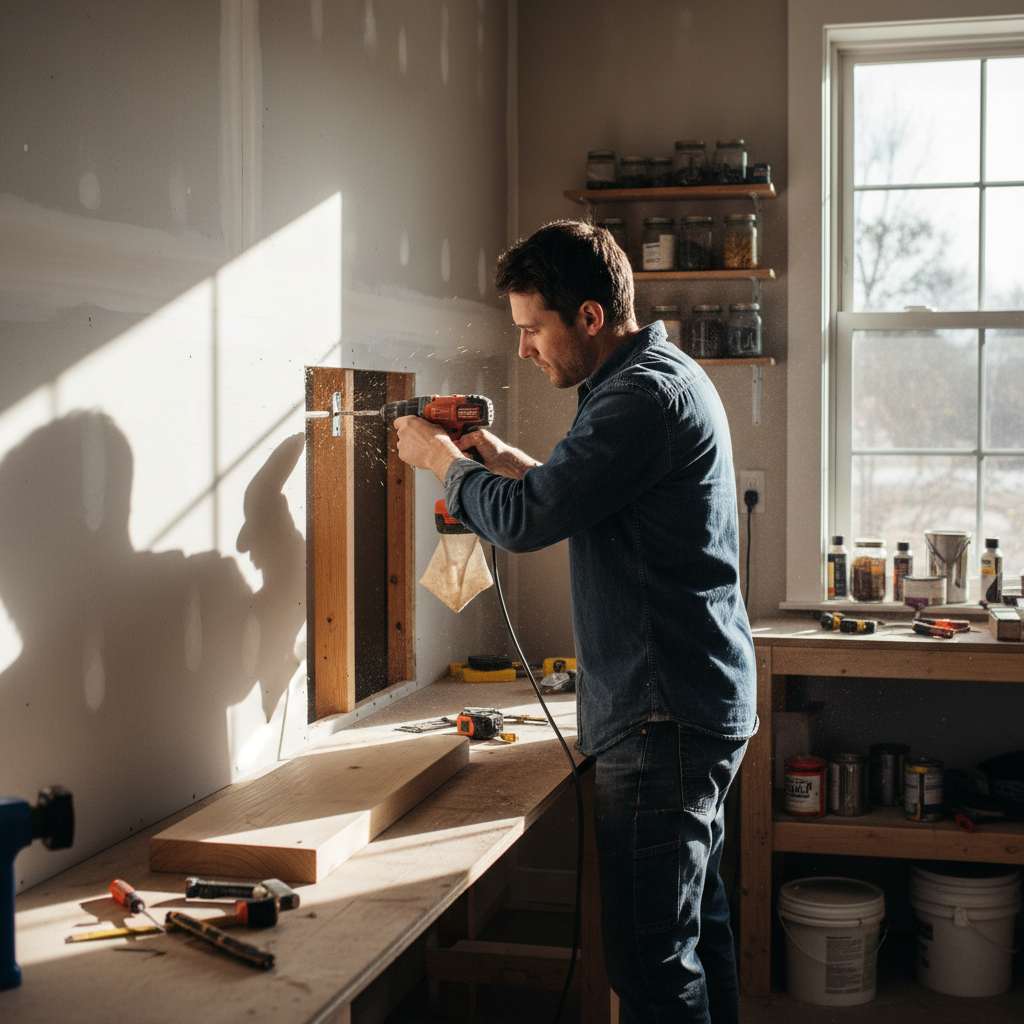
Woodworkers posting the same dovetail joints and cutting boards they posted in 2019 are watching their numbers stagnate, and the reason isn't the algorithm. Popular woodworking projects on social media in 2026 follow a different logic than they did even two years ago, one shaped by platform-specific formats, a viewer appetite for emotional payoff, and a shift in what counts as aspirational. Shelf brackets and farmhouse benches still get made, but they don't get shared the way they used to.
The gap that most builders miss: engagement and virality are not the same metric, and optimizing for one can quietly destroy the other. A satisfying finish video of a walnut coffee table can pull 400,000 views on a Wednesday and convert almost nobody into a follower. A project that costs a third as much to build, shot with a phone on a workbench, can add 3,000 followers in a week. Platform, format, and project type have to align or the effort doesn't compound.
Three variables consistently separate woodworking content that builds an audience from content that just collects impressions: perceived accessibility, material specificity, and resolution speed. None of those are about skill level. A master craftsman can post content that fails all three, and a first-year hobbyist can nail them.
What the Data Actually Shows About Trending Projects
Short-form video platforms have reshuffled which woodworking projects earn traction. According to publicly available creator data and trend reporting from platforms like TikTok's Creative Center and Meta's content insights, functional home organization pieces dominated woodworking engagement through 2025 and carried that momentum into 2026. Floating shelves, pegboard tool walls, and entryway storage benches consistently outperform decorative or heirloom pieces in raw reach, largely because the viewer can immediately imagine owning the finished object.
Or rather: it's not just that viewers want functional items. The mechanism is recognition speed. When someone scrolling at 1.5x speed can understand the project's purpose within two seconds, they slow down. Abstract beauty, however genuine, requires cognitive effort the algorithm doesn't reward. This is why live-edge river tables, which dominated feeds around 2021 and 2022, have dropped sharply in engagement despite still being technically impressive. The format saturated, the wow-factor normalized, and the build process is too slow for short-form.
The projects pulling strongest engagement on Instagram Reels and TikTok in 2026 cluster into roughly four categories: modular storage systems, outdoor furniture scaled for small yards, children's furniture and play furniture, and what the community has started calling "thrift flips," which means structural rebuilds of secondhand furniture using new joinery or surface work. Thrift flips in particular generate high save rates, which the platforms weight heavily in distribution. People save them because they want to attempt the project, not just admire it.
YouTube tells a different story. Long-form builds, anything over twelve minutes, perform best when they include a genuine problem-solving moment: a mistake corrected, a joint redesigned, a finish that failed and got stripped. Channels that post perfect builds without visible struggle have seen average view duration drop. Viewers want the friction. That's not a content strategy tip pulled from a marketing guide; it's observable in the comment sections of the highest-performing woodworking channels right now.
Platform Breakdown: Where Each Project Type Wins
Not every project belongs on every platform. Treating all social media as interchangeable is the most common strategic mistake woodworking creators make, and it costs them compounding growth.
| Project Type | Best Platform | Format That Works | Typical Engagement Driver |
|---|---|---|---|
| Floating shelves and wall storage | TikTok, Instagram Reels | 30-60 second timelapse with reveal | Relatability, low perceived cost |
| Outdoor dining furniture | Pinterest, YouTube | Step-by-step tutorial or photo series | Search intent, seasonal peaks |
| Children's play furniture | Instagram, Pinterest | Before/after photo pair, short Reel | Emotional resonance, shareability |
| Thrift flip rebuilds | TikTok, YouTube Shorts | Problem-reveal-solution arc under 60s | Save rate, curiosity gap |
| Heirloom and fine furniture | YouTube long-form | Full build documentary, 15+ minutes | Skill admiration, community depth |
| Shop organization and tool storage | Instagram, TikTok | Satisfying organization reveal | Aspiration, immediate utility |
The pattern here matters more than any single row. Short platforms reward projects with fast visual payoff and a low intimidation factor. Long platforms reward projects that show process, including the failures. Posting a fifteen-minute walnut credenza build on TikTok doesn't underperform because the platform penalizes quality; it underperforms because the format and content type are mismatched.
Pinterest deserves a separate note. It functions as a search engine more than a social platform, which means seasonal and evergreen projects hold value for months after posting. An outdoor Adirondack chair tutorial posted in March can still drive traffic in August. That's a compounding asset most woodworkers building only for TikTok are leaving on the table.
The Projects That Actually Build Followers, Not Just Views
Views and followers are different currencies, and the projects that generate each are not the same. If you're trying to build an audience rather than a viral moment, the distinction determines everything about what you should build and how you should film it.
Beginner-accessible projects with a surprising material choice consistently convert viewers to followers. A simple wall-mounted coat rack isn't remarkable. The same coat rack built from reclaimed pallet wood, finished with a single coat of Danish oil, and shown in sixty seconds with the raw cost on screen: that earns follows. The perceived accessibility matters, but so does the specificity. Viewers want to know they can replicate it, and a specific material name, a specific finish, a specific dimension gives them the confidence that they can. Vague "woodworking project" content doesn't convert.
The most follow-generating project category right now is children's furniture, particularly play kitchens, step stools, and reading nooks. The emotional stakes are high for the viewer, the perceived difficulty is approachable, and the content is shareable outside the woodworking community. A parent who doesn't own a single tool will share a cute play kitchen build to their network. That cross-community sharing is what accelerates follower growth in ways that shop-organization content, however satisfying, never will.
I'd start with one of these if building an audience from scratch: a children's step stool or a wall-mounted entryway shelf. Both can be shot in under two hours, both have high save rates, and both demonstrate enough technique to establish credibility without alienating beginners. The step stool in particular photographs well at any skill level.
If you ignore the platform-format alignment entirely and just post whatever you're building, you'll likely get occasional views but almost no follower compounding. The content that doesn't align with platform behavior gets distributed once and stops. That means months of building, filming, and editing that generates no lasting channel growth.
When Trending Projects Are Wrong for Your Channel
This article is for woodworkers who want to grow a social media presence. If your goal is selling finished pieces, getting commissions, or documenting personal projects with no audience-growth intent, most of what's above doesn't apply to you, and chasing trending formats could actively misrepresent your work.
The framing that popular equals worth building is the thing to push back on. A fine furniture maker posting thrift flips to chase TikTok engagement is diluting their brand signal. Potential commission clients watching that content get confused about what the maker actually does. The downside isn't just wasted time; it's reputational drift. A clear, consistent body of work at one skill level and aesthetic, even with slower follower growth, builds a stronger client pipeline than an algorithmically optimized channel that covers too much ground.
The better question is what platform suits the work you're already making. Heirloom and commission-quality work belongs on YouTube and Instagram, where longer attention spans and higher household income among users create better client-conversion conditions. TikTok builds awareness fast, but awareness of the wrong thing can close doors as effectively as obscurity.
That framing misses something important: social media growth and business growth are not the same goal, and optimizing for one at the expense of the other is a real cost, not a theoretical one.
How to Choose What to Build and Post Next
Picking a project for social media in 2026 comes down to three honest questions. What platform do you primarily post to? What is your current follower range? And what is your actual skill level, not what you aspire to, but what you can execute cleanly today?
For under 1,000 followers on TikTok or Instagram: stick to projects under four hours build time, under $80 in materials, and with a clear before-or-during-or-after structure. Wall shelves, coat racks, simple benches, small outdoor tables. Film the mistake if one happens. Post the cost on screen.
For 1,000 to 10,000 followers: introduce a signature material or technique that makes your content identifiable. The accounts that break through this range typically have a recognizable visual style or material preference: always white oak, always hand tools, always reclaimed wood. Generic projects at this stage stop compounding. Specificity is what earns shares.
For 10,000 and above: the algorithm rewards you enough that project choice matters less than consistency and format. But the creators who plateau here are usually the ones who stopped making distinctive choices in favor of safe, broad-appeal content.
Check your save rate, not your view count. Save rate is the number that tells you whether people plan to use your content, and projects with high save rates get re-distributed by the platform for weeks. A project with 10,000 views and a 6% save rate will outperform a project with 80,000 views and a 0.5% save rate in long-term channel growth.
What Comes Next in Woodworking Content
The trend arc in woodworking content follows a predictable pattern. A project type emerges, gets saturated, and the creators who built their channels on it either evolve or stagnate. Live-edge tables followed this arc. So did epoxy pours. So will thrift flips, probably within eighteen months.
The next category showing early signals: structural sustainability content, meaning projects that use salvaged or low-waste materials and show the sourcing process as part of the build. This isn't a prediction about cultural trends in the abstract. It's observable in which channels are growing fastest in the 5,000 to 50,000 follower range right now, and in what those creators are filming. When the mid-tier channels start moving toward a topic, the mainstream follows within a year or two.
Modular and adaptable furniture, pieces designed to change configuration or scale up, is also gaining traction. The appeal is partly practical (smaller homes, renters who can't make permanent changes) and partly content-structural: modular pieces create natural series content, which is a format the platforms actively promote.
Build the project you can execute well. Film it on the platform that matches its format. Save rate is your north star.