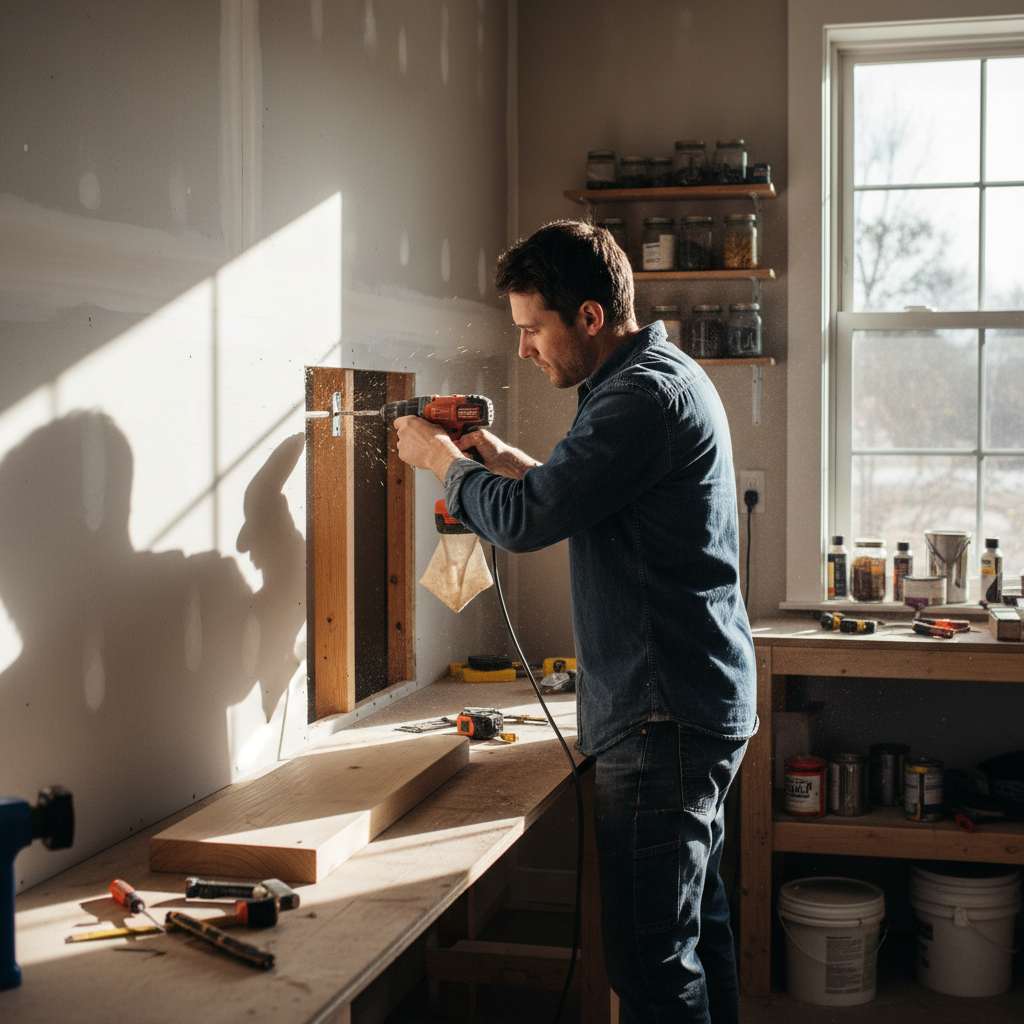
Woodworkers will tell you to match your first shelf project to your tools before they discuss anything else, and there's a real reason for that. A style that looks achievable on Instagram can require a router, a pocket-hole jig, or flush-mount hardware that costs more than the lumber. The gap between "I want to build a shelf" and "I finished a shelf I'd actually hang" is almost always a style mismatch, not a skill gap.
Right now, three shelf styles are genuinely trending in American home decor: the floating ledge shelf, the pipe-and-board industrial shelf, and the bracket-mounted open shelf. All three look current. Only one of them is truly forgiving when you're still learning how to cut a straight line or drive a screw without splitting pine. That distinction matters more than aesthetics at this stage.
Here's the tension worth sitting with before you buy anything: the most beginner-friendly build isn't always the most beginner-friendly to hang. A bracket shelf takes twenty minutes to cut and sand, then demands precise wall anchoring into studs or drywall anchors rated for real weight. Get the build wrong and you lose an afternoon. Get the hang wrong and you lose the shelf, the wall, and whatever was sitting on it.
Why Style Choice Is a Tool Choice in Disguise
Every wood shelf style has a hidden tool list. Floating shelves, the kind with no visible bracket, require either a French cleat routed into the back of the board or a recessed keyhole mount. Neither is beginner-hostile, but both need a router or at least a chisel and a steady hand. If you don't own a router, floating shelves aren't actually floating on your budget.
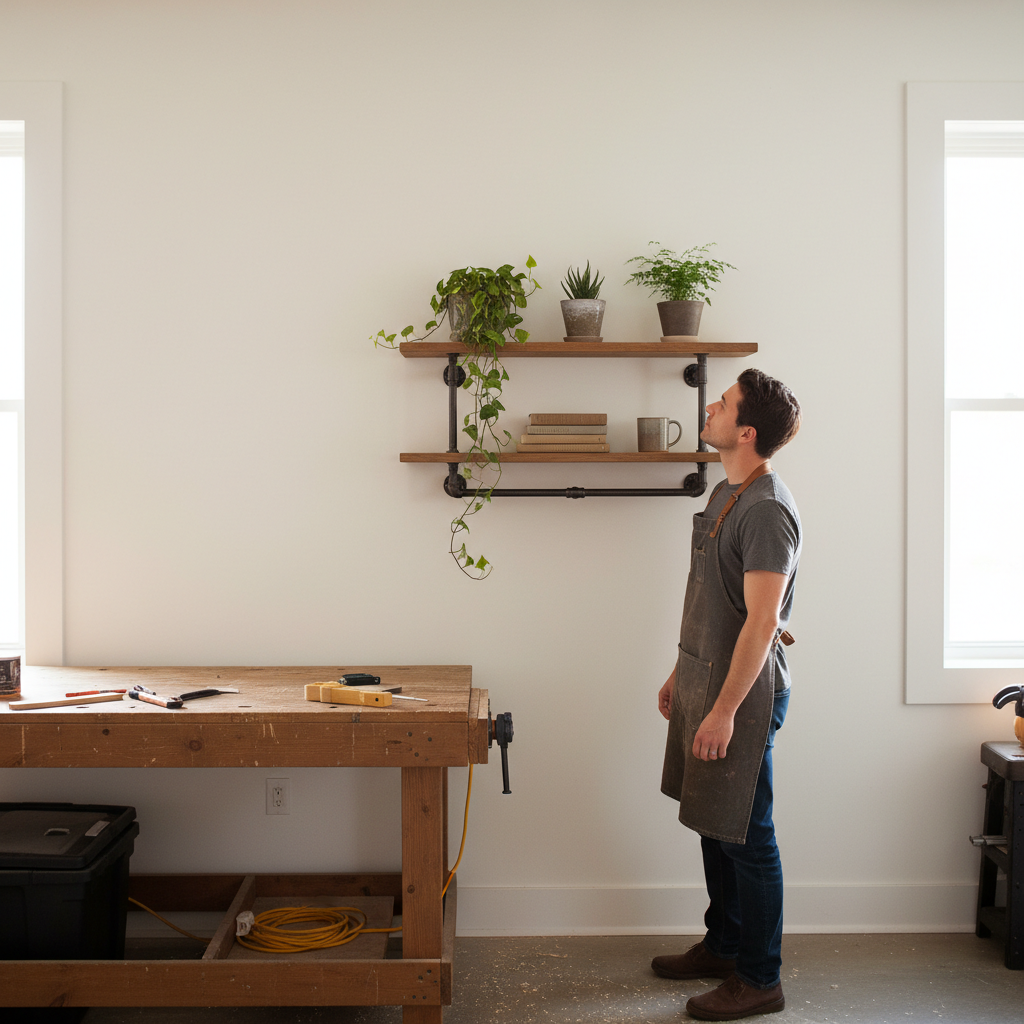
The pipe-and-board industrial shelf sidesteps most of that. The build itself is just selecting and finishing a board, since the iron pipe flanges, nipples, and floor flanges handle the mounting structure. You're shopping at a hardware store and an art supply store, not cutting complex joinery. That's partly why it's stayed popular since the mid-2010s and keeps showing up in home decor content: the visual result looks custom, but the woodworking skill floor is about as low as it gets. Sand, stain, seal, mount flanges. Done.
Or rather: done structurally. The finishing step is where beginners often underestimate the time. A raw pine board shows every scratch and uneven stain application under strong light. A gel stain, applied with a foam brush in one direction and wiped off quickly, covers much more consistently than a liquid stain on open-grain pine. That single technique swap is worth knowing before you ruin your first board.
Bracket-mounted shelves sit in the middle of this range. The board itself is simple. A 1x8 or 1x10 pine board, cut to length at the home center (most will make one cross-cut free), sanded to 150-grit, and finished with a water-based polyurethane is weekend-afternoon work. The brackets are where cost and style diverge sharply. Cheap stamped-steel brackets flex under load and look it. Solid cast-iron or heavy-gauge steel brackets from manufacturers like Rejuvenation or even the heavier options at Home Depot hold shape and read as intentional design choices. Budget around $8 to $18 per bracket for something that won't sag visibly, and you'll typically need two per shelf up to 36 inches long.
The Three Styles, Honestly Compared
Before getting into the comparison below, one thing this article won't cover: built-in shelving, box shelves with dadoed sides, or anything requiring a table saw. Those are worthwhile projects, but they aren't beginner builds in any honest sense of the term.
Here's how the three trending styles actually stack up for someone building their first or second shelf:
The table below compares the three styles across the factors that actually determine whether a beginner finishes the project.
| Style | Core Tools Needed | Approx. Material Cost (single shelf) | Beginner Finish Risk | Trending Aesthetic |
|---|---|---|---|---|
| Pipe-and-Board Industrial | Drill, screwdriver, sanding block | $35 to $65 | Low (flanges hide wall gaps) | High (industrial, loft, modern farmhouse) |
| Bracket-Mounted Open Shelf | Drill, stud finder, level, sanding block | $25 to $55 | Medium (bracket reveal punishes crooked installs) | High (Scandinavian, minimalist, transitional) |
| Floating Ledge Shelf | Drill, router or chisel, level, stud finder | $30 to $70 | High (invisible mount requires precision) | Very High (contemporary, clean-line, gallery wall) |
The cost ranges above reflect 2024 lumber and hardware pricing at major US retailers like Home Depot and Lowe's. They assume standard pine or poplar, not hardwood. Oak boards roughly double the material cost and require sharper tools to avoid tearout.
What the table can't show is tolerance for error. Pipe flanges are bolted flat to the wall surface, so minor leveling adjustments take seconds. A floating shelf with a keyhole mount that's half an inch off reads immediately and requires filling holes and starting over. For a first project, that failure mode is genuinely discouraging in a way that a slightly imperfect bracket install isn't.
What Actually Makes a Shelf Look Current Right Now
The trending look in 2024 American home decor leans hard on natural wood grain, warm tones, and visible hardware. That means walnut-stained pine, black iron brackets or black pipe fittings, and open grain rather than painted finishes. You'll see this across design platforms and in the Pottery Barn and West Elm catalogs, which function as reliable trend anchors for what mainstream buyers are responding to.
The framing misses something, though. What's actually driving the aesthetic isn't the hardware color or the stain. It's the wood thickness. Current shelving trends favor boards that read as substantial: 1.5 inches thick or more. A standard dimensional 1x10 from the home center is actually 0.75 inches thick. It's technically cheaper and easier to work with, but it reads thin on the wall, especially next to the chunky glued-up or live-edge boards you see in the inspirational photos. If you want the current look, budget for a 2x10 (which finishes at 1.5 inches) or glue up two 1x boards face-to-face with wood glue and clamps. That's a slightly more involved step, but it's not beyond a patient beginner and the visual difference is significant.
I'd start with the pipe-and-board style using a 2x10 pine board, a black iron pipe kit (sold pre-assembled at most home centers for around $30 to $45 for a two-flange set), and a dark walnut gel stain. That combination hits the current industrial-meets-warm-wood aesthetic, costs under $70 total, and builds actual skills: surfacing, staining technique, and wall anchoring into studs. You can expand the same approach into a full shelving wall later without any new tool investment.
Buyers who skip the stud-finding step and anchor brackets or flanges into drywall alone are the ones who end up with collapsed shelves. A basic stud finder runs $15 to $25 at any hardware store. It's not optional.
When the Simple Build Is the Wrong Choice
The pipe-and-board recommendation weakens in one specific context: humid rooms. Bathrooms and laundry rooms expose raw wood to moisture cycles that cause pine to swell, warp, and hold mildew in the grain texture. A pipe-and-board shelf in a bathroom with poor ventilation will look rough within a year. For those spaces, a sealed hardwood or a painted MDF shelf with a semi-gloss finish is more durable, even if it's slightly more work to build cleanly.
Similarly, anyone expecting to load a single shelf with more than about 20 to 25 pounds should think carefully about flange count and stud placement. Two flanges per shelf is standard, but they both need to hit studs (typically 16 inches on center in US residential construction) or be backed with a proper toggle bolt rated for the load. This isn't a theoretical concern. Overloaded pipe shelves with drywall-only anchors pull out, sometimes months after install when wood movement works the fasteners loose.
The other reader type who should think twice: anyone renting. Pipe flanges require multiple large holes in the wall. Some landlords treat that as normal wear; others deduct it from the deposit. A freestanding shelf unit or a tension-rod system designed for renters avoids the argument entirely.
Building Your First Shelf Without Wasting the Lumber
The most common beginner mistake isn't the wrong style choice. It's buying finished lumber that looks fine in the store and terrible after stain. Pine has pitch pockets, tight and loose grain sections, and occasional knots that absorb stain at different rates, giving you a blotchy surface nobody posts on social media. The fix is wood conditioner: a pre-stain product applied 15 minutes before the stain that equalizes absorption across the surface. Minwax Pre-Stain Wood Conditioner and General Finishes Pre-Stain Water Based Wood Conditioner are both widely available at home centers. Skip it and you'll spend more time sanding out the blotch than you spent on the whole build.
A practical sequence for the pipe-and-board shelf: sand to 150-grit, apply wood conditioner, wait 15 minutes, apply gel stain with a foam brush (work in sections, wipe off within 3 to 5 minutes), let dry overnight, apply one coat of water-based polyurethane. Locate studs, mark them, mount flanges, check level before tightening fully, set the board. That's it. Check square footage, stud spacing, and pipe length before buying hardware, because returning pipe fittings is more annoying than it sounds.
If you ignore the wood conditioner step on pine, you're betting on a consistent result from a material that doesn't deliver one. Some boards come out fine. Most don't. The conditioner costs around $10 and takes five minutes to apply. The math isn't complicated.
The Right Starting Point
If you've been circling this decision and not building anything, here's the actual problem: you're optimizing for the perfect shelf instead of the finished shelf. Build the pipe-and-board first. It will teach you stud finding, stain application, and hardware mounting, which are the same skills every other shelf style requires. Do it with a 2x10 pine board, a black pipe kit, and a gel stain in dark walnut or early American. Hang it somewhere you'll see it every day.
If you're working in a humid room, swap to a painted MDF bracket shelf instead, and prime it with a shellac-based primer before the topcoat. If you're renting, skip wall-mounted entirely and look at the Kallax or similar freestanding systems as a holding pattern until you have walls you can commit to.
The floating shelf will still be trending next year. Build the simple one first, hang it, load it, live with it for a month. Then you'll know whether you want to keep going.