A bare-bones beginner woodworking setup in the US runs somewhere between $400 and $1,500 before you cut a single board, and that spread isn't vagueness - it reflects three decisions that most tool lists treat as identical when they aren't. Space constraints, your first actual project, and whether you're buying new or used all push the number in opposite directions before you've touched a single item on any recommended list.
The standard beginner tool roundup hands you a shopping cart. It doesn't tell you that a $200 random-orbit sander is wasted money if your first project is a bookshelf, or that skipping a workbench in favor of sawhorses costs you accuracy on every cut you make for the next year. Those aren't small details.
Here's the tension worth sitting with: the cheapest functional setup and the cheapest entry-level setup are not the same thing. Buying the wrong $80 tool and replacing it six months later costs more than buying the right $140 tool once. That math runs through every category in this guide, and it changes what "budget" actually means for a beginner.
The Real Cost Breakdown by Category
Breaking down a beginner setup by category is more useful than a single total, because each category has a different cost floor and a different consequence for going too cheap.
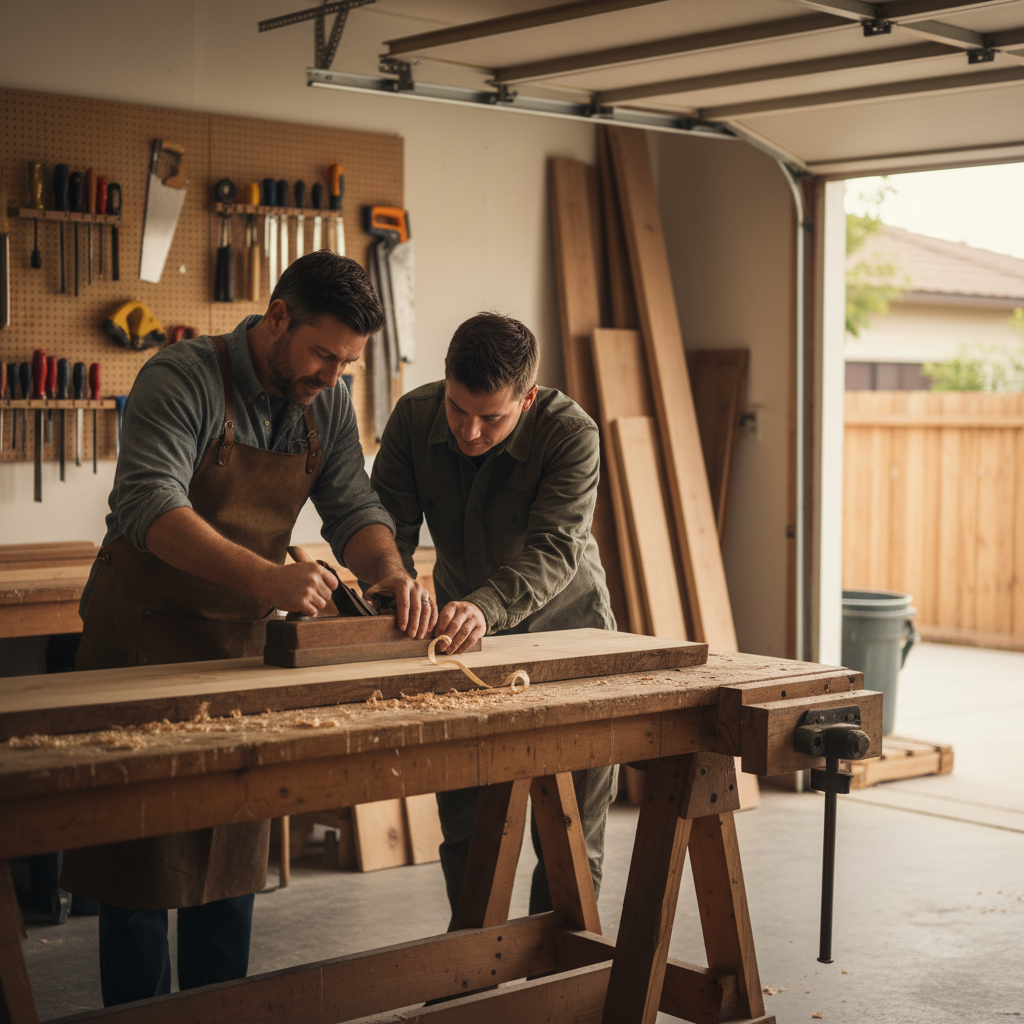
Workholding comes first. A workbench or a solid workaround is the single most important purchase most beginners delay. A folding Workmate-style bench (around $120 new) is the floor. A proper entry-level workbench with a face vise runs $300 to $500 new, or $80 to $150 used if you're patient on Craigslist or Facebook Marketplace. Without stable workholding, every measurement and every cut is less accurate than it should be. That's not a recoverable problem with better tools later - it compounds.
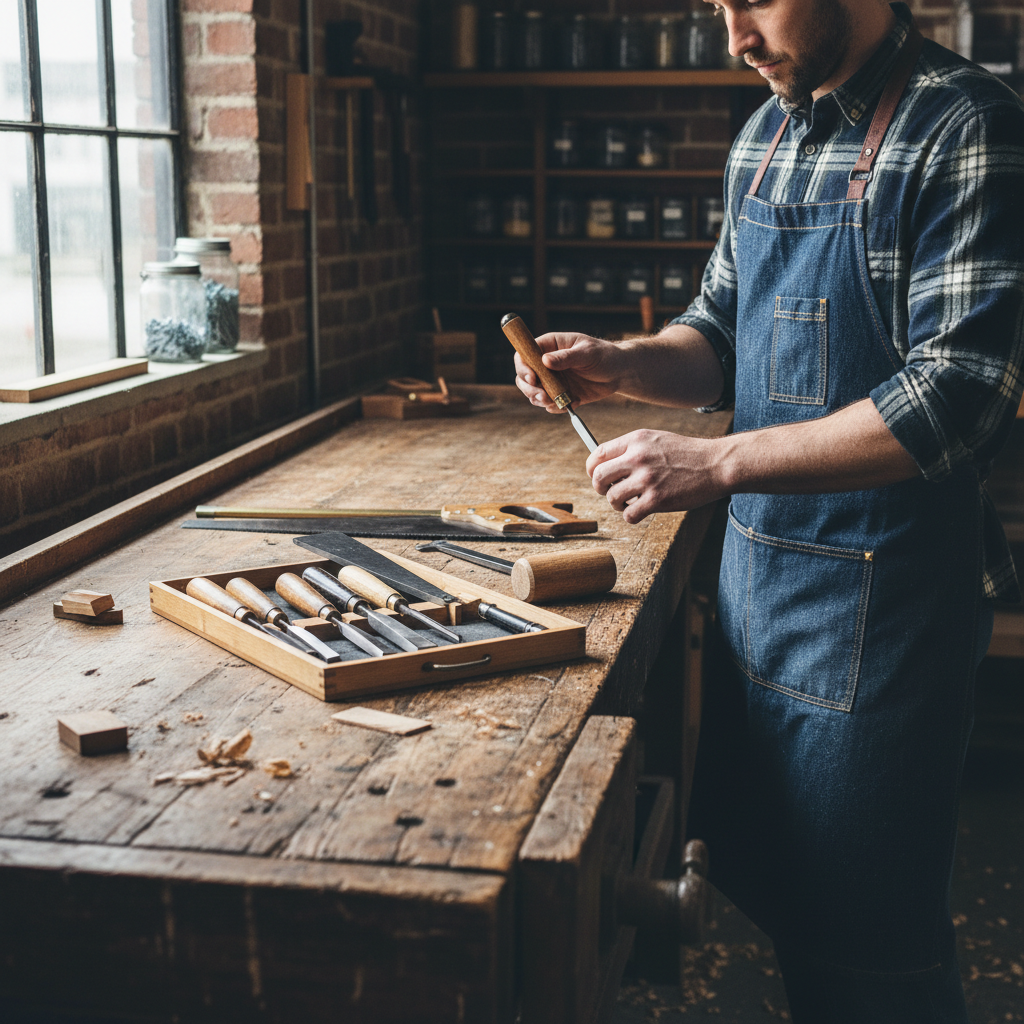
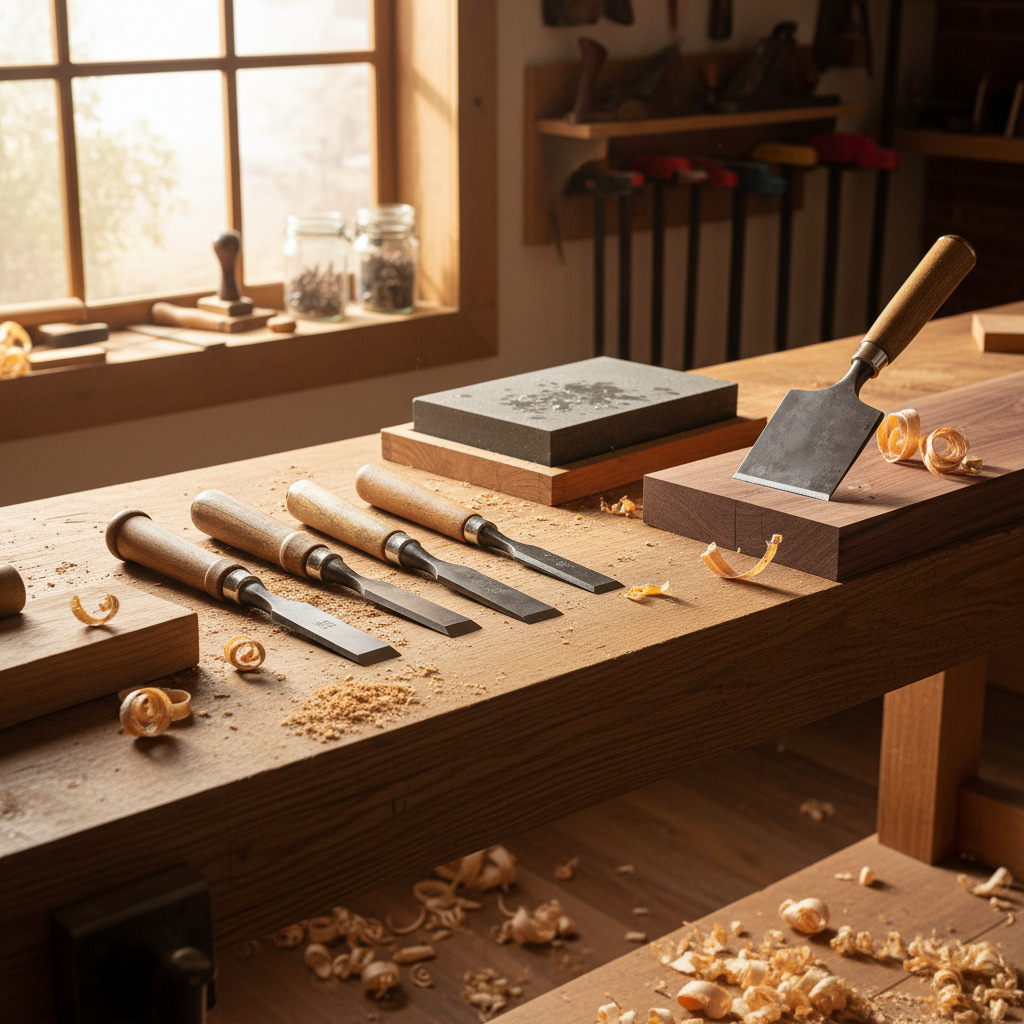
Hand tools are next, and they reward patience. A decent set of bench chisels (set of four, brands like Narex run around $60), a No. 4 bench plane ($40 used, $80 new for a decent Stanley or Silverline equivalent), a pull saw ($25 to $40), a combination square ($20 for a reliable Empire or Irwin), and a marking gauge ($15 to $25) gets you to roughly $200 to $250 in hand tools. That's a working set, not a starter sampler.
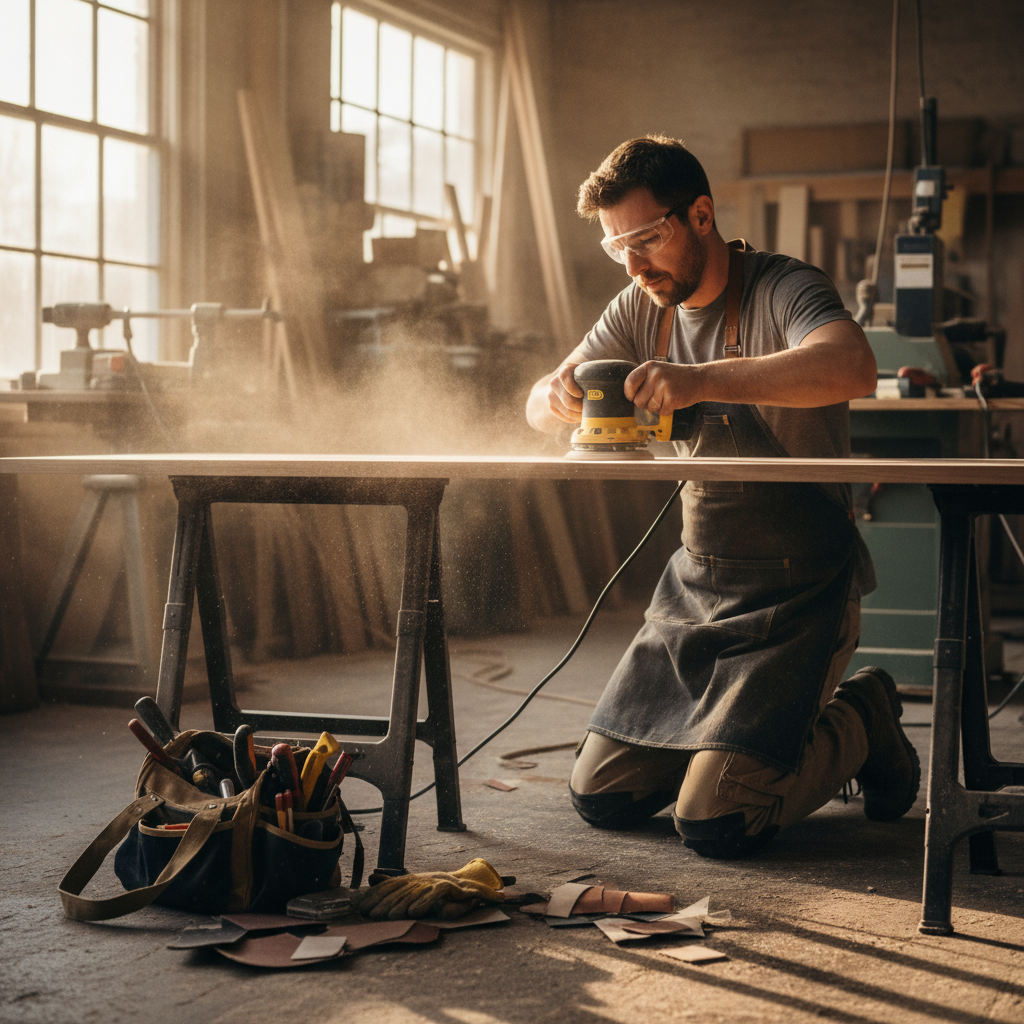
Power tools are where the budget swings widest. The honest minimum is a circular saw ($80 to $130 for a Skil or Ryobi that won't embarrass you) and a drill/driver combo ($100 to $150 for a Ryobi or HART 18V kit with two batteries). A random-orbit sander ($50 to $70) is worth adding if your projects involve any finish work. That's $230 to $350 for a three-tool power setup. A jigsaw ($60 to $90) is the next addition if you need curves. A miter saw is genuinely useful but not mandatory for a first project - and at $150 to $250 for a 10-inch sliding model, it's a deliberate upgrade, not a baseline requirement.
Safety gear gets skipped constantly, and it shouldn't. A half-face respirator with P100 cartridges (around $35) and safety glasses ($10) are the floor. Hearing protection if you're running power tools indoors ($15 for basic earmuffs). Budget $60 here and don't cut it.
Consumables are the invisible cost. Sandpaper, saw blades, drill bits, wood glue, and clamps add up to $80 to $120 before your first project. Clamps specifically: two 6-inch F-clamps and two bar clamps is a working minimum, around $40 to $50 total.
Put it together and a realistic beginner setup looks like this:
| Category | Budget Option | Mid-Range Option | Notes |
|---|---|---|---|
| Workholding | $120 (folding bench) | $300 (entry workbench) | Don't skip this category |
| Hand tools | $200 (minimal set) | $280 (quality chisels, plane) | Narex chisels hold an edge well |
| Power tools | $230 (saw + drill) | $400 (saw + drill + sander + jigsaw) | Same battery platform saves money |
| Safety gear | $60 | $60 | Non-negotiable floor |
| Consumables | $80 | $120 | Clamps are always underbought |
| Total | ~$690 | ~$1,160 | Before lumber costs |
The budget column gets you working. The mid-range column gets you working without constant friction. The gap between them is roughly $470, and most of that difference is felt on every single project you do, not just the first one.
Hand Tools vs. Power Tools: The Decision That Shapes Your Budget
The hand-tools-first vs. power-tools-first debate in beginner woodworking is real, and the answer isn't philosophical - it's spatial and project-specific.
If you're working in an apartment, a shared garage, or anywhere with neighbors within 30 feet, hand tools aren't just cheaper. They're the only practical option. A No. 4 bench plane and a pull saw generate sawdust and noise, but nothing that requires ear protection or offends a landlord. A table saw in a 400-square-foot apartment is not a compromise - it's a non-starter.
Or rather: the real question isn't which is better. It's which is better for your first 10 projects given your actual space. A hand-tool setup (bench, chisels, plane, saws, marking tools) can be assembled for $350 to $500 and will teach you more about wood grain, joinery, and fit than any power tool does. But it's slower, and if you're building a workbench, a cabinet, or anything with repetitive dimensioning, hand tools alone become genuinely tedious before you develop the skill to make them fast.
Power tools compress time at the cost of space, noise, and dust collection requirements. If you don't account for a shop vac ($60 to $90 for a basic 5-gallon Ridgid or Craftsman) in your power tool budget, you'll regret it by the second project. Add that to the honest total.
I'd start with a hybrid setup: two or three power tools for dimensioning (circular saw, drill/driver) and hand tools for fitting and finishing. That's the fastest path to actual completed projects, which matters for beginners more than people admit. Completed projects build the habit. Abandoned projects - usually abandoned because the setup creates too much friction - don't.
Buyers who skip power tools entirely and go full hand-tool aren't making a mistake, but they should know: it takes longer to reach the satisfaction of a finished piece, and that gap is where most beginners quit. That's not an argument against hand tools. It's a real condition to weigh honestly.
New vs. Used: Where the Math Actually Works
Used tools are the single best way to cut beginner setup costs, but the savings are not evenly distributed across categories. Getting this wrong means buying a $30 used belt sander that costs $45 in replacement belts and an afternoon of frustration.
Hand tools reward used buying most. Vintage Stanley bench planes (No. 4, No. 5) bought on eBay or at estate sales for $25 to $50 can be restored to better-than-new performance with a $12 set of lapping film and 45 minutes. A new equivalent at comparable quality costs $80 to $100. The used math is obvious here, and the restoration process teaches you something useful about how the tools actually work.
Power tools are more conditional. A used circular saw or drill is fine if you can test it before buying and verify the chuck, blade guard, and trigger all function correctly. But used cordless tools from a different battery platform than your existing tools eliminate the battery sharing that makes cordless ecosystems economical. Buying a used Ryobi 18V drill when you already own DeWalt 20V tools means two chargers, two battery sets, and a growing incompatibility problem. Buy used within your platform or buy new.
What not to buy used: safety gear (respirator cartridges, hearing protection with compromised foam), saw blades (you can't reliably inspect tooth geometry at a yard sale), and anything with a power cord showing wear or repair. Those categories are cheap enough new that the risk isn't worth it.
If you skip the used market entirely and buy everything new from big-box retailers like Home Depot or Lowe's, you're leaving roughly $150 to $300 on the table compared to a patient used-and-selective-new approach. That's real money for a beginner budget. But impatience has a cost too - buying a wrong used tool twice costs more than buying the right new tool once.
When This Approach Breaks Down
The $690 to $1,160 range described here assumes a specific reader: someone building furniture-scale projects (shelves, small tables, boxes, simple cabinets) in a garage or basement with 150 to 400 square feet of workable space. Change those conditions and the math changes with them.
If your first project is a timber-frame garden structure, outdoor furniture, or anything requiring sheet goods larger than 4x4 feet, the circular-saw-and-sawhorses approach becomes genuinely limiting. A track saw ($200 to $350) or a table saw ($350 to $600 for an entry Contractor-style model) enters the picture, and the budget floor jumps accordingly. This guide isn't written for that reader.
If you're working in a true urban apartment with no garage access, even the budget hybrid setup described here may not be feasible without storage solutions that add cost. A full hand-tool setup that fits in two tote bags is a real configuration, and it caps out around $400 for quality gear. But it requires accepting hand-tool pace and technique, which is a different learning curve.
Beginners who skip the workholding investment and go straight to tools will notice the problem within two projects: everything shifts when you clamp it, your saw tracks less cleanly, your chisels wander. The consequence isn't just inconvenience. It's that you'll blame your technique for problems caused by your setup, and you'll plateau earlier than you should. Stable workholding isn't glamorous, but it's the category where underspending costs the most over time.
Getting Your First $100 Right
If you're starting from zero and want to test whether woodworking is actually your thing before committing $700, the first $100 should buy you three things: a quality combination square, a set of Narex bench chisels (or equivalent), and a pull saw. Check sharpness, lumber dimensions, and joinery fit before you spend on anything else.
That combination tells you almost everything about how your brain and hands respond to the craft. If you find yourself reaching for the square constantly and caring about whether a joint fits flush, you're hooked. Buy the bench next. Then the power tools.
And once you're in: buy clamps. Then buy more clamps. Every experienced woodworker will tell you the same thing, and every beginner underestimates it until the first glue-up where they're short one clamp and the joint dries at an angle. Two clamps is not enough. Four is a working minimum. Six is where you stop improvising.