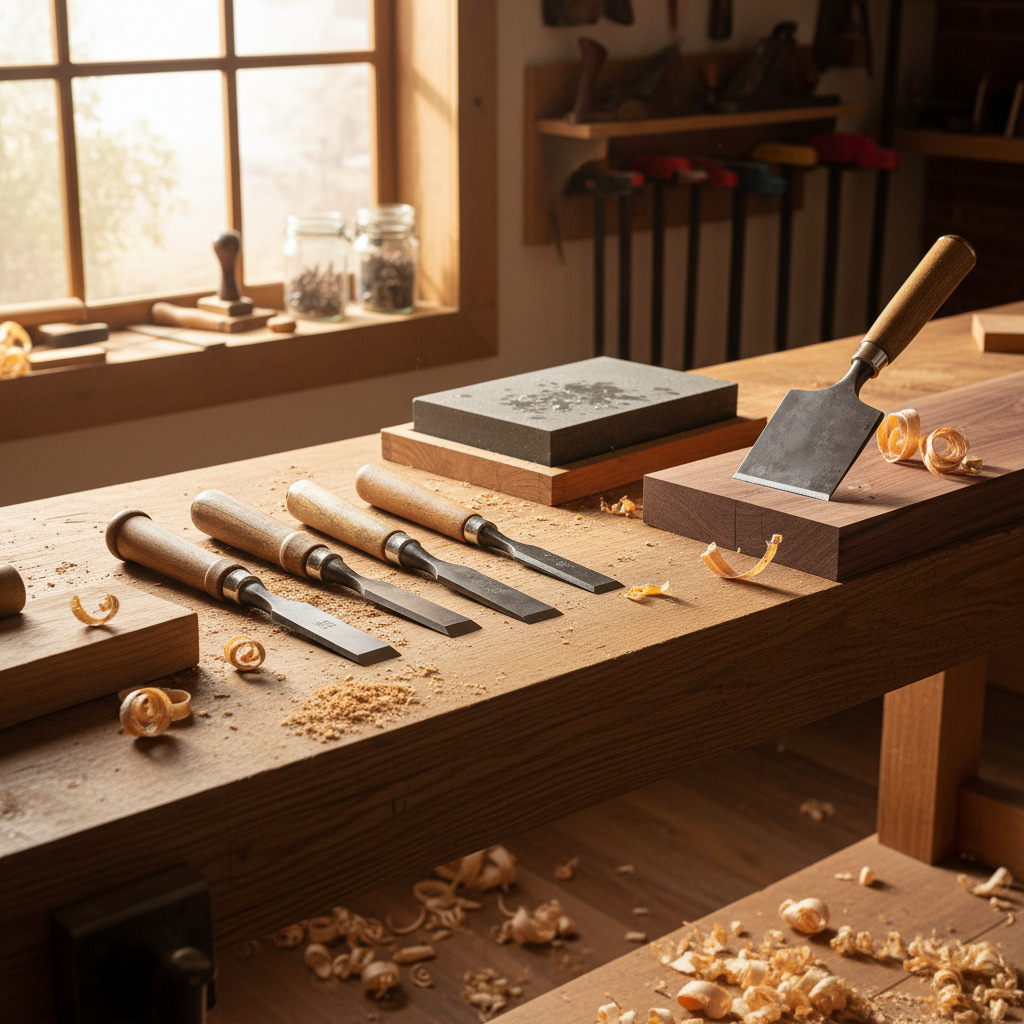

A woodworker shopping for their first hand plane faces a wall of options that the online forums make considerably worse. The tool itself hasn't changed much in a century, but the advice around it has fractured into competing camps, each convinced the other is wasting money or compromising quality.
Hand plane selection hinges on a few concrete variables: the work you're actually doing, the condition of lumber you're starting with, and how much tuning you're willing to do before the thing cuts reliably. Get those three aligned and the choice becomes straightforward. Skip them and you'll end up with a shelf ornament.
Here's the tension nobody addresses cleanly: the planes most often recommended to beginners are either too cheap to perform out of the box or too expensive to justify until you know you'll use them. That gap is where most first purchases go wrong, and it's where this guide focuses.
What a Hand Plane Actually Does (and Why That Narrows Your Choice)
A hand plane shaves thin material from a wood surface. That sounds obvious, but the mechanism matters here: a flat sole pressed against wood while a sharpened iron peels a controlled shaving. The flatness of the sole, the sharpness of the iron, and the tightness of the mouth opening determine whether you get a tissue-thin shaving or a tear-out disaster.
For a first plane, you're almost certainly doing one of two jobs: flattening a board face or smoothing a surface before finish. Those are different tasks that historically called for different planes, but a No. 4 smoothing plane handles both acceptably well at the beginner stage. That's the standard starting recommendation, and it holds.
Or rather: it holds if your lumber is already reasonably flat. If you're working rough-sawn stock straight from a mill, a No. 4 will fight you constantly. A scrub plane or a No. 5 jack plane removes material faster and makes the No. 4's job possible. Beginners working with S4S lumber from a home center don't need to worry about this distinction yet, but anyone buying green lumber or rough-sawn hardwood should budget for a jack plane first.
The mouth opening is worth understanding before you buy. A tight mouth produces a finer finish but requires a sharper iron and more careful setup. A wider mouth is more forgiving for rough work. Most budget planes ship with a mouth that's too open for fine finishing and require adjustment. Most premium planes ship ready to cut. That setup gap is not a small thing.
The Real Decision: New Budget Plane, Used Vintage, or Premium New
Three realistic paths exist for a first hand plane purchase in the US, and each has a genuinely different profile.
The table below lays out the honest comparison.
| Option | Price Range | Out-of-Box Performance | Tuning Required | Best For |
|---|---|---|---|---|
| New budget (WoodRiver, Grizzly) | $60-$120 | Mediocre; needs lapping and sharpening | 1-3 hours typical | Buyers willing to tune before use |
| Used vintage (Stanley, Record) | $20-$80 at flea markets and estate sales | Variable; depends on condition and era | 30 min to several hours | Budget buyers who can assess condition |
| Premium new (Lie-Nielsen, Veritas) | $225-$375 for a No. 4 | Excellent; cuts well from the box | Sharpening only | Buyers who want to skip setup entirely |
The used vintage route is frequently called the best value, and for a buyer who can identify a good casting and isn't afraid of rust removal, that's accurate. A Stanley Bedrock from the pre-WWII era or a mid-century Bailey pattern plane in decent shape will outperform a new budget plane after tuning. The problem is that flea market and estate sale sourcing takes time and some baseline knowledge to avoid wrecks.
WoodRiver planes, sold through Woodcraft, represent the honest middle ground. They need work out of the box, but the castings are consistent and the parts are compatible with standard Stanley-pattern replacement irons. Budget roughly 90 minutes for initial flattening of the sole and back of the iron before you cut your first shaving.
Lie-Nielsen and Veritas planes are not a waste of money. They're a waste of a first purchase if you don't yet know whether you'll use hand planes regularly. Buy one after you've confirmed the habit.
The Setup Gap Nobody Warns You About
Cheap guides skip this, so let's be direct: most hand planes under $150 won't cut well the day they arrive. The sole isn't flat enough. The iron isn't sharp enough. The chip breaker doesn't seat tightly against the iron. Any one of these produces a plane that chatters, tears grain, or simply refuses to take a consistent shaving.
Flattening the sole requires sandpaper on a known-flat surface (a piece of float glass or a granite surface plate works) and patience. You're working the sole in a figure-eight pattern until you see consistent scratch marks across the full length. For a WoodRiver No. 4, this typically takes 20-30 minutes. For a rougher budget import, it can take longer.
Sharpening the iron is non-negotiable regardless of which plane you buy. Even a Lie-Nielsen ships with an iron that benefits from final honing. A common guideline for beginners is to sharpen until you can shave arm hair cleanly and the edge reflects no light under a bright lamp. That's not a certified standard; it's a practical heuristic that reliably indicates a workable edge.
And if you skip setup entirely? The plane will either not cut or will tear the wood surface instead of shaving it. You'll conclude that hand planes are harder than they look, put it on the shelf, and tell people hand planes aren't for you. That's the actual consequence of ignoring the setup step, and it happens constantly.
I'd start with a sharpening setup before buying the plane itself: a combination waterstone (1000/6000 grit is the common pairing) costs $30-$60 and gets used for every subsequent tool purchase. Get that first.
When a No. 4 Is the Wrong Answer
The No. 4 recommendation weakens under specific conditions, and you should know them before spending anything.
If your primary work is end grain, a low-angle plane changes the geometry in your favor. A standard bevel-down No. 4 has an effective cutting angle around 45 degrees, which is adequate for face grain but struggles on end grain. A low-angle jack plane (Veritas and Lie-Nielsen both make good versions) uses a 12-degree bed with a 25-degree bevel for an effective cutting angle around 37 degrees. That difference is not subtle on end grain cutting boards or chair legs.
If you're building furniture from rough lumber and don't own a jointer or planer, a No. 5 jack plane does the heavy prep work that a No. 4 isn't designed to handle. The longer sole bridges low spots; the wider iron removes material faster. Start there, add a No. 4 later.
This article isn't addressing specialty planes: routers, shoulder planes, rebate planes. Those solve specific joinery problems and belong on a later shopping list, not a first purchase.
Beginners working exclusively with pre-dimensioned hardwood from a lumber yard, doing box-making or small furniture projects, are the core audience for the No. 4 recommendation. If that's you, the rest of this section doesn't apply.
A Practical Buying Checklist
Before you buy, run through these four checks: confirm your lumber source (S4S or rough), identify your primary use (flattening or smoothing), set a realistic budget including sharpening supplies, and decide whether you'll tune or pay to skip tuning.
If you're buying used, inspect the sole for cracks or severe pitting, check that the frog seats solidly without rocking, and verify the tote and knob aren't cracked. A cracked casting is a hard no. Surface rust is fine; deep pitting on the sole takes significant work to recover and usually isn't worth it on a first purchase.
The Patrick Leach Blood and Gore guide, available free online, remains the most detailed reference for identifying Stanley plane variants by manufacture era. It's long. You don't need to read all of it before your first purchase, but the sections on Type 11 through Type 15 Baileys cover the sweet spot for used plane buying in the US market: reliable castings, plentiful parts, reasonable prices.
Buy the sharpening kit first. Then pick the plane.
The Short Answer
If you're working with S4S lumber and want a plane that cuts without a weekend of prep, spend $225 on a Lie-Nielsen No. 4 or $250 on a Veritas bevel-up smoother and sharpen it before use. You'll have a tool you keep for decades.
If the budget is $100 or under, buy a used Stanley Bailey No. 4 in decent condition, follow a setup tutorial from Paul Sellers or Rex Krueger (both have free video resources), and spend the remaining money on a waterstone. That combination outperforms a new budget plane for most buyers who put in the tuning time.
If your work involves rough lumber or significant end grain, reconsider the No. 4 entirely and look at a No. 5 jack or a low-angle jack first.
The plane that gets used is always better than the plane that sits on a shelf waiting for ideal conditions. Pick one of these three paths and get cutting.