
A decent entry-level hand tool kit runs somewhere between $80 and $200 at most US hardware chains, and that price hides a real question: are you paying for convenience or paying to own a drawer full of tools you'll never use again?
Beginner woodworking starter kits get sold hard to people who are curious but cautious. That's understandable. Starting a new craft without knowing which tools you actually need feels risky, and a bundled kit looks like a clean solution. But the value of any kit depends almost entirely on which projects you're planning and whether the tools inside are sized for real work or for demonstration.
The tension nobody mentions upfront: a kit optimized for low shelf price is rarely optimized for the learning curve. You may finish your first project, hit a snag the included tools can't solve, and end up buying the better tools anyway. That's the real cost most kit reviews skip.
Three factors determine whether a kit earns its price: tool steel quality, whether the kit matches your actual project list, and how many of those tools you'd have bought individually. None of those is obvious from a product photo.
What Most Starter Kits Actually Include (and What They Leave Out)
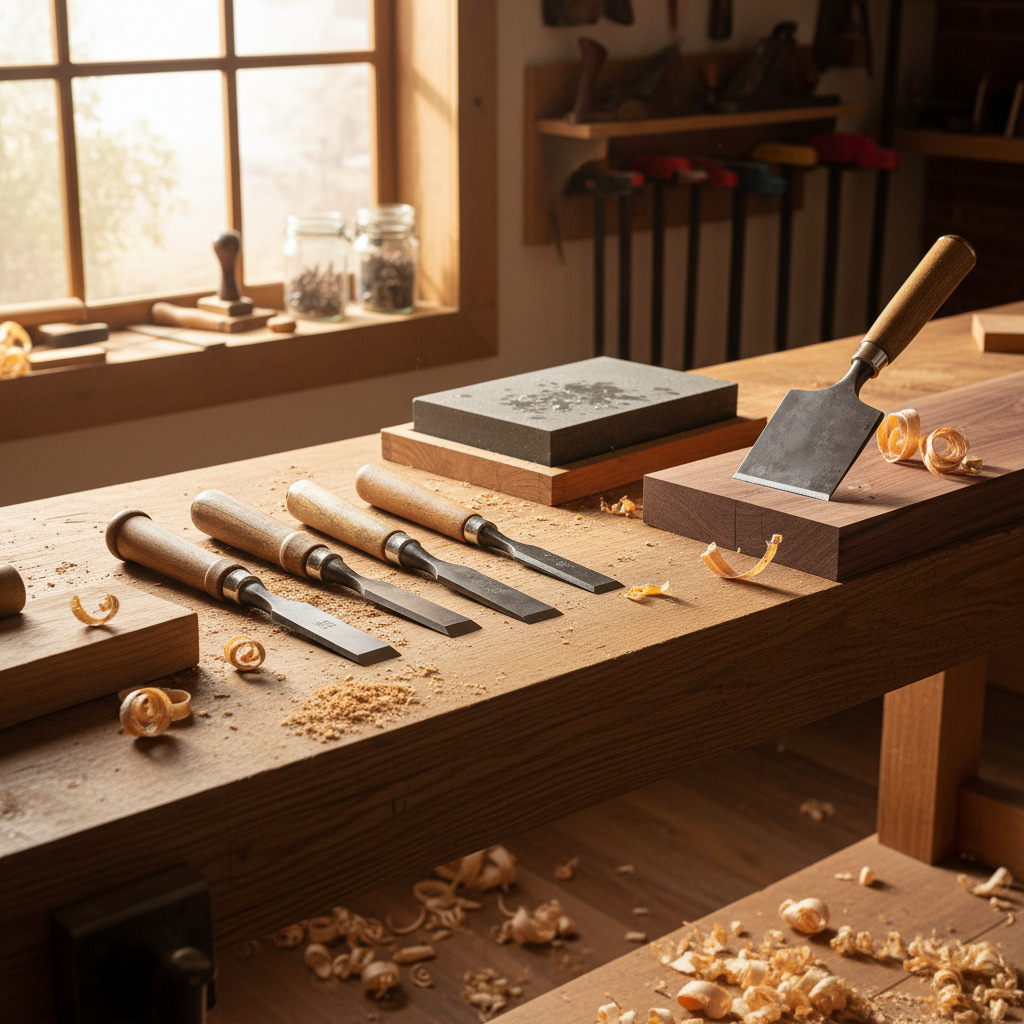
Walk into any Home Depot or Lowe's and you'll find kits that bundle a hammer, a set of chisels, a combination square, a hand saw, and maybe a marking gauge. On paper that's a reasonable starter lineup. In practice, the chisels in budget kits are frequently made from lower-carbon steel that doesn't hold an edge through a full afternoon of dovetail practice.
That framing misses something. The problem isn't the tool list. It's that most kits are assembled by margin calculation, not by a woodworker who thought through your first ten projects. A $99 kit that includes six chisels you can't keep sharp is worth less than a $60 kit with two chisels you can actually maintain.
What starter kits consistently leave out: a sharpening system (stones, a strop, or a guided honing jig), a marking knife, and a decent workholding solution. You can technically start without these. But you'll hit a wall on your second project when your edges are dull and your workpiece keeps shifting. Sharpening, in particular, is the skill most beginners underestimate. A well-sharpened $15 chisel from a hardware store will outperform an unsharpened $40 chisel from a premium kit every single time.
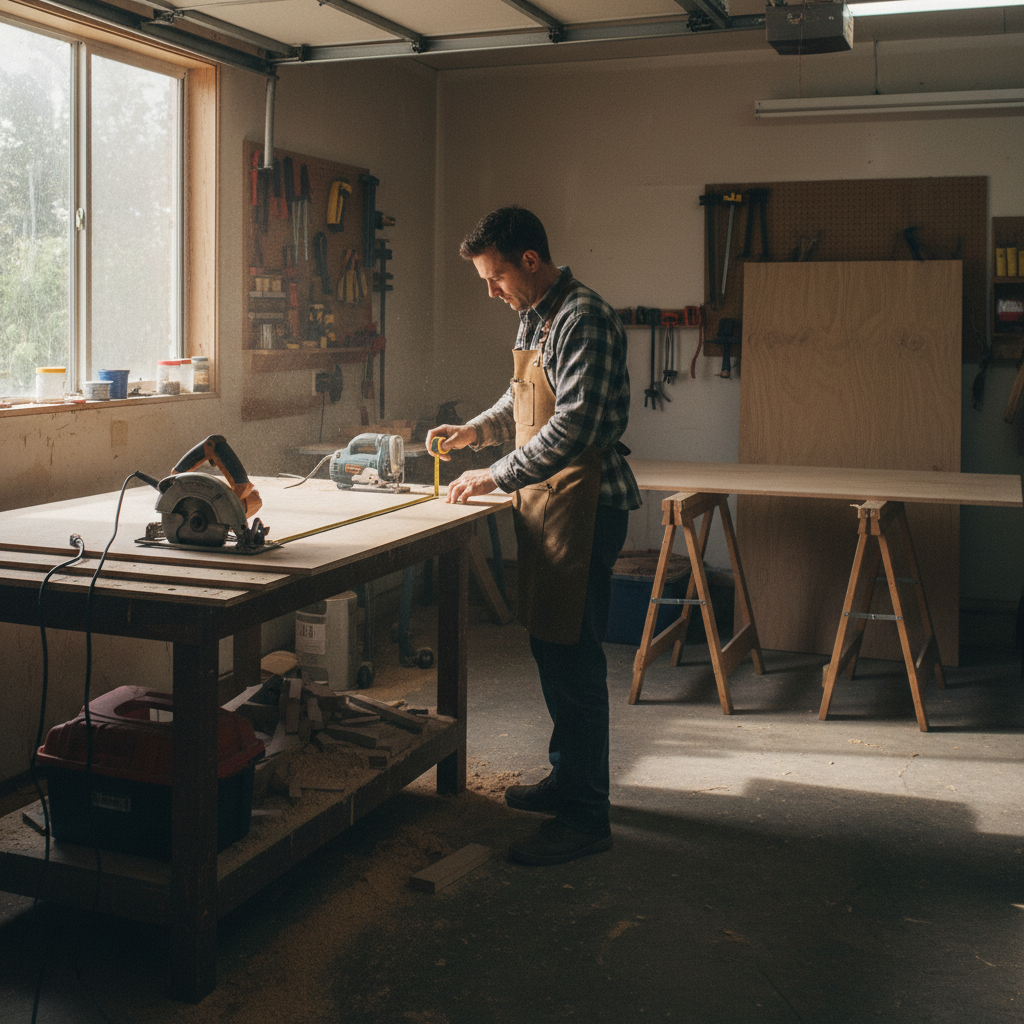
Power tool starter kits follow a similar pattern. A random orbital sander, a circular saw, and a jigsaw cover a wide range of beginner projects. But the motors in budget combo packs often run hotter and wear faster than single purchases from the same brand's mid-range line. Ryobi's individual PCK tools, for example, carry better duty-cycle ratings than some of their bundled sets at the same price point. That's not a knock on the brand; it's just how bundle economics work.
When a Starter Kit Actually Makes Sense
Kits aren't uniformly bad. There's a specific buyer they serve well, and if that's you, the convenience premium is worth it.
You're a good candidate for a starter kit if your first project is defined (a small shelf, a cutting board, a simple box), you don't want to research every tool individually, and your budget ceiling is firm. A kit removes the decision fatigue of spec comparison and gets you moving. For people who learn by doing rather than by researching, that momentum matters more than optimal tool selection.
The kits that hold up best in practice tend to share a few traits: forged rather than cast steel on edge tools, individual tools available for separate purchase (which signals the manufacturer believes in each piece), and a realistic scope of two to four core tools rather than eight marginally useful ones. Narex chisels, sold individually and in sets, are a useful benchmark here. Their entry-level sets run around $50 to $70 for four chisels and consistently appear in woodworking community recommendations because the steel is reliable at that price. That's the standard a kit's chisels should be measured against.
I'd start with one of the leaner kits if you're set on buying a bundle: fewer tools, higher per-tool quality, and a clear use case. A four-piece chisel set plus a good combination square handles more beginner projects than a ten-piece grab bag of questionable steel.
So: kit buyers who do well are project-focused, budget-constrained, and planning to supplement within six months. That last part matters. No starter kit is a permanent solution.
Buying Tools Separately: The Real Math
The realistic alternative to a starter kit is selective individual buying, and the math usually favors it once you've spent more than a few weekends in the shop.
Here's a rough comparison that holds up across most mid-tier options. A $120 hand tool kit typically bundles a saw, four chisels, a square, and a mallet. Buying equivalent-quality versions individually from Stanley, Irwin, or Narex runs roughly $90 to $110 for the same four items, and you get to choose quality levels on the tools you'll use most. You spend about the same but own better versions of your high-use tools.
The calculation shifts further when you factor in replacement. Budget kit chisels often need replacement within a year of regular use. A Narex or Two Cherries chisel bought separately will last a decade with basic maintenance. Over three years, that puts the selective-buying path around 30 to 40 percent cheaper than kit-then-replace cycles. That's a derived estimate combining typical replacement timelines and current retail pricing, not a guaranteed figure, but the direction is reliable.
Buyers skip this math until they're burned. The pattern is consistent in woodworking forums: kit purchased, frustration hits around project two or three, individual tool buying begins. Skipping the kit and buying selectively from the start saves one full replacement cycle.
Or rather: the real cost of a starter kit isn't the sticker price. It's the sticker price plus the cost of the better tools you'll need when the kit hits its limits.
When Kits Fail You: The Conditions That Matter
Starter kits weaken fast under two conditions: when your projects require precision joinery and when you want to develop hand tool skill seriously.
Dovetails, mortise-and-tenon joints, and hand-cut dados demand sharp edges, consistent geometry, and tools that don't flex. Budget kit chisels are typically ground at inconsistent bevel angles and made from steel that won't take or hold a fine edge. A blunt chisel in a precision joint doesn't just produce ugly results; it produces dangerous ones. The tool skips, your hand moves into the path, and the margin for error collapses. This is the one safety dimension of kit quality that doesn't get enough attention.
If you're planning to pursue hand tool woodworking seriously rather than as an occasional hobby, the kit-as-foundation approach doesn't serve you. You'll build habits around tools that misrepresent how good technique is supposed to feel. A properly sharpened chisel requires light, controlled force. A dull one requires pushing, which is where control breaks down.
Hobbyists who work with power tools primarily and use hand tools only for cleanup and marking fare better with kits. The precision demands are lower, the tools get used less intensively, and the quality floor matters less. A weekend project woodworker building planter boxes or simple furniture doesn't need the same edge tool quality as someone cutting hand-cut joinery.
This article also isn't aimed at woodworkers who already own a partial set of tools and are filling gaps. For you, individual buying is always the right call. Kits are a first-entry solution, not a gap-filling one.
How to Evaluate Any Kit Before You Buy
You can screen most kits in under ten minutes if you know what to look for. Check steel specification, check individual tool availability, check whether a sharpening solution is included or sold by the same brand.
On edge tools, the steel matters more than the brand name on the handle. Look for high-carbon or chrome-vanadium steel in the product description. If the listing says only "steel" or "alloy steel" without a grade, that's a flag. Manufacturers who know their steel is good tell you.
The individual availability test is simple: search the brand name plus the specific tool (e.g., "XYZ brand 3/4 inch bench chisel"). If it's sold alone, the manufacturer is confident in that tool standing alone. If the brand only sells bundles, they may be hiding weak individual pieces behind the convenience of the set.
Power tool kits: check amp-hour ratings on the included battery. A kit that comes with a 1.5Ah battery will drain fast on any project involving a circular saw. A 2.0Ah or higher is a practical minimum for work sessions longer than an hour. Battery platform compatibility also matters; a DeWalt 20V MAX kit means every future tool purchase can share that battery, which compounds value over time.
Finally, read the one-star reviews specifically, not the average. Search for words like "edge" and "dull" and "broke." Three one-star reviews mentioning the same failure mode is more diagnostic than fifty four-star reviews praising convenience.
The Verdict: Conditions and a Direct Answer
If your first project is defined, your budget is fixed, and you're buying power tools that share a battery platform you plan to expand, a starter kit can be a reasonable entry point. Buy the kit, use it for project one and two, and replace edge tools with individual upgrades when the limits show.
If you're planning hand tool woodworking, pursuing precision joinery, or have time to research individual tools, skip the kit entirely. Spend the same money on two or three individually sourced tools at a higher quality tier. You'll move faster through the learning curve and spend less in total over the first two years.
And if you skip this decision entirely and buy whatever looks complete at the lowest price? You'll likely replace the kit within a year, spend more in total, and carry some frustration that belongs to the tools, not to your skill. That's the actual cost of choosing by convenience over fit.
The kit question is really a question about which learning experience you're buying. Buy accordingly.