A decent beginner tablesaw costs somewhere between $400 and $700 before you've bought a single board, and that figure doesn't include the 15 square feet of floor space, the dust collection, or the hearing protection you'll need every time you turn it on. Some woodworkers will tell you to start there anyway. Others will hand you a No. 4 bench plane and tell you that's all you need for the first year.
The hand tools vs. power tools question is one that beginners searching for a woodworking setup keep running into, and the honest answer depends on three things most guides gloss over: your available workspace, your tolerance for a steep learning curve, and what you actually want to build in the next six months. These aren't interchangeable variables. Someone in a third-floor apartment with 80 square feet of spare room is in a genuinely different situation than someone with a two-car garage and a weekend free every week.
Here's the tension that doesn't get named often enough: hand tools have a lower financial barrier to entry but a higher skill barrier, while power tools invert that ratio almost exactly. That gap matters because most beginners quit not from lack of interest but from early frustration with tools that don't match their actual situation. Neither approach is universally better. But for specific readers, one is clearly the right starting point, and choosing the wrong one costs real time and real money.
What You're Actually Deciding
This isn't a debate about which tools produce better furniture. Professional-grade work comes from both camps, and plenty of skilled woodworkers use both in the same shop. What you're deciding as a beginner is which learning environment sets you up to stay in the craft past the first three months.
Power tools get you to a finished result faster. A compound miter saw can crosscut a board accurately in under ten seconds. That same cut with a hand saw and a bench hook takes closer to two minutes once you factor in marking and clamping, and it will probably require a dozen attempts before it's consistently square. Speed matters psychologically: beginners who see finished projects early tend to keep going. That's a real advantage, not a marketing pitch.
Or rather: the speed advantage only holds when the power tool is set up correctly. A tablesaw with a dull blade and an uncalibrated fence is slower and more dangerous than a sharp hand saw, because fixing it requires knowledge you don't yet have. Setup and calibration are the hidden tax on power-tool woodworking that almost no beginner guide foregrounds. The first committed specific worth naming here is that entry-level stationary power tools (table saws, jointers, planers) typically require 30 to 60 minutes of initial setup and periodic re-calibration, and errors in that process compound into every subsequent cut.
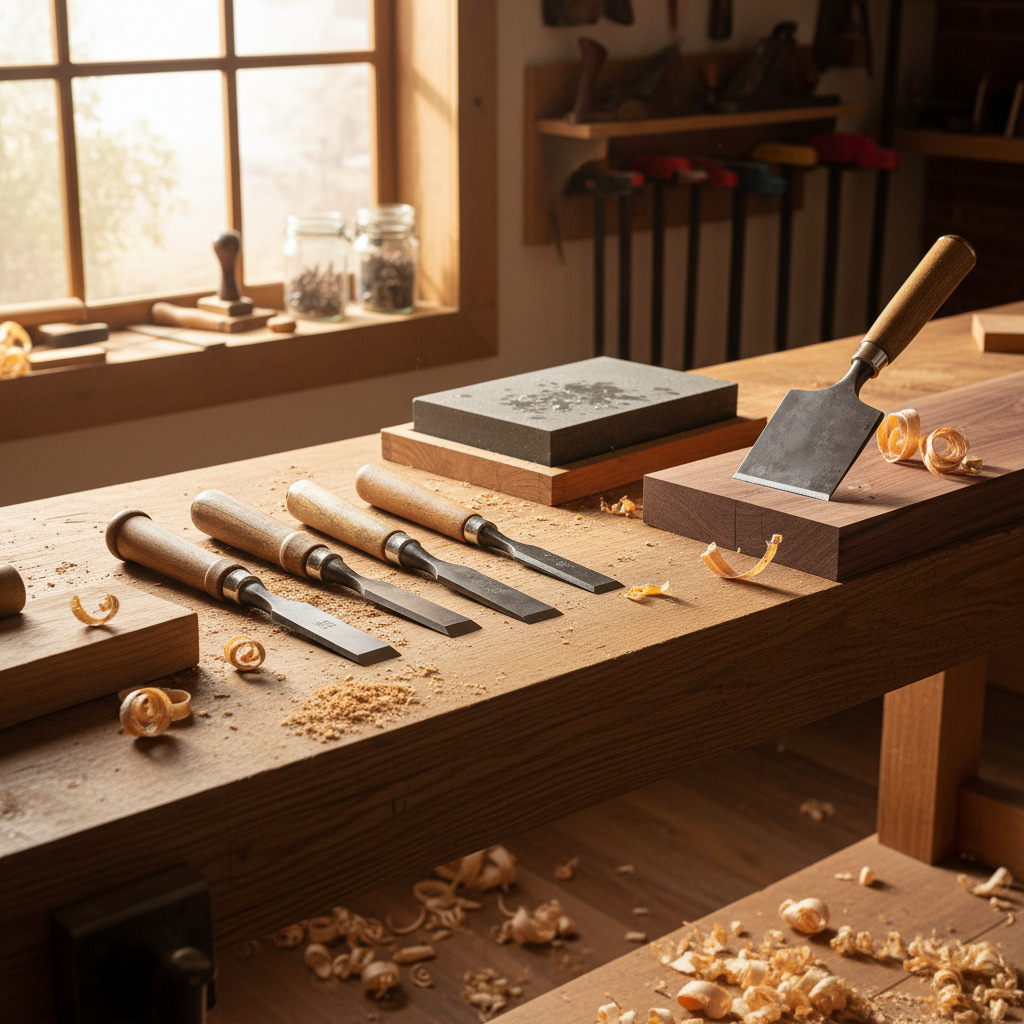
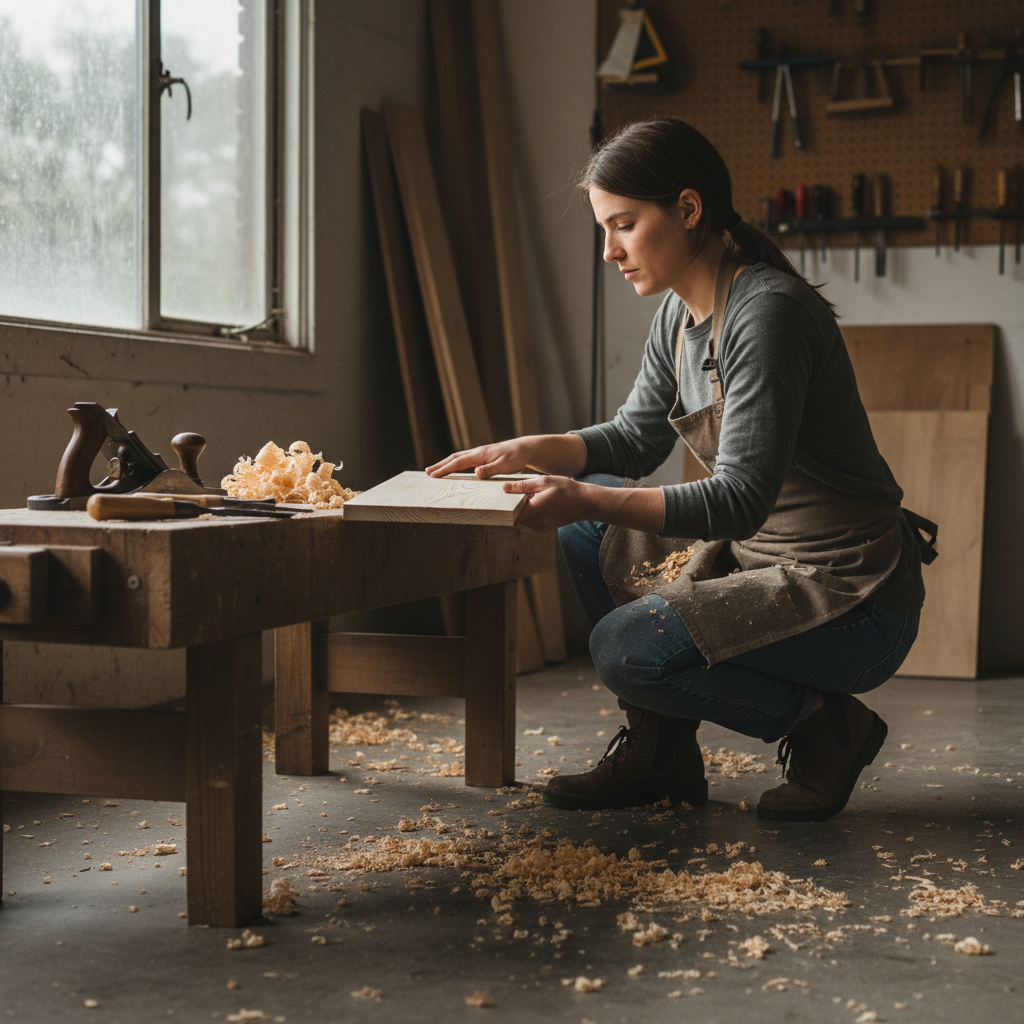
Hand tools shift the tax to your hands and your patience. Sharpening is non-negotiable, and sharpening a bench plane iron or a chisel correctly takes practice most beginners underestimate. But the failure mode is visible and correctable on the spot. A plane that chatters tells you immediately that the iron needs work. A tablesaw that drifts is much harder to diagnose without experience.
The Real Cost Comparison
Run the numbers before you commit to either path.
A functional hand-tool starter kit, covering the cuts you'll actually need in your first year, can be assembled for around $200 to $350 if you buy used. That typically means a No. 4 or No. 5 bench plane, a set of chisels (3/4 inch and 1/4 inch cover most joinery), a quality marking gauge, a crosscut hand saw, and a rip saw. Used Stanley and Record planes from the mid-20th century are widely available on eBay and at estate sales for $20 to $60 each and perform as well as new planes costing three times as much once tuned. This is a practical heuristic common among experienced hand-tool woodworkers, not an official pricing standard, but it's well-documented in communities like the Hand Tool School and LumberJocks forums.
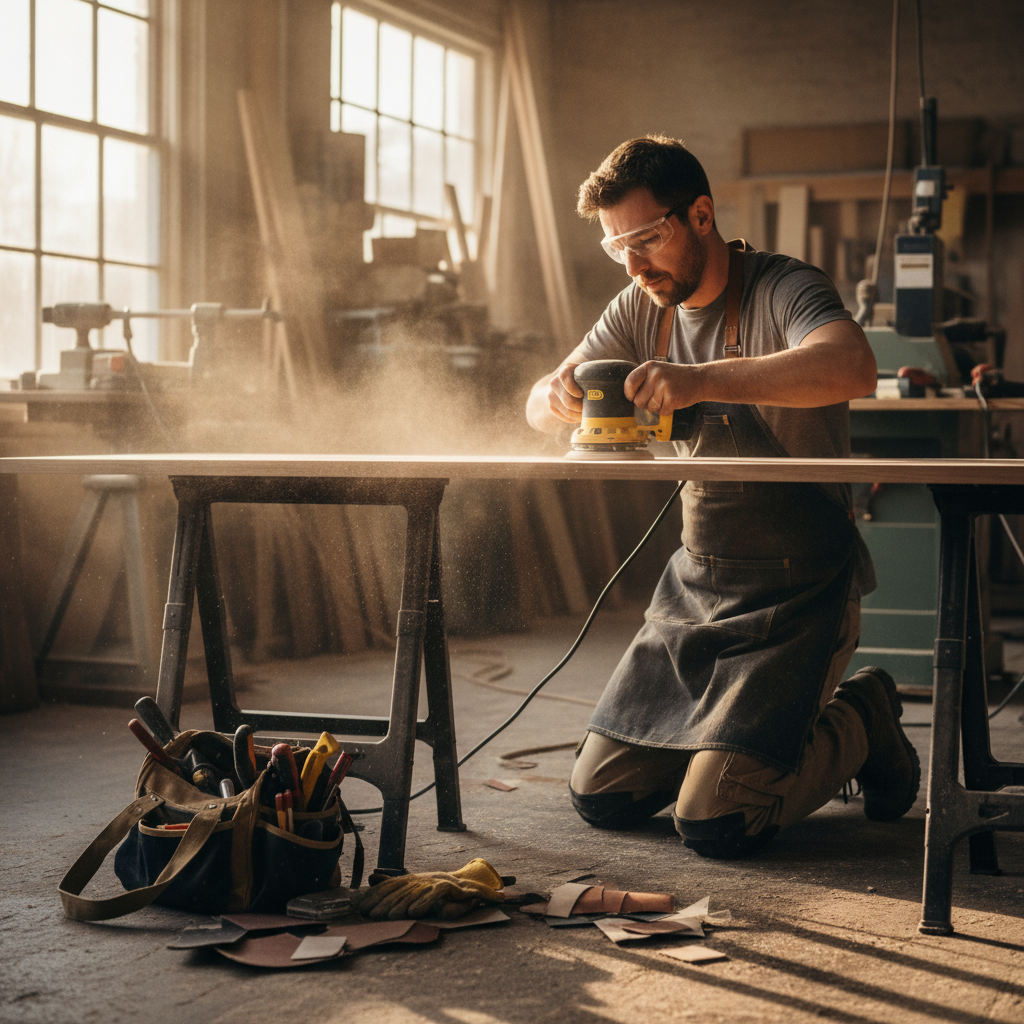
A starter power-tool setup costs more and requires more space. A benchtop router, a random-orbit sander, a jigsaw, and a compound miter saw from a mid-tier brand like Ridgid or Bosch can run $500 to $900 new. Add a workbench (or build one, which requires tools you don't have yet), and you're looking at a meaningful initial outlay before your first project. The miter saw alone typically needs a dedicated stand or a cleared bench surface of at least four feet.
The cost crossover point matters. If you spend $250 on hand tools and discover woodworking isn't for you after six months, you've lost far less than if you spent $800 on a power setup. That asymmetry is the clearest financial argument for hand tools as a beginner's entry point, not because hand tools are better, but because the exit cost is lower.
But here's what that calculation misses: if you already own a circular saw and a drill driver, which a large share of American households do, your power-tool baseline cost drops dramatically. Check your garage before budgeting for either path.
Space, Noise, and the Apartment Problem
Hand-tool woodworking is genuinely viable in a small apartment. Power-tool woodworking, for the most part, is not.
A workbench or a sturdy table is enough working surface for hand-tool joinery. You don't need dust collection beyond a shop vacuum. Noise levels from hand planing and chiseling are comparable to a loud conversation, which means you can work in the evening in a rental without fielding complaints. This is a practical reality that determines tool choice for a significant number of beginners in urban areas, and it's rarely given the weight it deserves in guides written by people with dedicated shops.
Power tools create three problems in small or shared spaces. First, noise: a contractor-grade tablesaw produces around 100 dB, which is OSHA's threshold for mandatory hearing protection with sustained exposure. Second, dust: fine wood dust is a genuine respiratory hazard, and managing it without a dedicated dust collection system means it migrates throughout your living space. Third, footprint: a tablesaw needs clearance on all four sides for safe outfeed, which compounds the square footage requirement well beyond the machine's own dimensions.
If you're working in a space under 200 square feet, or in a shared living situation with noise constraints, hand tools aren't just the cheaper option. They're effectively the only option that doesn't create a problem larger than the one you're solving.
Where Each Approach Can Fail a Beginner
Hand tools fail beginners who skip sharpening. This is the single most common point of frustration and early dropout in the hand-tool path. A dull plane iron doesn't just cut poorly; it makes every technique feel wrong, which leads beginners to conclude they lack skill when the actual problem is a maintenance issue. If you're not willing to spend 20 to 30 minutes learning to sharpen before your first real project, hand tools will fight you.
Power tools fail beginners who underestimate setup complexity, or who buy underpowered equipment to save money. A benchtop table saw under about $300 new often has an undersized motor, a flimsy fence, and limited cutting capacity, which creates as much frustration as a dull hand tool, just differently. The mistake is assuming that powered means forgiving. Underpowered or poorly set-up machinery introduces its own error modes.
And power tools carry safety considerations that beginner guides sometimes soft-pedal. The U.S. Consumer Product Safety Commission (CPSC) tracks thousands of table saw injuries annually, and a disproportionate share involve users with less than two years of experience. That's not an argument against tablesaws; it's an argument for taking the Woodworkers Guild of America's stance seriously: learn blade guards, kickback prevention, and push-stick technique before you run a single board through a saw.
The framing most beginners don't hear until they've already made an expensive mistake: the tools themselves don't determine quality or safety. Your skill baseline at month one does. And that baseline is built faster with hand tools, where feedback is immediate and mistakes are recoverable, than with power tools, where setup errors compound silently across a dozen cuts.
Which Starting Point Fits Your Situation
Start with hand tools if three conditions apply: you're working in a small or shared space, your budget for the first six months is under $400, and you want to build foundational skills that transfer directly to understanding what power tools are actually doing when you add them later. The skill floor is higher, but it builds a kind of spatial and tactile understanding of wood that power-tool beginners often have to circle back and acquire anyway.
Start with power tools if you have dedicated workspace of at least 150 to 200 square feet, a budget that covers both the tools and basic safety equipment (hearing protection, a dust mask rated N95 or better, eye protection), and you want to see finished results in weeks rather than months. The learning curve is front-loaded into setup and safety, not into hand skill, and for some learners that's a better fit.
If you're genuinely unsure when you're reading this, try a hybrid entry: buy a quality hand saw, a set of chisels, and a miter box for under $80, build one small project completely by hand, and pay attention to whether the slowness feels meditative or maddening. That answer tells you more about which path you'll actually stick with than any guide can.
What you should not do is buy a full power-tool setup on the assumption that faster means easier. It doesn't. Faster means the errors happen faster too.
Conclusion
If your space is under 200 square feet or your budget is under $400, start with hand tools and don't apologize for it. If you have a garage, a larger budget, and want to build furniture you can finish in a weekend, a basic power-tool setup with proper safety equipment is the right call.
If you skip this decision entirely and buy whatever looked good in a YouTube video, expect to spend the first three months fighting your tools instead of learning the craft. That's the actual cost of a mismatched setup: not money wasted on resale, but weeks of frustration that push good woodworkers out of a hobby they would have loved.
The tools don't make you a woodworker. But the right starting tools make it much easier to become one.