Woodworking instructors will tell you to buy the best tools you can afford before they tell you anything else, and there's a reason for that. The frustration ratio on cheap tools is brutal: a blade that won't hold an edge, a drill that bogs down in hardwood, a square that's not actually square. These failures don't just waste money. They waste the hours you spent on a project that won't come out right.
Budget tool brands for beginner woodworking exist across a spectrum that ranges from genuinely solid to outright trash, and the separation between those categories isn't obvious from a box on a shelf at Home Depot. The answer to which brands actually deliver turns on three variables most tool reviews leave unresolved: what specific tools you need first, how much finish quality matters to your earliest projects, and whether you're building toward a larger collection or just testing the hobby.
Here's the tension that doesn't get addressed directly: the brands that score highest on beginner YouTube reviews are not always the brands contractors and hobbyist woodworkers with ten years of practice would actually recommend to a friend starting out. Budget doesn't have to mean disappointment, but it does mean making deliberate choices rather than grabbing whatever's cheapest at a big-box store.
How Budget Tool Brands Actually Get Made (and Why It Matters)
Most budget tool brands don't manufacture their own tools. They contract production, often to the same factories in China and Taiwan that supply mid-tier brands, and then compete on margin. That means a $40 circular saw and a $90 circular saw can share substantial internal components, or they can be wildly different in motor quality and tolerance stack-up. You can't tell from the outside.
The mechanism that separates real performers from junk is tolerance control. A chisel that measures 3/4 inch at the tip but wobbles 0.010 inches in the handle won't register how imprecise that sounds until it starts blowing out your mortise walls. A drill chuck that doesn't center properly vibrates, heats, and wanders. These aren't minor inconveniences for beginners; they actively teach you wrong technique because you compensate for the tool rather than developing real skill.
Or rather: it's not just about durability. A budget tool that lasts three years but produces inaccurate results will cost you more in ruined materials and frustrated evenings than a mid-tier tool that lasts a decade and cuts true. The cost of a bad tool includes the lumber it destroys.
So the evaluation frame isn't "does it survive?" The frame is "does it let you actually learn?" Brands that meet that standard at budget prices exist. But they're specific, and they're not all the same brands across every tool category.
The Brands Worth Buying and the One Category Where They Diverge
For beginner woodworking in the US, three brands consistently appear in the conversation among hobbyist woodworking communities (Fine Woodworking's forums, the r/woodworking community on Reddit, and the Woodwhisperer's beginner resources): WEN, Ridgid, and HART, with Harbor Freight's Pittsburgh hand tool line earning its place in a narrow but real category.
WEN is worth naming first because it punches above its price point on stationary tools. Their benchtop band saws and drill presses in the $150 to $250 range receive consistent reviews for acceptable runout tolerances and replacement part availability, which matters when a beginner eventually needs a blade guide or a table insert. That's not a trivial advantage: when a budget tool breaks and parts don't exist, it becomes landfill.
Ridgid, sold primarily through Home Depot, carries a lifetime service agreement on many corded power tools that no other brand at its price tier matches. The R4514 table saw, typically around $300 to $350, and their corded drills regularly appear in beginner guides for one specific reason: the LSA means a beginner who runs a motor too hard or makes a maintenance mistake doesn't pay again. For someone still learning how tools work, that coverage is genuinely worth paying a slight premium over WEN.
HART, Walmart's house brand, covers a specific gap: cordless drill and driver entry kits in the $60 to $90 range that are accurate enough for beginner joinery work and carry a three-year warranty. They won't last a professional's career. But for someone who doesn't yet know if woodworking will stick, "good enough for two to three years" is a real answer.
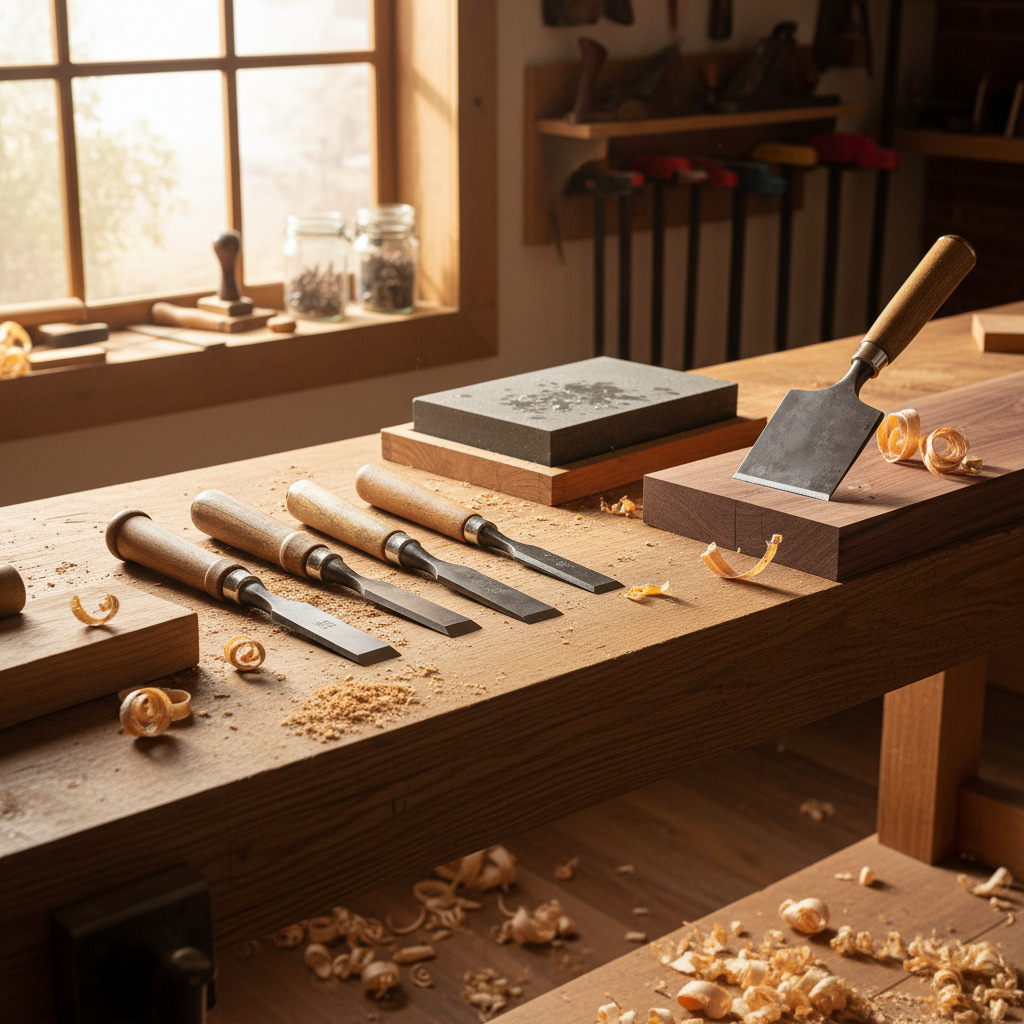
The divergence happens with hand tools. This is where Pittsburgh (Harbor Freight's hand tool label) earns a careful, conditional endorsement. Their chisels, in the $10 to $15 range for a basic set, are soft enough to sharpen easily on a basic whetstone, which is actually a feature for beginners who are learning to sharpen. The downside case: if you're doing any dovetail work or need a crisp paring chisel for joinery, Pittsburgh chisels won't hold an edge long enough to matter. Narex, a Czech brand available in the US through Tools for Working Wood and Woodcraft, runs about $10 to $18 per chisel and holds an edge that Pittsburgh simply doesn't match at any price. For joinery-focused beginners, that difference is decisive.
Buy Pittsburgh chisels to learn sharpening on. Buy Narex when you need the edge to stay.
What to Buy First and What to Skip
The most common mistake beginners make is buying a tool set. Sets look like value. They're usually not. A $200 18-piece power tool combo includes tools you won't touch for two years and skimps on the one or two tools you'll use every single project. I'd start with three things: a drill/driver combo, a circular saw, and a random orbit sander. Everything else can wait.
For those three, the decision logic runs like this. Check battery platform compatibility, warranty coverage, and whether replacement blades and pads are sold at your local store first. A platform you can expand beats a slightly better tool you can't.
The sander is the category where beginners consistently overspend or underspend in ways that hurt them. A $30 random orbit sander from an off-brand will likely have a stamped steel pad that doesn't back up sandpaper evenly, producing swirl marks that don't show up until finish goes on. That framing misses something: sanding quality affects finish quality more than almost any other step, and finish quality is what your first project actually looks like. WEN's 5-inch random orbit sanders in the $40 to $55 range have consistently received positive reviews for pad flatness and vibration control relative to their price. That's the floor worth hitting.
What to skip outright: router combo kits under $80, oscillating multi-tools as starter purchases, and any jigsaw under $50. Routers at that price introduce so much runout that clean edge profiles become nearly impossible. Multi-tools are genuinely useful but not for learning woodworking. And a $40 jigsaw will drift in cut and frustrate you into thinking the problem is your technique.
If you're buying only hand tools to start (a legitimate path), the short list looks different: a decent hand saw, a marking gauge, a combination square, and those chisels. Stanley's FatMax line covers the square and saw adequately at under $30 each, and their quality control at that tier is reliable enough that you're unlikely to get a false square out of the box.
When Budget Brands Stop Working for You
There's a real condition where budget brands become the wrong answer, and most beginner tool guides don't name it directly: when you move into hardwood joinery. Maple, hard maple especially, and white oak will expose every weakness in a budget tool's motor, blade, and edge retention. A circular saw with a marginal motor that handles pine cleanly will bog and burn on 8/4 hard maple. A drill that handles soft lumber will flex and chatter drilling mortises in white oak.
The threshold isn't a specific dollar amount spent on the hobby; it's the material and joint type. If your first six months involve pine, poplar, and simple butt joints or dados, budget brands will genuinely serve you. The moment you decide to build a hardwood dining table or a joinery-heavy box with dovetails, the calculus changes.
At that point, the Ridgid LSA tools hold their value better than WEN or HART because you can get them serviced rather than replaced. And the alternative worth considering at that crossover point isn't another budget brand. It's the used tool market: 10- to 15-year-old Porter-Cable, DeWalt, or Bosch corded tools in good condition routinely sell for $50 to $100 on Facebook Marketplace and Craigslist, and those represent real step-ups in motor quality and component tolerance that no current budget brand at the same price point matches. A used DeWalt corded circular saw for $65 will outperform a new $65 budget brand saw every time.
Beginners who ignore this and keep buying budget brand after budget brand while escalating to harder materials end up spending more than they would have buying one quality used tool. That's the actual cost of staying budget too long.
Making the Call: A Practical Framework
Quick decision guide: Assess these four things before buying any tool.
- What material are you cutting or shaping: softwood, hardwood, or sheet goods?
- Does the brand carry a warranty or service agreement you can actually use?
- Are consumables (blades, bits, pads) available locally or from a non-obscure retailer?
- Are you testing the hobby or committing to it for at least two years?
Testing the hobby: HART cordless kit, WEN stationary tools, Pittsburgh hand tools for learning sharpening. That combination keeps entry cost under $300 for a functional starter set and doesn't lock you into a platform you may abandon.
Committing to it: Ridgid for corded power tools with the LSA, Narex for chisels, Stanley FatMax for layout tools. Budget another $50 to $100 for used tools from the secondary market for anything corded where motor quality matters most.
The reframe worth holding onto: budget woodworking tools aren't a permanent category you graduate out of. They're a category you use strategically, by tool type and material, not by general philosophy. Nobody needs a $400 random orbit sander to build good furniture. But nobody should try to learn dovetails with a $12 chisel that dulls in four passes.
Match the tool budget to the task, not to a blanket buy-cheap-or-buy-quality philosophy. That specific calibration is what separates beginners who build things they're proud of from beginners who quit after the second frustrating project.
Starting Right Without Overspending
If you're standing in a tool aisle right now trying to decide, here's the short version. For cordless, HART or Ridgid. For benchtop stationary tools, WEN. For hand tools, Stanley FatMax on layout, Narex on chisels if you can stretch $15 per chisel, Pittsburgh if you're learning to sharpen and don't mind resharpening often. Skip sets entirely. Don't buy a router until you've built three projects without one.
The brands that actually deliver at budget prices do so within specific categories and specific use cases. None of them delivers across the board. Getting that match right is the actual skill here, and it's not the skill most beginner tool guides teach.