A simple geometric wood panel at a home decor chain runs anywhere from $60 to over $200, and that price tag tells you almost nothing useful about whether you should pay it. The real question for wooden wall art is whether building your own pencils out to less money, better quality, or a piece that actually fits your wall once you account for lumber, tools, and the afternoon it takes to sand something flat.
This is not a crafting inspiration article. It won't tell you building is always more rewarding or that buying is always the smarter shortcut. The answer turns on three variables most comparisons ignore: whether you already own the tools, how large the piece needs to be, and what design complexity you're attempting. Get one of those wrong and the math flips.
There's a real tension buried in this decision that almost nobody addresses directly. The readers most tempted to build are often the ones who would benefit most from buying, because DIY wooden wall art has a steep hidden cost that only shows up after you've already committed to the project. That cost isn't the lumber.
What You're Actually Comparing
Before any cost comparison makes sense, you need to define the project. A single reclaimed-wood shiplap panel and a multi-piece geometric hex grid are both wooden wall art. They share almost no cost structure.
Store-bought wooden wall art covers a wide range. At the low end, you're looking at thin MDF panels with printed or routed patterns, typically sold at places like HomeGoods, Target, or Hobby Lobby for $30 to $80. Mid-range pieces from retailers like West Elm or Pottery Barn use solid wood or real veneer and run $100 to $300. Custom or artisan pieces from Etsy or local makers climb from $150 into the thousands depending on size and complexity. The price difference between MDF and solid wood isn't cosmetic. MDF doesn't hold screws at edges as reliably, and it won't survive humidity swings in bathrooms or kitchens the way solid pine or oak will.
On the DIY side, the first committed specific matters here: a basic 24-by-36-inch solid pine wall panel with a simple stained finish costs roughly $25 to $45 in materials at current lumber prices, assuming you're buying dimensional pine from a home center like Home Depot or Lowe's. That's the materials floor. It assumes no joinery complexity, no special hardware, and no finish beyond a single coat of stain and polyurethane.
Or rather: that $25 to $45 figure understates what most first-time builders actually spend, because it excludes sandpaper, wood conditioner, finishing rags, hanging hardware, and the board or two you ruin learning the grain direction. A more honest first-project materials budget is $55 to $75 for that same panel. Still cheaper than a comparable solid-wood piece at retail. But not as dramatically cheaper as the lumber price suggests.
The Tool Problem Nobody Mentions Until You're at the Register
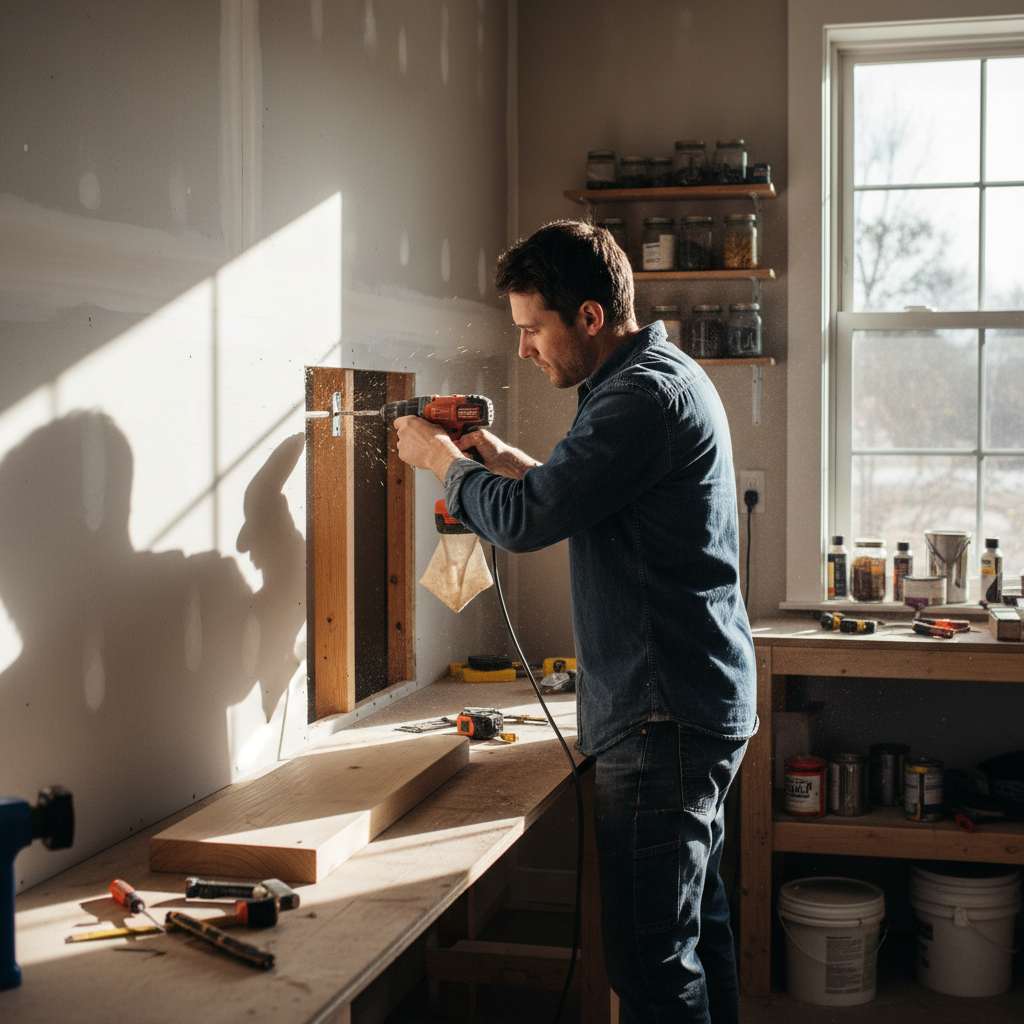
Here's where the build-vs-buy math breaks down for most people. A miter saw, orbital sander, clamps, and a brad nailer are the baseline toolkit for making wooden wall art that looks intentional rather than accidental. If you don't own those, you're not comparing $45 in lumber to a $120 store piece. You're comparing $45 in lumber plus $300 to $600 in tools to a $120 store piece.
That tool investment only makes sense if you plan to build repeatedly. A common guideline among woodworkers is that tool investment amortizes reasonably after four to six comparable projects. Before that threshold, buying almost always wins on pure cost. This is a practical heuristic, not an official standard, but it holds up across a wide range of project types.
If you already own a basic woodworking toolkit, the calculation changes entirely. At that point, a DIY solid-wood piece comparable to a $150 to $180 retail piece genuinely does cost $50 to $70 to build, and you control the dimensions, finish, and wood species. That's where building wins clearly.
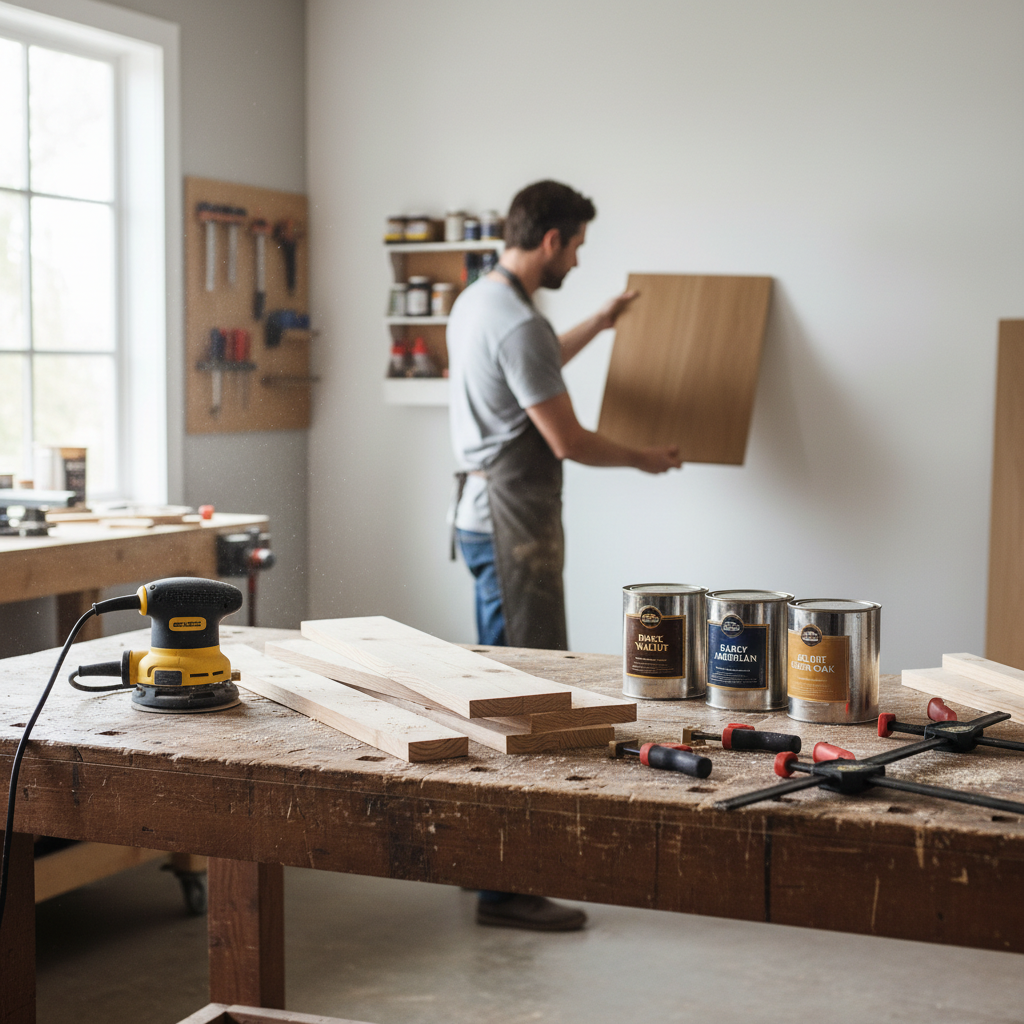
Check what you actually own before deciding: table saw or circular saw, a reliable sander, at least four bar clamps, and finish supplies. If two or more of those are missing, price the tools before pricing the lumber.
Design Complexity and Where DIY Starts to Lose
Simple designs favor DIY. Geometric patterns built from straight cuts, shiplap-style horizontal slats, or a basic live-edge shelf mounted as art are all achievable for an intermediate hobbyist with moderate tools. The failure-before-success reality of woodworking is worth naming directly: your first attempt at a miter-jointed hexagonal frame will almost certainly have visible gaps at the corners. That's not discouragement, it's just sequencing. Budget for a practice run on cheap pine before cutting your featured board.
Complex designs favor buying. Anything involving curved cuts, marquetry, inlay, or precision multi-piece assemblies that need to look machine-finished from across the room is genuinely difficult to execute at home without a dedicated shop setup. The readers who should not build are those attempting gallery-quality results on a garage workbench without prior joinery experience. The gap between a well-made commercial piece and a rushed DIY piece is most visible at corners and edges, and most visitors will notice even if they can't name why.
Size actually helps DIY. A large-format piece, say 48 by 60 inches or bigger, costs significantly more at retail because shipping and handling alone add $40 to $80 to the landed price. At that scale, building a simple slat panel or a wood plank installation becomes economically obvious, assuming your vehicle can handle an 8-foot board.
So the design decision comes down to three honest questions: Can you execute straight cuts accurately and consistently? Do you have at least one completed woodworking project behind you? And are you building because you want a specific look retail doesn't carry, or because you think it'll be cheaper? The last motivation is the least reliable.
When Buying Is the Smarter Move
Buying wins clearly in three scenarios. First, if you need the piece by a specific date and have no existing woodworking practice, a rushed build almost always ends in a piece that embarrasses rather than decorates. Second, if you're renting and plan to move within a year or two, the investment in tools and materials for a single statement piece doesn't recover. Third, if the design you want uses materials you can't source locally, such as reclaimed barn wood, live-edge slabs, or specific exotic species, retail or Etsy artisans have supply chain advantages you don't.
The alternative comparison worth making directly is against Etsy or small-maker custom pieces rather than chain retail. A custom maker on Etsy can often produce a solid-wood piece in your exact dimensions for $80 to $150, which sits between chain retail and the true all-in cost of a first DIY build. For someone without tools or prior experience, that custom-order path is genuinely underconsidered. You get the specificity of DIY without the tool acquisition or skill ramp.
What happens if you ignore this and build anyway without the right setup? The most common outcome is a piece that gets finished but never hung because the builder knows it looks off, or a piece that hangs for six months before being quietly replaced. That's not a catastrophe, but it is $60 to $80 in materials and four to six hours that didn't produce what you wanted.
The Honest Cost Comparison
The table below compares three scenarios across the key decision factors. Read it as a guide to which path fits your situation, not as a definitive price list. Lumber prices vary by region and fluctuate with supply.
These figures reflect typical US home center pricing and mid-range retail as of recent years. Your local costs may differ.
| Scenario | Estimated Total Cost | Time Required | Best For |
|---|---|---|---|
| DIY (tools already owned, simple design) | $50 to $75 in materials | 3 to 5 hours | Experienced hobbyist, specific dimensions needed |
| DIY (no tools, first project) | $350 to $650 including basic tools | 6 to 10 hours | Only if you plan 4 or more future projects |
| Retail chain (mid-range solid wood) | $100 to $200 | Under 1 hour including installation | Renters, time-constrained buyers, non-woodworkers |
| Custom Etsy or local maker | $80 to $150 plus shipping | 2 to 4 weeks lead time | Specific dimensions or design, no tool investment |
The clearest takeaway from this comparison is that DIY only wins on cost when tools are already owned. The custom-maker path is competitive with mid-range retail and frequently better than a first-time DIY build on both cost and quality.
Making the Call
If you own the tools and have built at least one wood project before, building your own wooden wall art is worth it for pieces larger than roughly 24 by 36 inches or for any design retail doesn't carry in your dimensions. The cost advantage is real and the quality ceiling is higher than what chain stores sell at comparable prices.
If you're starting from zero on tools, buy the piece or order custom. The framing of this decision as build-versus-buy misses the actual fork in the road, which is tool-owner versus non-tool-owner. That distinction matters more than enthusiasm, budget, or available weekend time.
I'd start with an honest inventory of your existing toolkit before pricing a single board. That five-minute check will tell you more than any cost comparison chart.