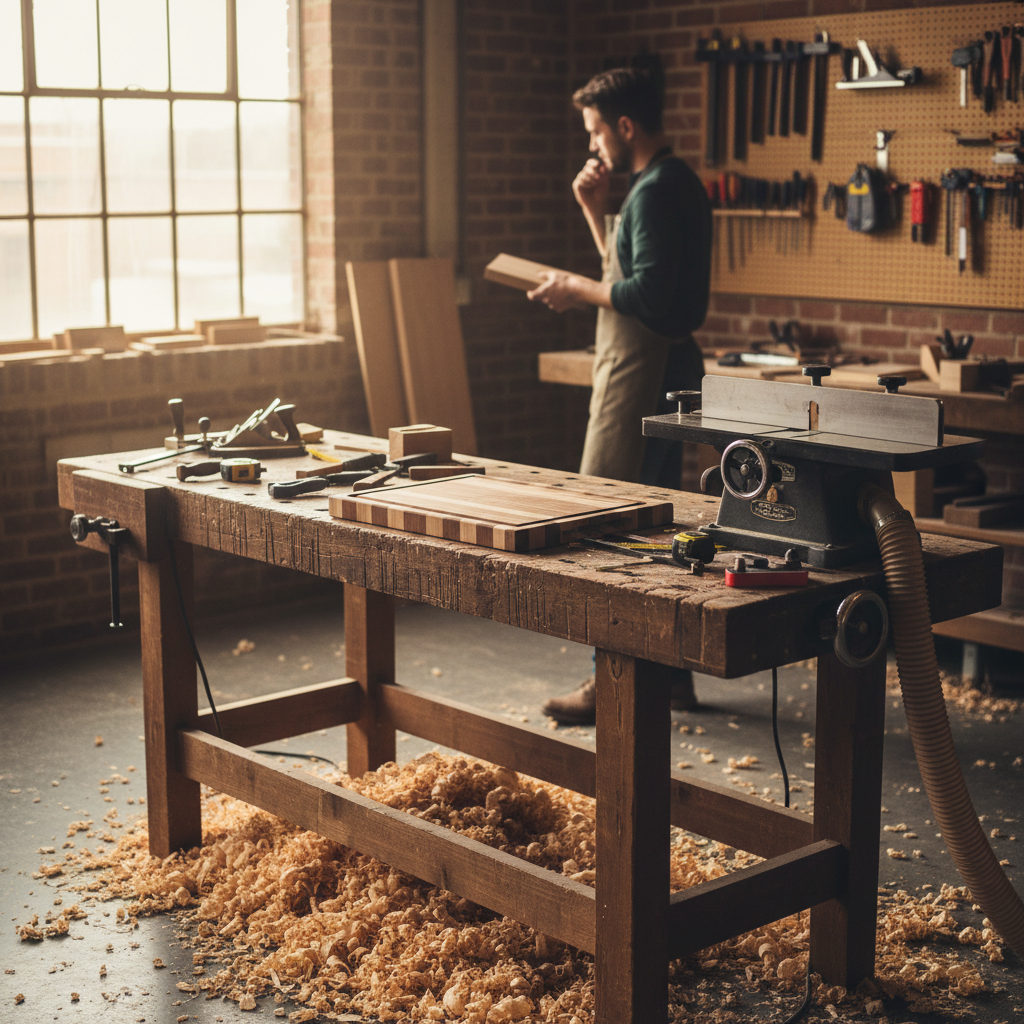
A decent end-grain walnut cutting board from a reputable kitchen retailer runs somewhere between $80 and $180. That price tag sends a certain kind of person straight to the lumber yard, convinced they can do better. Sometimes they're right. Often, they're not accounting for half the costs involved.
The build-vs-buy question for cutting boards is genuinely close, and it turns on three variables most comparisons leave out: whether you already own a planer and jointer, what wood species you choose, and how you value the four to six hours the project actually takes. Get those wrong, and the "cheaper" option ends up costing more.
Here's the tension worth sitting with before you decide: the DIY route can produce a board that outperforms anything at Williams-Sonoma, but only if your shop is already set up for it. If you're buying tools to build a board, the math falls apart fast.
What a DIY Cutting Board Actually Costs
Let's put real numbers on this. Hardwood lumber prices vary by region and species, but for a standard 12-by-18-inch edge-grain board in hard maple, you're looking at roughly $15 to $25 in wood at a hardwood dealer (not a big-box store, where prices run higher and selection is worse). A comparable end-grain board in walnut or cherry pushes that to $30 - $55, because end-grain construction wastes more material and walnut commands a premium, typically $8 - $12 per board foot at retail.
Add food-safe finish. A proper application of pure tung oil or a beeswax-mineral oil blend costs $10 - $18 for enough to finish several boards. Clamps, sandpaper, and miscellaneous supplies add another $5 - $15 if you're buying fresh. That puts a realistic DIY build at $30 to $80 in consumables, before a single minute of labor.
Or rather: that's the consumables figure assuming you own the tools. A jointer, thickness planer, and table saw are the minimum shop setup for a flat, food-safe glue-up. Buying those new runs $1,500 to $4,000 combined. Even renting time at a community woodshop, which typically costs $15 - $25 per hour in most US cities, adds $30 - $60 per session for a first build. If you're equipping a shop to make one cutting board, the economics are not close.
The better question is whether your shop is already equipped. If it is, your marginal cost is genuinely $30 - $80 and four to six hours. That's where DIY wins on price.
What You Get When You Buy
A $60 - $100 edge-grain maple board from a brand like Boos or Virginia Boys Kitchens is not a compromise product. John Boos has been making butcher block since 1887, and their entry-level boards use properly dried, food-safe glued maple that will outlast most home kitchens. You get a flat surface, consistent thickness, and no risk of gaps in the glue line opening up under moisture cycling.
Buyers skip the wood-movement problem until it burns them. End-grain boards expand and contract perpendicular to their length as humidity changes. A board built without accounting for seasonal movement, or glued with a non-waterproof adhesive, can develop hairline cracks within a year. Brands at the $80-plus level use Titebond III or equivalent waterproof PVA and build in the tolerances. A first-time builder often doesn't.
That understates it. The flatness standard matters enormously. A board with even a 1/16-inch cup rocks on the counter and becomes a safety issue. Getting a true flat surface on a glued panel requires a drum sander or wide jointer pass that most home shops can't deliver on the first try. Commercial boards are machined flat after glue-up. Your first DIY board probably won't be, unless you've done this before.
Above $150, you're paying for exotic species, larger dimensions, or personalization. A 24-by-18-inch end-grain walnut board from a small-batch maker runs $150 - $200 and is genuinely hard to replicate at home for less, even with a full shop, because the material cost alone is $50 - $70.
Side-by-Side: Where Each Option Wins
The comparison comes down to your actual situation, not the theoretical cheapest outcome.
| Factor | DIY Build | Buy Quality Board |
|---|---|---|
| Material cost (12x18 maple) | $15 - $25 | $60 - $100 |
| Material cost (end-grain walnut) | $40 - $65 | $120 - $180 |
| Tools required | Jointer, planer, table saw | None |
| Time investment | 4 - 6 hours first build | 10 minutes online |
| Flatness guarantee | Skill-dependent | Machined flat |
| Customization | Full control | Limited |
| Risk of failure | Real on first attempt | Near zero |
The table makes one thing clear: buying wins on risk-adjusted value for anyone without an equipped shop. Building wins on long-term unit cost if you're making multiple boards and already own the tools. A single one-off build rarely beats buying outright once you factor in time at any honest hourly rate.
I'd start with a purchased board if you're equipping a kitchen, and consider building once you've handled enough boards to know exactly what dimensions and species you want. That experience makes the build decisions obvious rather than guessed.
When DIY Stops Making Sense
Building your own board is a bad call in at least two situations. First, if you need the board within a week, a first build under time pressure produces shortcuts: insufficient dry time on the glue-up, skipped final flattening passes, premature finish application. None of those are recoverable. A board put into service with an incomplete cure on the finish will absorb bacteria-harboring moisture into the wood.
Second, if you're buying tools specifically for this project, stop. The break-even point on shop equipment is roughly eight to twelve boards, depending on species and size. One board doesn't get you there. Rent time at a local makerspace or community woodshop (most US cities have them; search "woodworking makerspace" plus your city) and treat the rental fee as part of your material cost. That's a honest calculation.
This article is also not for the person looking to start a side business selling boards. That's a different analysis involving wholesale lumber pricing, volume finishing, and selling platform fees. The math here applies to a single board for personal use.
The Decision That Actually Matters
If you already own a jointer, planer, and table saw, build the board. Your out-of-pocket cost is $30 - $80 in materials, you'll get exactly the species and dimensions you want, and the process is straightforward. Use Titebond III for the glue-up, alternate grain direction on end-grain strips, and don't rush the 24-hour clamp time. Finish with food-grade mineral oil, not tung oil blends with driers.
If you don't own those tools, buy a quality board in the $80 - $130 range. Boos, BoardSmith, and Virginia Boys Kitchens all produce boards that will serve a home kitchen for a decade or longer with basic maintenance. End-grain if your budget allows; edge-grain if you want a harder-wearing surface for heavy chopping.
The reframe that actually matters here: this isn't a question of cheap versus expensive. It's a question of whether you're paying with money or paying with time and skill. Both are legitimate currencies. Know which one you have more of.
Skip the decision entirely and you'll keep using a warped plastic board that harbors surface cuts and never lies flat. That's the real cost of not choosing.