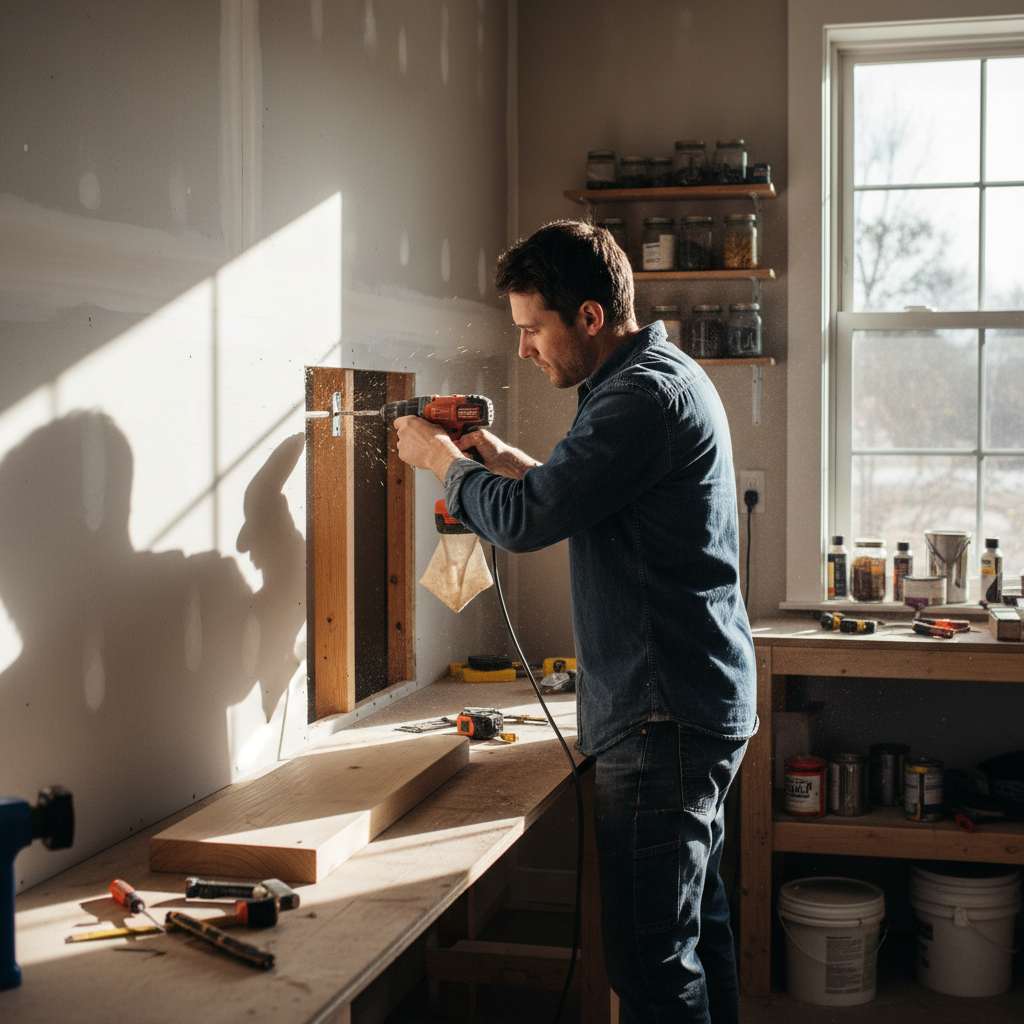
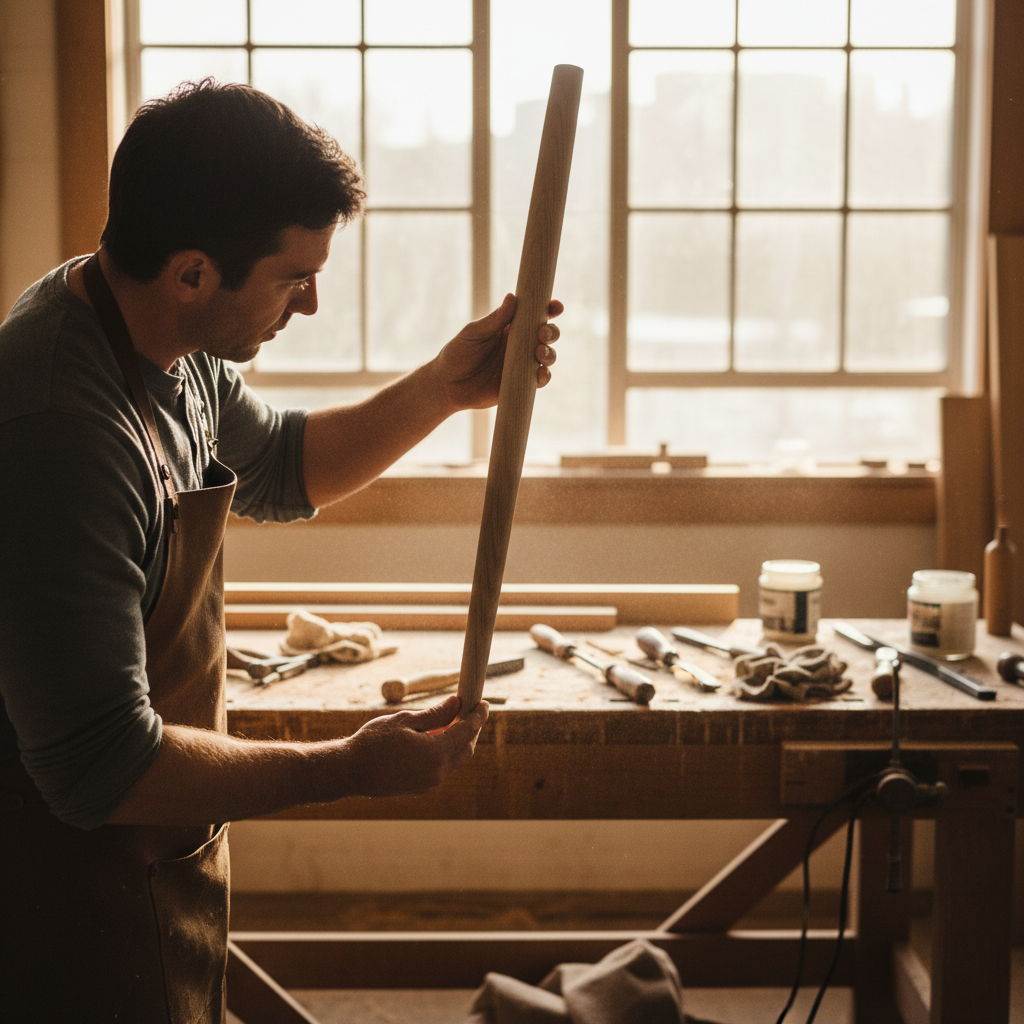
Woodworkers who've spent time with both Scandinavian and Japanese furniture will tell you the joinery before they discuss proportions, and there's a reason for that. A Japandi side table looks deceptively simple, which means every visible element carries more weight than it would in a busier piece. Get the joinery wrong and the table wobbles; get the finish wrong and it reads as generic rather than intentional. Those two variables separate a piece that looks like the real thing from one that looks like a Pinterest approximation.
Building a Japandi side table with basic tools is genuinely achievable for a beginner with patience, but the style has specific demands. Japandi sits at the intersection of Japanese wabi-sabi and Scandinavian functionalism: natural materials, no ornamentation, honest construction, warm neutrals. That constraint is actually useful when you're building, because it tells you exactly what to prioritize and what to leave out.
Here's the tension worth naming early: the tools you probably own are sufficient, but the species of wood you choose will determine whether the table looks right or simply looks plain. That gap between sufficient and optimal is where most first builds go sideways, and it doesn't get much attention in the usual beginner guides.
What Makes a Side Table Genuinely Japandi
The Japandi aesthetic isn't a finish you apply at the end. It's a set of proportional and material decisions you commit to before the first cut. Understanding the underlying logic makes every subsequent choice easier.
Japandi furniture keeps its legs slender and slightly tapered, its surfaces flat and unadorned, and its palette anchored in warm ash, white oak, or walnut tones. The Japanese influence brings restraint and asymmetric balance; the Scandinavian side brings warmth and user-centered ergonomics. For a side table, that translates to a top between 16 and 20 inches square (a common guideline for bedside or sofa-side use), legs between 22 and 26 inches tall depending on seating height, and no hardware visible on the finished piece.
What separates a Japandi table from a generic minimalist one is grain visibility and leg taper. Flat-sawn boards with wild cathedral grain read as rustic rather than refined. Quarter-sawn or rift-sawn boards, where the grain runs tighter and more parallel, give you the calm visual texture the style requires. You don't need to source exotic lumber: rift-sawn white oak is widely available at hardwood dealers across the US, and it's the closest domestic species to the Japanese white oak used in traditional tansu furniture.
Or rather: calling it a "minimalist table" understates what you're committing to. Every face of the piece will be examined, because there's nothing else to look at. Gaps at joints, torn grain from a dull blade, and uneven leg tapers are all immediately visible. That's not a reason to avoid the project; it's a reason to slow down at the two or three steps that actually matter.
Wood Selection and What to Actually Buy
Walk into a big-box store and you'll find pine, poplar, and occasionally maple. None of them are wrong for practice, but only one of them finishes the way Japandi requires. Poplar takes stain unevenly and often shows blotching under an oil finish. Pine has large, open pores that make achieving a smooth satin surface difficult without a grain filler. Hard maple is close to ideal for surface quality but doesn't carry the warm undertone the style calls for.
White oak is the best domestic choice for a beginner's Japandi build. It has a tight, consistent grain in rift-sawn form, a natural warmth that accepts oil finishes beautifully, and a hardness rating (around 1,360 on the Janka scale, a measure of wood hardness) that resists denting on a surface that will hold books, glasses, and lamps. For a 18×18-inch top and four tapered legs, expect to spend roughly $40 to $70 on white oak boards at a hardwood dealer, depending on grade and region. (A big-box store won't carry it; a local hardwood dealer or Woodcraft store will.)
Walnut is the other strong option. It's darker, more dramatic, and runs $15 to $25 more for the same volume. If your room already has warm light tones, walnut reads better. If you're building for a room with light walls and natural linen, white oak is the call.
Buy rough-sawn lumber if you have a hand plane or a friend with a thickness planer. Buy S4S (surfaced four sides) if you're working with a circular saw, a drill, and hand tools only. S4S costs slightly more per board foot but saves you the hardest step if you're new to dimensional lumber.
This article is not a guide for building with sheet goods like plywood or MDF. Those materials can make fine furniture, but they don't finish or behave the way solid hardwood does for this style, and the joinery approaches are different enough to warrant a separate discussion.
The Build: Joinery, Cuts, and Assembly
A basic Japandi side table has four components: a solid-wood top, four tapered legs, and an apron (the frame that connects the legs and supports the top). You don't need a mortise-and-tenon joint to build this well, though you can cut one with a chisel and a handsaw if you want to. For basic tools, pocket-hole joinery using a Kreg jig produces a strong, repeatable connection that is entirely hidden on the finished piece.
Cut your legs first. Start them square at 1.5×1.5 inches (you can buy pre-dimensioned turning squares at Woodcraft or from online hardwood dealers). The taper runs on the two inside faces of each leg, from full thickness at the top to roughly 0.75 inches at the foot. A taper jig on a table saw is the clean way; if you're working without one, a hand plane or a sharp block plane achieves the same result more slowly but without any additional equipment. A common guideline is to begin the taper 4 to 5 inches below where the apron meets the leg, which preserves a clean shoulder line at the joint.
Cut your apron pieces next. Standard apron depth for a side table in this proportion is 3 to 3.5 inches. Drill your pocket holes on the inside faces of the apron before assembly. Then dry-fit everything without glue to check for square: measure diagonally corner to corner. Both diagonals should match within 1/16 inch. If they don't, you have a parallelogram, not a rectangle, and gluing it that way is a permanent problem.
Glue and clamp the apron to the legs in two stages: two legs and one apron piece, let it cure for an hour, then add the opposite leg and apron piece, then connect the two sub-assemblies. Wood glue is plenty strong for a side table; the pocket screws are mostly there to hold alignment while the glue sets. Attach the top with figure-8 fasteners or tabletop clips (around $4 for a pack of eight at any hardware store), which allow the solid wood to expand and contract seasonally without cracking the top.
If you skip the seasonal movement allowance and glue the top directly to the apron, you'll likely see a split in the top within a year or two if your home has significant seasonal humidity swings. That's the counterfactual worth keeping in mind: the clips cost less than $5 and take ten minutes to install.
Finishing for the Japandi Look
The finish is where most builds either succeed or collapse into looking like a stained pine nightstand from a discount catalog. Japandi finishing is about enhancing the wood's natural character, not covering it.
For white oak, a hardwax oil like Rubio Monocoat (widely available in the US through Woodcraft and online) gives you the flat, natural appearance the style requires. It penetrates the wood fiber rather than sitting on the surface, which means it won't crack, peel, or build up a plastic sheen over time. One coat is typically enough. Rub it in with a lint-free cloth, wait 10 to 20 minutes depending on temperature, then buff off the excess. Let it cure for at least 24 hours before use.
The better question is whether you need to sand before finishing. Yes, and further than you probably plan to. Sand through 80, 120, 180, and 220 grit in sequence. Don't skip grits; each one removes the scratches left by the previous. At 220, the surface will feel smooth to bare skin but will look slightly rough under raking light. That's normal. Wipe the surface with a damp cloth to raise the grain, let it dry fully, then sand lightly with 220 again before applying your oil. Buyers skip this last step until they're burned by it: the first application of any water-based or water-containing product will raise the grain and create a fuzzy surface if you haven't pre-raised and sanded it down.
Avoid polyurethane for this style. It builds a film on the surface that catches light in a way that reads as synthetic, and it's at odds with the material honesty Japandi requires. Tung oil and Danish oil are acceptable alternatives; they're slower to cure and require more coats, but they're available at most hardware stores and cost a fraction of Rubio Monocoat.
For the legs, apply the same finish but work in the direction of the taper, not across it. This prevents streaking at the narrowest point of the foot.
When This Approach Isn't the Right Fit
This build assumes you have, or can borrow, a circular saw, a drill/driver, a pocket-hole jig, clamps, and sandpaper. If your only cutting tool is a handsaw, the taper cuts become genuinely difficult to execute cleanly, and the result will show it. A hand plane can compensate, but it requires its own set of skills.
It also assumes you're building for moderate-use contexts: a bedroom, a living room, a reading nook. If you need a table that holds heavy equipment, gets daily commercial use, or sits in a high-humidity environment like a bathroom or screened porch, this build's joinery is not overbuilt enough. Mortise-and-tenon construction, which requires chisels and more time but produces a mechanically superior joint, is the better choice for those conditions.
I'd start with white oak over walnut if this is your first hardwood build. White oak is more forgiving on hand tools (walnut's interlocked grain can tear unpredictably), cheaper per board foot in most US markets, and the lighter tone is more versatile in a room that isn't already committed to a dark palette.
And if you're comparing this DIY route against buying a Japandi-style side table outright: ready-made options from brands like CB2 or Article run $150 to $350 for solid-wood pieces of comparable proportion. The DIY cost for a white oak build is roughly $80 to $120 all in (lumber, fasteners, finish), so the financial case for building it yourself is real but modest. The better argument for building your own is fit: you can dial in the height, top dimension, and finish to exactly what your space needs, which a catalog piece won't give you.
Putting It Together
Start with rift-sawn white oak and buy S4S boards if you're working without a planer. Cut your legs first, taper the inside faces, then build the apron frame with pocket-hole joinery. Check diagonal measurements before gluing. Attach the top with figure-8 fasteners, not glue. Finish with Rubio Monocoat or tung oil, pre-raising the grain before the final sanding pass.
If you're building for a bedroom, a 18×18-inch top at 24 inches tall will sit correctly beside a standard platform bed. If it's for a sofa, drop the height to 22 inches and match the arm height of your seating. Those two numbers aren't arbitrary; they reflect the actual ergonomic relationship between seating surface and side table that makes the piece feel right rather than just look right.
The tools you already own can do this. The wood choice is what separates a piece that reads as Japandi from one that reads as a beginner table with clean lines. Get the oak, slow down on the finish, and the joinery will hold.